Daylight saving time 2026: Clocks ‘fall back’ an hour tonight. Why is it still so controversial?
Americans will gain an extra hour of sleep on Sunday.
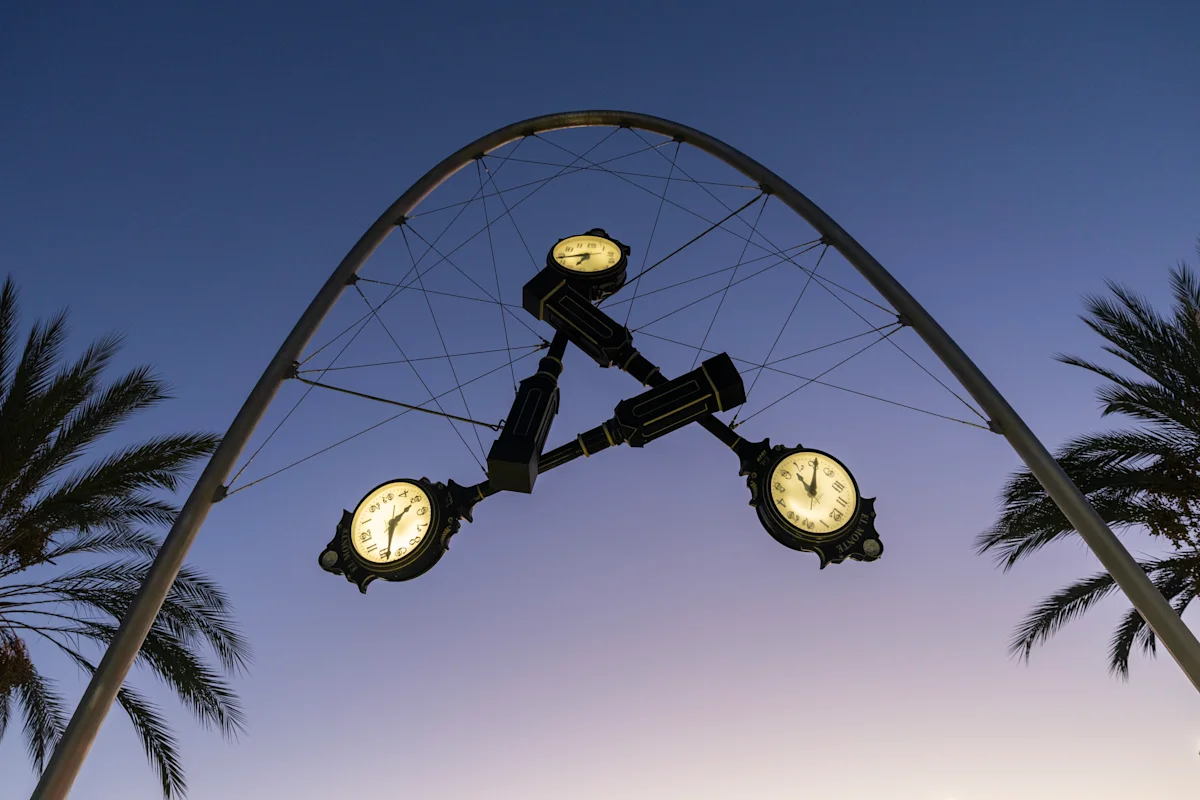
Daylight saving time ends tonight as scheduled, bringing sunsets before 5 p.m. to some cities. At 2 a.m. Sunday, clocks in 48 states will fall back one hour, giving back the hour taken in springtime .
The change will give many an extra hour in bed and brighter mornings, but also earlier sunsets that will last through the winter.
It comes amid an ongoing political tussle to make daylight saving time permanent .
The House easily passed a bill in July to make daylight saving time permanent. It has since moved to the Senate, where it is meeting significant opposition — despite being backed by President Trump. The Senate is unlikely to act before the end of the year, according to the Associated Press .
What dates do the clocks go back, and when do they move forward again?
Under federal law, daylight saving time runs from the second Sunday in March to the first Sunday in November. This year, it began on March 8 and ends at 2 a.m. local time Sunday, Nov. 1, when clocks go back one hour.
Under the current schedule, clocks will spring forward again on Sunday, March 14, 2027.
The clocks going back means earlier darkness for everyone, but it will be more keenly felt in some regions than others.
On Sunday, the sun will set before 5 p.m. in New York City, Chicago, Denver and Seattle, according to AccuWeather , while Caribou, Maine, will see sunset as early as 4:16 p.m., among the earliest in the contiguous U.S.
Later sunsets will be in store in the South, with the sun setting in Houston and Miami at 5:34 p.m. and 5:39 p.m., respectively.
Over the course of November, Seattle will lose more than 70 minutes of daylight, compared with about 30 minutes in cities in the South such as Austin and Tampa, AccuWeather said.
What's happening to the plans to scrap daylight saving time?
In July, the U.S. House of Representatives passed the Sunshine Protection Act by 308-117, which would see the U.S. remain on daylight saving time all year.
Several bills to end the twice-yearly clock changes have been introduced in recent years, but the Sunshine Protection Act gained momentum with broad bipartisan support in the House and backing from Trump.
However, the bill faces opposition from senators, including Republican Sen. Tom Cotton of Arkansas, who warned in a 2025 Senate floor speech that permanent daylight saving time "would push winter sunrises to an absurdly late hour, depriving Americans of morning sunshine that's essential for our safety and well-being."
The president has stepped up pressure on Senate Republicans to pass the legislation, even as it remains stalled. Senate Majority Leader John Thune told Politico this month there is "no clear path forward."
"The United States Senate is letting the Daylight Saving Bill die," Trump said in a Truth Social post on Oct. 26, urging the Senate to "TAKE A VOTE!" In a previous Truth Social post, Trump railed against Cotton, saying, "Who wouldn't want more "SUN" in the afternoon than in the morning?"
According to YouGov polling from March 2026, about two-thirds (64%) of Americans say they would like it if clocks no longer changed twice a year, with just 16% preferring to keep the current approach. It also showed more people would prefer the later sunrise and sunset times of daylight saving (43%) than standard time (28%).
Opponents also point to northern states, where winter sunrises would come much later. "You'd be sending kids to school in the dark," South Dakota Republican Sen. Mike Rounds said, according to the AP .
Daylight saving time was adopted in Germany in 1916 to conserve fuel and energy during World War I.
The U.S. adopted it in 1918 under the Standard Time Act, which also created the country's time zones. The change proved unpopular, and Congress repealed it in 1919 over President Woodrow Wilson's veto. Cities and states were left to choose their own schedules.
Congress brought it back in 1942 as year-round "War Time" during World War II, and it ended in 1945. A patchwork of local clock rules followed, until the Uniform Time Act of 1966 set one national schedule and let states opt out, as Arizona and Hawaii have.
The current schedule, running from the second Sunday in March to the first Sunday in November, dates from the Energy Policy Act of 2005, which took effect in 2007.
Who participates in daylight saving time in the U.S.?
Most states observe daylight saving time, but Hawaii and most of Arizona do not. With summer temperatures among the hottest in the country, Arizona has little appetite for daylight saving time, which would extend sunlight into the evening during the hottest part of the year.
Hawaii's sunrises and sunsets follow a fairly set schedule because of its close proximity to the equator. By sticking to one time all year round, Hawaii Standard Time, islanders can follow the flow of the sun, according to KHON-TV .
The Navajo Nation, however, which spans three states, including Arizona, observes daylight saving time.
Topics in this story
Gathered from external sources. Rights to this text belong to whoever originally published it.