Congress is failing faith communities on security funding at the worst time
For too long, Jews and other faith-based communities have been forced to shoulder the financial and emotional burdens of protecting ourselves from hate.
American Jews around the country celebrated Rosh Hashanah — our New Year — last weekend and are getting ready to observe Yom Kippur — our Day of Atonement — next week. These are our “High Holy Days,” the two most sacred holidays on the Jewish calendar.
Having led one of the largest Jewish advocacy organizations in our nation’s capital region for the past 25 years, I get asked the same question every year around this time: How are you keeping the Jewish community safe?
It is an understandable and important question. The High Holy Days bring, by far, the largest attendance to our synagogues each year. We live in a time when antisemitic threats and violence have become frighteningly common, and security needs are paramount.
For too long, Jews and other faith-based communities have been forced to shoulder the financial and emotional burdens of protecting ourselves from hate. Ensuring the safety of our families and communities will always be our top priority. But we cannot do it alone, nor should we have to. It is the government’s responsibility to protect its citizens and provide us with the resources to do so.
So, the right question to ask lawmakers in Washington is what are you doing to keep us safe? Right now, the answer is nowhere near enough. Unless and until that changes, the Jewish community and many others will continue to be vulnerable targets.
Being Jewish is becoming increasingly unsafe. A recent report stated it plainly: “In both the number of lethal attacks and the number of casualties, 2025 was the deadliest year for antisemitic attacks” against Jewish communities globally in more than three decades.
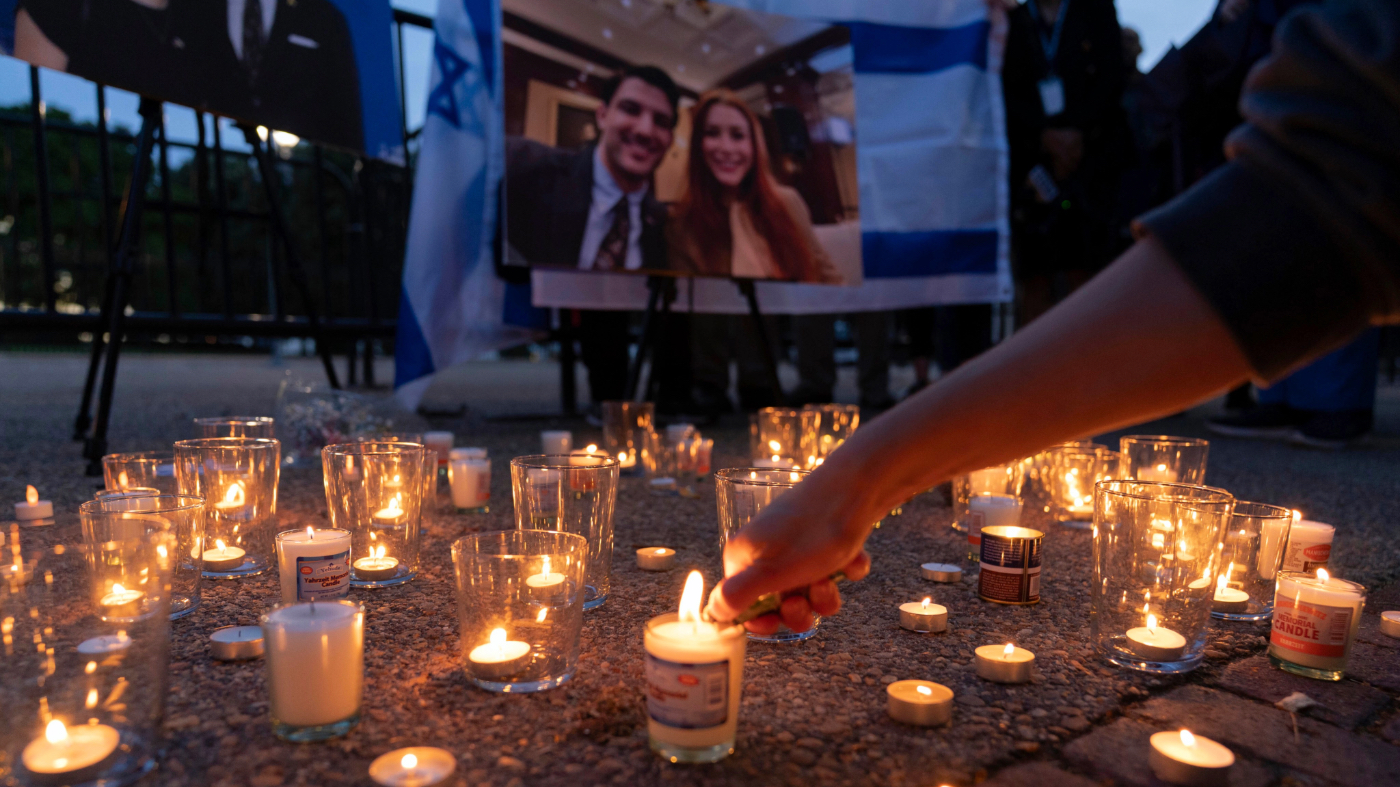
Last year, the United States averaged 17 antisemitic attacks per day. Two of our brightest lights — Israeli embassy staffers Sarah Milgrim and Yaron Lischinsky — were murdered outside the Capital Jewish Museum, just steps from the U.S. Capitol. Approximately 300 other Jews were physically assaulted in incidents around the country.
The sheer volume reflects the extraordinary threats our community faces. Jews comprise a mere 2 percent of the U.S. population yet were on the receiving end of 63 percent of religion-motivated hate crimes in 2025, according to the FBI.
The need for more security support to protect our families and institutions has never been greater. Security costs for Jewish communities now amount to an astonishing $1 billion annually, with the average Jewish communal institution spending roughly $225,000 on security needs..
But something has to give. Threats are rising, costs are soaring and there’s only so much that congregations and families can do on their own.
The federal government must provide more help. In 2004, Congress established the Nonprofit Security Grant Program , which provides security grant funding for nonprofit organizations at high risk of hate crimes or terrorist attacks. As attacks increase and security costs rise, this program should be keeping pace with growing needs.
Instead, it’s the opposite . Last year, nonprofits and religious institutions requested $1.3 billion from the program, but Congress only appropriated $266 million. Of the 8,000 institutions that applied for funding, about 6,400 didn’t receive a dime.
This is unacceptable. Congress should provide sufficient funding to meet demand. Its refusal to do so is a moral failure by both parties.
Increasingly, advocates and institutions are being forced to look elsewhere for leadership. Over the past decade, my organization has led efforts to create similar nonprofit security grant programs at the state and local level in Maryland , Virginia and Washington, D.C . They help cover capital improvements like security cameras and building reinforcements, as well as operating costs like additional security guards.
They also move quickly. For example, within days of the terrorist attack on Temple Israel in Bloomfield, Michigan earlier this year, officials in Montgomery County, Maryland allocated $500,000 in emergency security funding through the county’s program to guard against copycat attacks. Any institution that had previously received funding through the program — not only synagogues, but also churches, mosques, schools and community centers — could apply. Washington D.C.’s program also came through with an additional $120,000.
The federal government should be following suit. Earlier this year, hundreds of Jewish leaders came to Washington to lobby Congress to increase funding for the Nonprofit Security Grant Program to at least $1 billion annually. Faith communities across the country need it. Indeed, that advocacy push came a day after several individuals were shot and killed at a mosque in San Diego.
But Congress continues to sit on its hands. Level funding or incremental increases are not going to cut it.
This year, Rosh Hashanah began on the evening of Sept. 11, exactly 25 years after the worst terrorist attack in American history. We gathered to remember those we lost and recommitted ourselves to doing our part to prevent future tragedies.
The question for our leaders in Washington remains: Will you finally do what you need to do?
Ron Halber is CEO of the Jewish Community Relations Council of Greater Washington .
Topics in this story
Gathered from external sources. Rights to this text belong to whoever originally published it.