Kavanaugh’s ‘new circumstances’ could pave a path to gun restrictions
Kavanaugh’s “unanticipated” developments analysis also maps neatly onto gun regulations.
Gun control advocates have good reason to worry whenever the Supreme Court accepts a case for review. That goes double this term.
The court has two such cases on its docket — from Illinois and Connecticut — which have been consolidated for oral argument in December on “Whether the Second and Fourteenth Amendments guarantee the right to possess AR-15 platform and similar semiautomatic rifles.”
The outcome will determine whether the Constitution has become a homicide pact. Fortunately, there is a glimmer of hope. But first, the bad news.
Gun rights groups are optimistic that the Supreme Court will find semiautomatic rifle bans unconstitutional. They have been on a nearly unbroken winning streak since 2008, when the court’s conservative majority held, in District of Columbia v. Heller , that the “Second Amendment protects an individual right to possess a firearm.”
Subsequent decisions extended gun rights, culminating in 2021 with New York State Rifle and Pistol Association, Inc. v. Bruen , which held that restrictions on individual firearms ownership are presumptively unconstitutional under the “plain text of the Second Amendment.”
The Republican supermajority explicitly rejected the longstanding approach of balancing government interests against individual rights, which has been used, for example, to evaluate freedom of speech claims under the First Amendment and unlawful search claims under the Fourth Amendment.
Instead, Bruen adopted a “history and tradition” test, under which gun laws can be upheld only if they are consistent with the “nation’s historical tradition of firearm regulation.” But this prevents appropriate restrictions on guns that are far more powerful than anything historically available to the public.
So absent a sufficiently analogous restriction, enacted some time before the 20th century, gun regulations are invalid, even if they address the sort of “compelling governmental interests” that could justify limitations on other constitutional rights.
The Supreme Court’s firearms jurisprudence rejects consideration of the underlying purposes of gun control in favor of a nearly impossible to meet historical test, no matter how compelling the reasons for the legislation.
That brings us to the two laws currently before the court.
On Dec. 14, 2012, a gunman entered the Sandy Hook Elementary School in Newtown, Connecticut, carrying a Bushmaster Model XM15-E2S rifle. Within five minutes , he fired 154 rounds, murdering 20 children and six adults, before killing himself with a handgun.
In response to the massacre of school children, the Connecticut legislature passed An Act Concerning Gun Violence Prevention and Children’s Safety that prohibits the sale, transfer or possession of certain semiautomatic rifles.
Highland Park, Illinois, suffered its own heartbreak on July 4, 2022, when a sniper used a semiautomatic rifle to attack attendees enjoying the Independence Day parade, leaving seven dead and dozens wounded, ages eight to 85.
Within days, the commissioners in nearby Cook County passed a resolution reaffirming its 2006 ordinance restricting the sale, transfer or possession of assault-style weapons. That ordinance was already in litigation at the time and is now before the Supreme Court.
Other semiautomatic rifle mass shootings in schools, churches and elsewhere are too many to detail, in locales both familiar and lesser known: Uvalde , Aurora , Parkland , El Paso , Nashville and others.
That has surely seemed like a sufficiently compelling reason for legislatures to attempt constraints on the weapons empowering such carnage. The gun rights lobby sees it differently, banking on a strict application of the Supreme Court’s Bruen opinion , that “the Second Amendment does not permit … judges to assess the costs and benefits of firearms restrictions.”
But all is not lost. The Supreme Court has already backed away from the most absurd consequences of the Bruen standard. In U.S. v. Rahimi , an 8-1 majority greatly relaxed the “history and tradition” requirement to avoid leaving guns in the hands of domestic abusers.
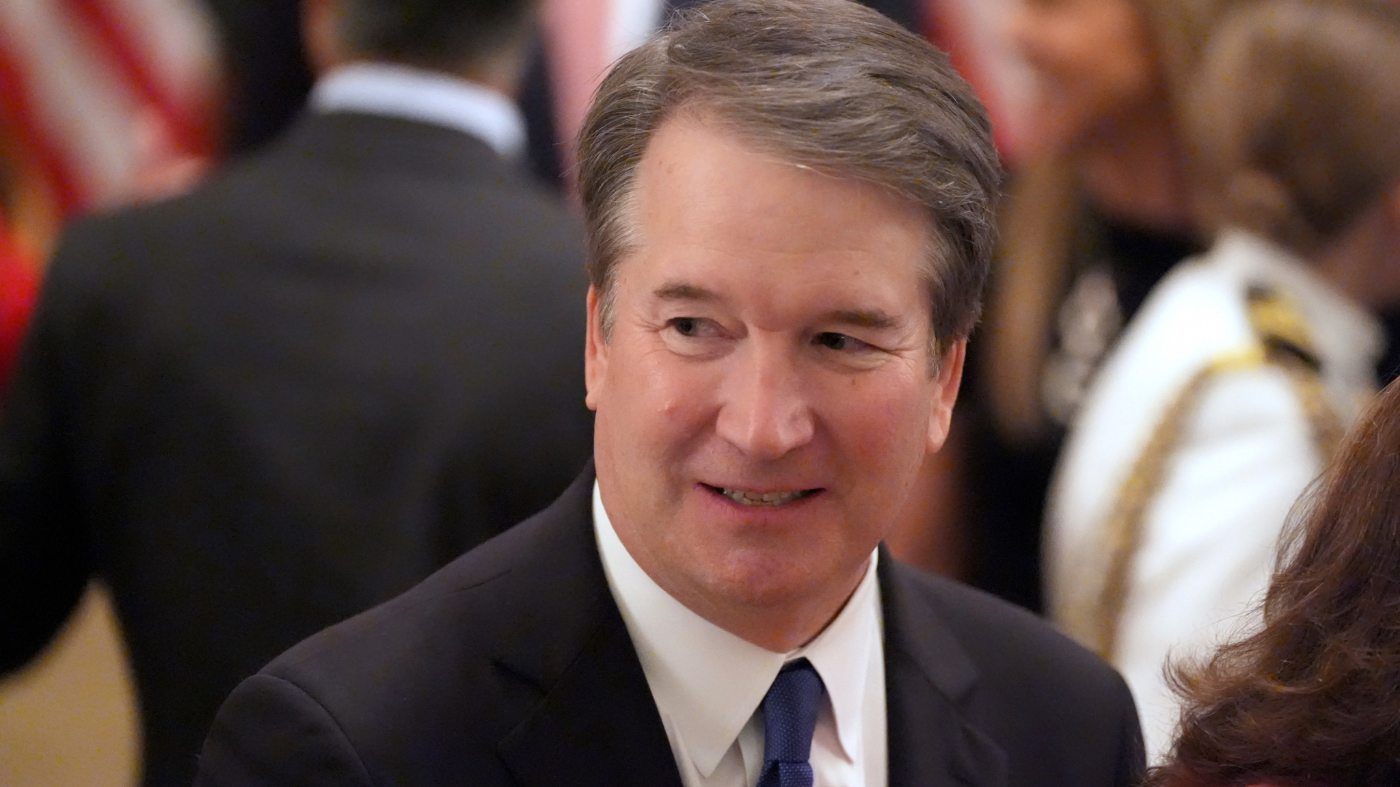
Perhaps common sense will also prevail in the assault weapons cases. If so, Justice Brett Kavanaugh, ordinarily quite friendly to gun rights, has already shown the way.
In Trump v. Barbara , the birthright citizenship case, Kavanaugh authored a concurrence, opining that exceptions to constitutional rights can be expanded under “new circumstances” shaped by subsequent developments “largely unknown or unanticipated” at ratification.
Although he was thinking of “significant illegal immigration” and the advent of air travel, Kavanaugh’s “unanticipated” developments analysis also maps neatly onto gun regulations. The proliferation of semiautomatic weapons has had far greater consequences for public safety than air travel has had for 14th Amendment citizenship.
In Bruen , the majority reasoned that “The constitutional right to bear arms in public for self-defense is not ‘a second-class right.’” But neither should it be a super-right, to be interpreted under an entirely different body of rules from those applicable to the rest of the Bill of Rights.
If “new circumstances” may be sufficient to limit birthright citizenship under the 14th Amendment, the same principle should allow restrictions on firearms under the Second Amendment.
Steven Lubet is the Williams Memorial Professor Emeritus at the Northwestern University Pritzker School of Law. He is coauthor of “Judicial Conduct and Ethics.”
Topics in this story
Gathered from external sources. Rights to this text belong to whoever originally published it.