9/11 was the beginning of the end of American democracy
To look back from the vantage point of a quarter century is to see how Osama bin Laden’s singular act of destruction also built the warped and broken world we have today.
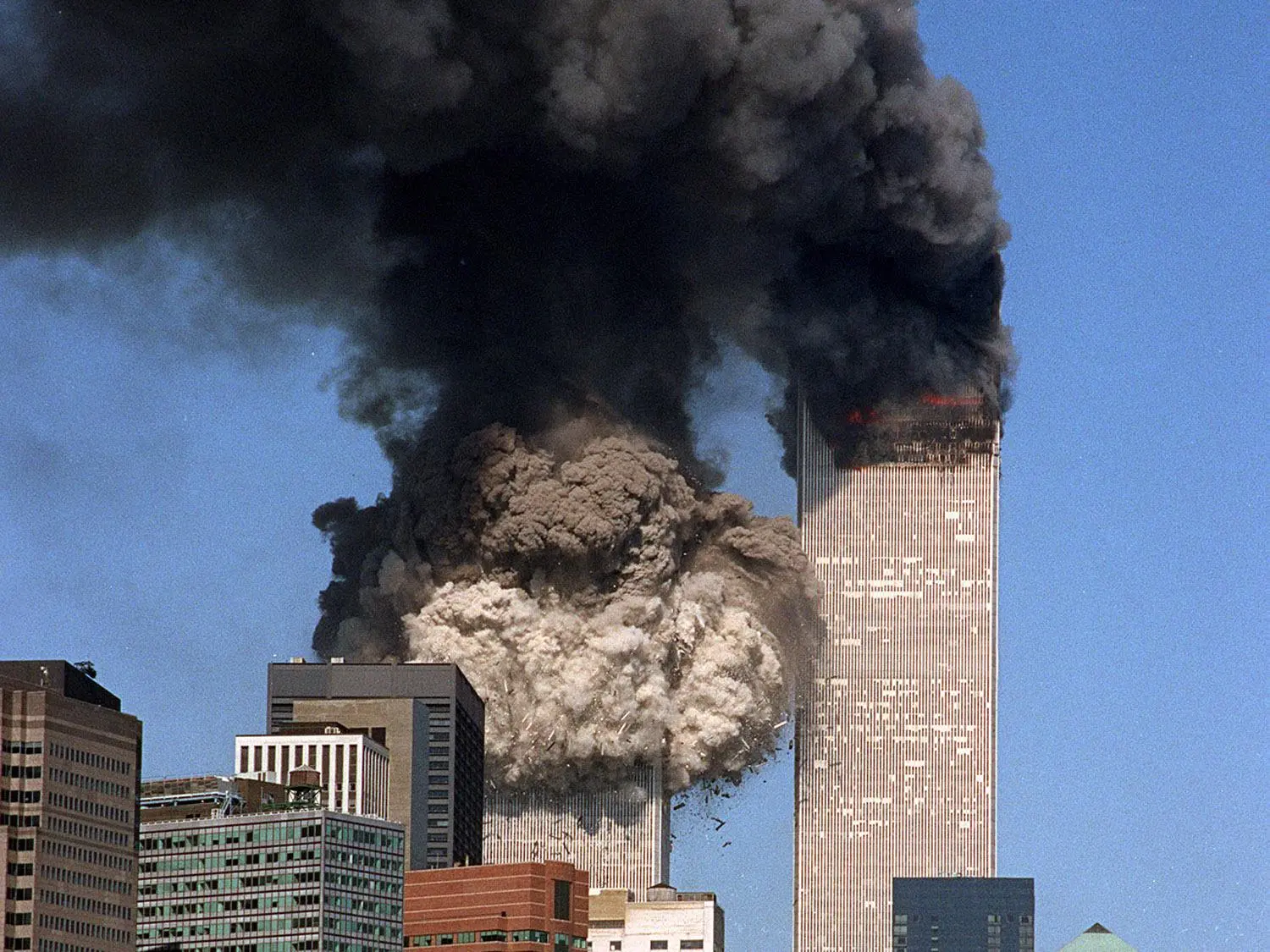
No one who lived through the events of Sept. 11, 2001, needs a reminder that this week marks the attack’s 25th anniversary . Images and videos of the carnage were so omnipresent in the wake of the attack and the years that followed that they were seared permanently into our identities. Like standing too close to a Mark Rothko painting, the image of those collapsing towers consumed our field of vision until there was nothing else.
That’s why it felt so strange for me to walk near the Freedom Tower on Labor Day, where I overheard a young girl explaining to her even younger brother the cold facts of that day. A generation has grown up in the years since the attacks, and for the first time I heard events that bleed for me described in the dispassionate language of historical fact. She got the names and dates and numbers correct, which I appreciated, especially for someone who couldn’t have been older than 12. But hers was a historical retelling devoid of the trauma that made September 11 what it is for so many of us.
To look back from the vantage point of a quarter century is to see how Osama bin Laden’s singular act of destruction also built the warped and broken world we have today. That includes the tragic and ruinous legacy of the War on Terror and the first buds of a surveillance state that now surrounds us in a totally unaccountable panopticon. It includes Islamophobia and xenophobia , culminating in a radicalized mass deportation force constructed from the remnants of our collective trauma. It includes a shift from an imperfect but liberal democracy to a hard-edged, right-wing authoritarianism that not only infects the U.S. but also seems to be on the march across the globe .
The surveillance state we live under today is powered by a symbiotic relationship between private businesses and the Pentagon that exceeds anything George W. Bush’s intelligence officials could have imagined. Palantir achieved a more than $400 billion market capitalization thanks to a steady stream of federal contracts for its AI surveillance tech . Its CEO, Alex Karp, satisfies his funders on the right with lengthy public manifestos deriding non-western cultures as “middling and worse, regressive and harmful.”
The girl who described 9/11 to her brother knows it as a historical event. She does not yet — and may never — know it as the efficient cause of a vast chain of effects that undermined public trust in government and convinced so many Americans that our experiment in democracy was fatally flawed.
It has led us to our current crisis — not just the crisis of President Trump’s political extremism, but also the grim reality that no one in our elected leadership seems capable of standing up for America’s most basic principles.
As tempting as it is to lay the blame for that at the feet of Republicans, from Bush to Trump, few moments in our modern history were as thoroughly demoralizing as watching fearful Democrats surrender their principles to electoral expediency. Democrats’ votes to authorize a war in Iraq and construct the beginnings of the surveillance state through the Patriot Act were abhorrent then, and even less defensible now that we have the benefit of knowing how those decisions corroded our country. They knew it was wrong, but few had the courage to say as much.
The late Sen. Robert Byrd (D-W.Va.) described better than anyone else his disgust with his Senate colleagues in a speech in February 2003 , just a month before the invasion of Iraq.
“This chamber is, for the most part, silent — ominously, dreadfully silent, Byrd said. “There is no debate, no discussion, no attempt to lay out for the nation the pros and cons of this particular war. We stand passively mute in the United States Senate, paralyzed by our own uncertainty, seemingly stunned by the sheer turmoil of events. And this is no small conflagration we contemplate. This is no simple attempt to defang a villain. No. This coming battle, if it materializes, represents a turning point in U.S. foreign policy.”
Reading this in 2026, one cannot help but think about the lack of moral courage on display among lawmakers today, and what the effects of that spinelessness will be a quarter of a century from now. We again face a turning point: a choice between legitimizing Trump’s authoritarianism and standing against it. In the same way that the War on Terror reshaped our culture and led to Trump’s presidency, a failure to stand against his poisonous ideology will pave the way for greater and more dangerous horrors in the years to come.
That little girl does not yet know her generation is heir to the unresolved traumas and political battles that began 25 years ago. If we continue down the ruinous path we are on, her generation will be left with the monumental task of rebuilding a nation whose greatest values exist only in history books.
Max Burns is a veteran Democratic strategist and founder of Third Degree Strategies.
Topics in this story
Gathered from external sources. Rights to this text belong to whoever originally published it.