Smithsonian head to resign after Trump admin threats to cut off support
The Smithsonian museums don’t have to tell Americans that their country is terrible to tell the truth about the terrible things America has done. And acknowledging slavery, segregation, displacement or discrimination does not erase the country’s achievements.
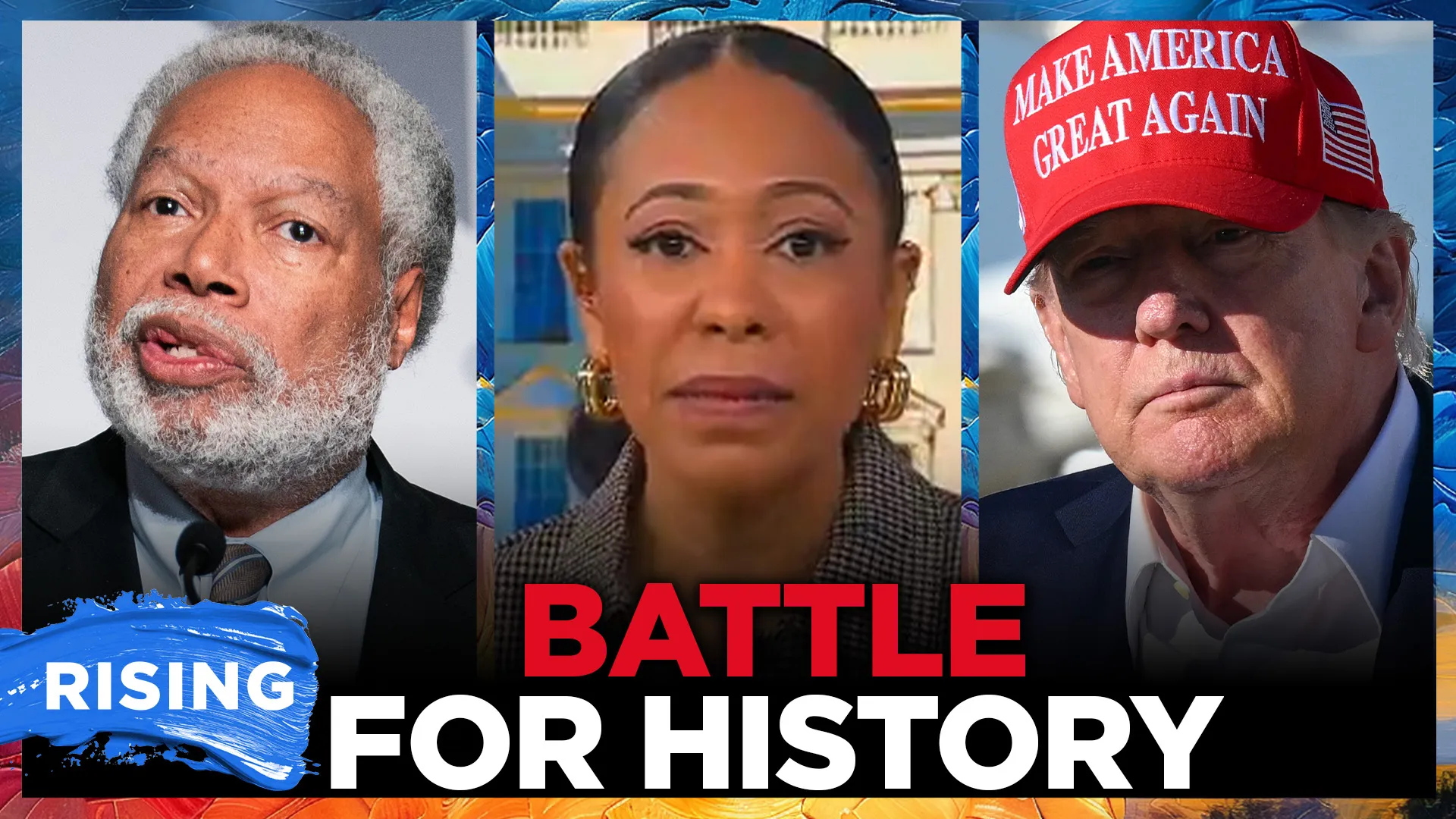
Smithsonian Secretary Lonnie Bunch announced he will step down by the end of the year, after seven years leading one of the most important cultural institutions in the country.
Bunch is the first Black person and the first historian to lead the Smithsonian. His departure comes as the Trump administration has dramatically escalated its fight with the institution over how American history should be told.
Just days ago, the administration threatened to cut off federal agencies’ support f or the Smithsonian, including loans of artifacts, procurement assistance and discretionary grants, accusing the institution of promoting what it calls an anti-American narrative.
The administration has also accused the National Museum of American History of promoting “extreme political activism.”
And in August, President Trump was explicit about what he believes is wrong, writing on Truth Social:
“The Museums throughout Washington, but all over the Country are, essentially, the last remaining segment of ‘WOKE.’ The Smithsonian is OUT OF CONTROL, where everything discussed is how horrible our Country is, how bad Slavery was, and how unaccomplished the downtrodden have been — Nothing about Success, nothing about Brightness, nothing about the Future.”
That’s untrue. I’ve been to both the American History Museum and the African American History Museum recently and both have plenty of truth, history and, yes, uplifting stories about America.
Still, American history is not one long story of triumph. It is the Declaration of Independence and slavery. It is the moon landing and Japanese internment. It is Harriet Tubman and the Underground Railroad and the institution of slavery that made an Underground Railroad necessary in the first place.
These things are not contradictions. They all are American history.
Bunch actually explained the philosophy guiding his work i n an interview with NBC earlier this year:
“The notion of being a more perfect union — not the perfect union — is really what motivates me. And I think what I want people to understand is that there is a responsibility to continue to make those aspirations available, accessible, and meaningful to a whole range of people, and that America’s greatest strength is not running away from its history, but understanding how that history shaped us and continues to shape us.”
The Smithsonian museums don’t have to tell Americans that their country is terrible to tell the truth about the terrible things America has done. And acknowledging slavery, segregation, displacement or discrimination does not erase the country’s achievements. You can’t possibly understand American freedom without understanding who was denied freedom. You can’t possibly understand why the civil rights movement was so important without understanding Jim Crow.
Bunch has largely tried to avoid turning the Smithsonian into a partisan battlefield, but the administration has continued escalating its pressure, including an executive order directing officials to remove what it calls “ improper, divisive or anti-American ideology ” from the institution. Bunch says he has “mixed emotions” about his departure and that he wants to continue protecting the integrity of the Smithsonian and championing a history that illuminates the complexity of the nation.
What the administration needs to understand is that history doesn’t become more patriotic when you remove the painful chapters. Whoever takes on this role next has a job is to preserve the evidence — all of it. The good, the bad, the inspiring and the devastating. And give Americans the opportunity to understand how all of those pieces became the country we are today.
Lindsey Granger is a NewsNation contributor and co-host of The Hill’s commentary show “Rising.” This column is an edited transcription of her on-air commentary.
Topics in this story
Gathered from external sources. Rights to this text belong to whoever originally published it.