Lame-duck agenda balloons as Congress punts priorities until after election
GOP lawmakers are punting major fights — including government funding, money for the war with Iran and the extension of expanded surveillance authorities — until after the November election, setting up a bloated lame-duck agenda that will be difficult to get done by Christmas. The House on Tuesday overwhelmingly passed a bill to fund the…
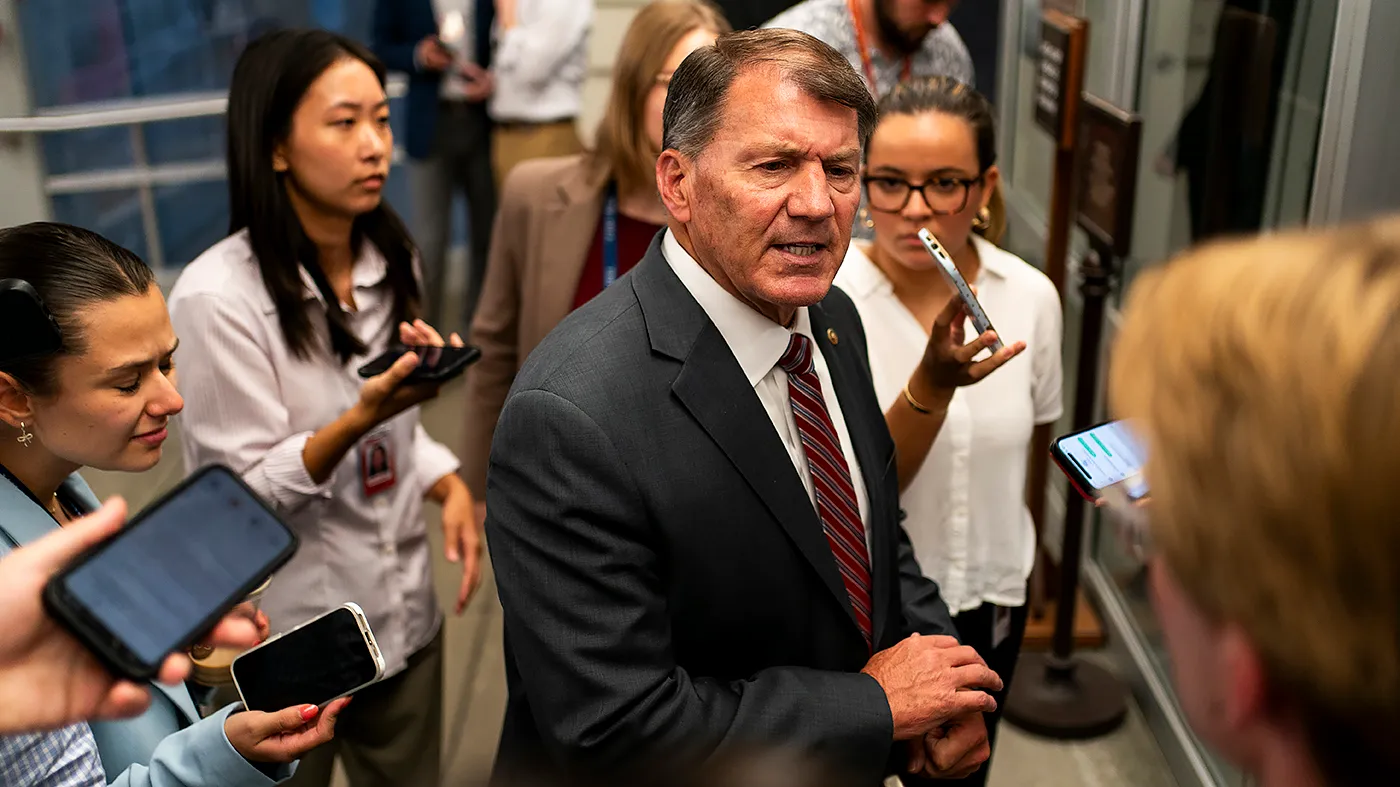
GOP lawmakers are punting major fights — including government funding, money for the war with Iran and the extension of expanded surveillance authorities — until after the November election, setting up a bloated lame-duck agenda that will be difficult to get done by Christmas.
The House on Tuesday overwhelmingly passed a bill to fund the government until Dec. 11, initiating a major partisan fight over spending levels for defense and nondefense programs after Thanksgiving.
A senior Senate GOP aide said “a lot” is getting pushed into the lame-duck session.
“The question is whether we can put together ‘ash and trash’ on an approps bill, which I assume will be an omnibus,” the aide said, using congressional slang for a bill that collects miscellaneous provisions to be attached to a must-pass bill.
The source said Democrats might be willing to cut deals after the election if they don’t reap the windfall of seats in the House and Senate that some Democratic lawmakers are optimistically expecting.
The Trump administration has requested a historic $1.5 trillion in defense spending, which Senate Democrats have rejected as a nonstarter. Democrats have blocked spending bills from advancing in the Senate because they claim Republicans have asked for a 4.5-1 increase in defense spending compared to nondefense spending.
Then there’s a brewing fight over the Trump administration’s emergency funding request for the Pentagon, farmers struggling with drought and low commodity prices as well as long-stalled disaster relief funding.
Congress needs to act on the expanded surveillance authorities under the Foreign Intelligence Surveillance Act (FISA) that expired in June and the $1.15 trillion annual defense authorization bill, which Democrats blocked on the Senate floor in July.
It also needs to move the farm bill, which failed to get out of the Senate Agriculture Committee in August because Sen. Mitch McConnell (R-Ky.) couldn’t attend the markup, leaving Republicans without a majority on the panel.
Lawmakers will need to scramble to finish work on a bill regulating the recruitment and compensation of college athletes for use of name, image and likeness if the measure manages to pass the Senate this month. It remains to be seen if the Protect College Sports Act can get 60 votes to advance.
Adding more chaos, Republicans are still talking about passing a budget reconciliation package in the lame-duck session to fund the war in Iran and provide up to $10 billion to states to incentivize tightening regulations for voting.
All of that will get packed into the six or seven weeks of legislative session expected after the election, starting on the week of Nov. 9 and running up until Christmas, with a week of recess planned for Thanksgiving, which is on Nov. 26.
“You’ll look at an omnibus at some point, but before that I think you’re going to have a real serious discussion about bringing the Democrats in with regard to the full story why we need supplemental on defense and some other areas,” said Sen. Mike Rounds (R-S.D.), a member of the Senate Appropriations Committee and the Armed Services Committee.
Rounds said Republicans would likely move an omnibus spending package with emergency funding for the Pentagon and other priorities, and then move a separate budget reconciliation package with funding for the six-month conflict with Iran.
But moving a budget reconciliation package will consume a lot of time on the Senate floor because it will entail first passing a budget resolution and slogging through two all-night vote-a-rama sessions.
Rounds on Tuesday acknowledged “we are” piling a lot on the lame-duck calendar and that it’s a “good question” whether the ambitious agenda can pass, especially if Democrats pick up a large number of House seats and win control of the lower chamber.
Democrats also think they have a chance of winning the Senate majority but face a tougher path. They would need to gain four seats, including at least some races in Republican-leaning states such as Alaska, Iowa, Ohio and Texas.
“It all depends on what the election outcome is and what people’s desires are to be here and work their way through,” Rounds said. “If leadership can come with an agreement to get certain things done on a consensus basis that the White House is willing to go along, yeah, we can get some things done fairly quickly.”
The Senate is planning to vote on a motion to proceed to the Clarity Act, a bill backed by the cryptocurrency industry to establish a regulatory framework for digital assets.
The crypto measure is expected to fail because Democrats are demanding strong conflict-of-interest provisions related to the Trump family’s crypto investments.
“They have a real problem with getting seven Democrats on board,” a GOP aide said of the Clarity Act.
Rounds, a member of the Banking Committee, acknowledged “it does not look good right now” for the Clarity Act “because I don’t think there’s been an agreement on ethics yet coming out of the White House.”
The Senate will then move to a vote on the college sports bill, approved by the Senate Commerce Committee with bipartisan support. If the motion to proceed to the bill has 60 votes, senators could spend up to two weeks considering amendments before voting on final passage.
But Senate Majority Leader John Thune (R-S.D.) is expected to punt the annual defense authorization bill and a deal to extend FISA’s lapsed surveillance authorities until after the Nov. 3 election.
“I think the NDAA will come together after the election,” Rounds said of the National Defense Authorization Act (NDAA).
Sen. Ron Johnson (R-Wis.), chair of the Senate Budget Committee, has been working over the recess on a budget resolution that he hopes to bring to the Senate floor this fall to pave the way for a budget reconciliation package that could pass with a simple majority and avoid a Democratic filibuster.
But vulnerable GOP colleagues such as Sen. Susan Collins (R-Maine) have made it clear that they don’t want to face another vote-a-rama on the Senate floor before Election Day, which would give Democrats a chance to force them to vote on tough issues that could provide fodder for campaign ads.
That means the budget resolution and follow-up reconciliation bill will get dropped into the lame-duck bucket, but the crowded agenda has some GOP aides predicting that reconciliation 3.0 won’t happen before January.
Topics in this story
Gathered from external sources. Rights to this text belong to whoever originally published it.