Second judge freezes Trump mail ballot plan as Supreme Court ruling looms
A second federal judge blocked the U.S. Postal Service from implementing President Trump’s executive order targeting mail-in voting, adding a new obstacle to the president’s plan as he awaits word from the Supreme Court. The high court was already considering an emergency request to lift another judge’s block — a decision could come any time —…
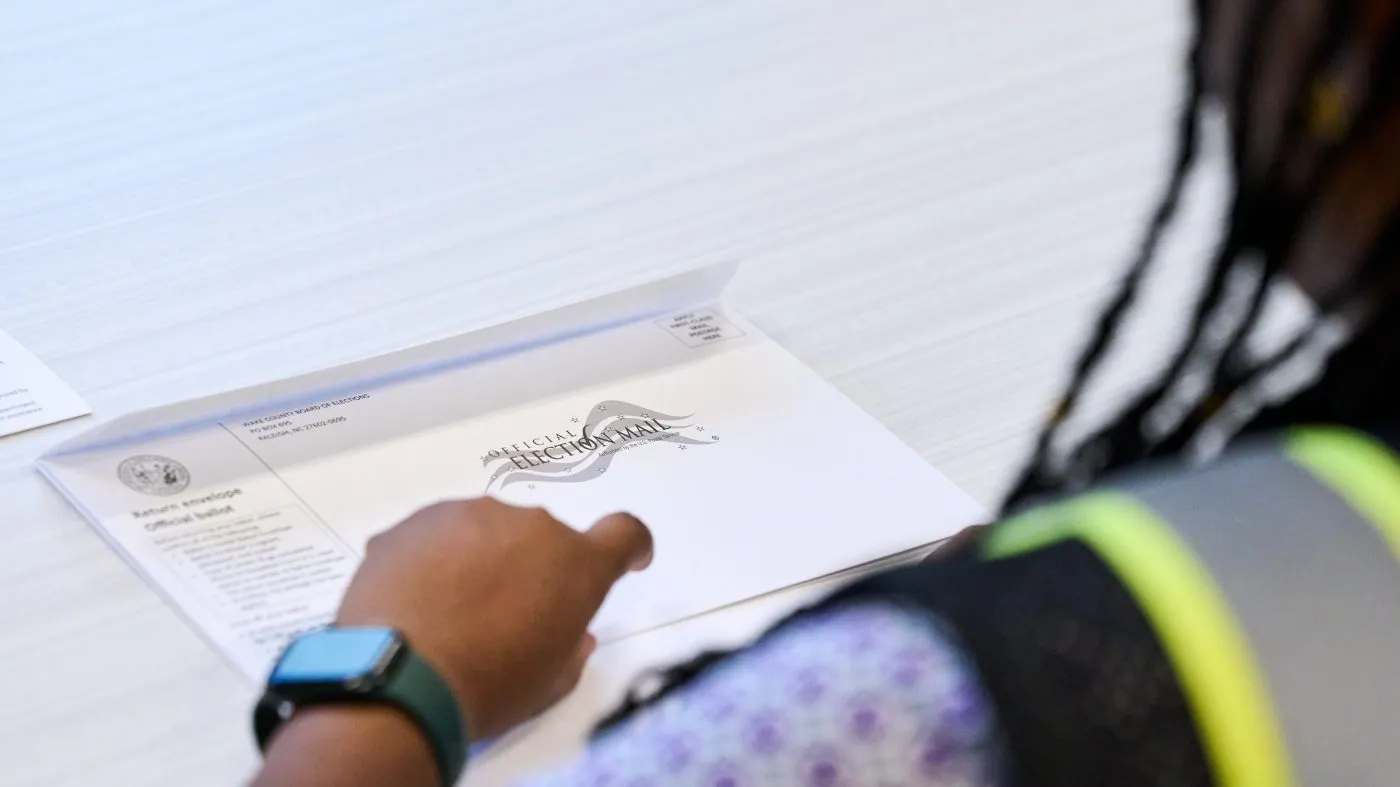
A second federal judge blocked the U.S. Postal Service from implementing President Trump’s executive order targeting mail-in voting, adding a new obstacle to the president’s plan as he awaits word from the Supreme Court.
The high court was already considering an emergency request to lift another judge’s block — a decision could come any time — when U.S. District Judge Carl Nichols ruled in separate challenges filed by Democrats and private organizations.
Nichols similarly found that Trump’s mail ballot plan wasn’t authorized by Congress.
“The key portions of the Rule exceed any conception of the outer bounds of these authorities,” the judge wrote in his 24-page opinion .
Nichols is a Trump appointee who serves on the federal trial bench in Washington, D.C.
He oversees several consolidated lawsuits challenging the president’s plan. One was brought by the Democratic National Committee, other party groups, House Minority Leader Hakeem Jeffries (D-N.Y.) and Senate Minority Leader Chuck Schumer (D-N.Y.). The others were filed by private organizations, such as the NAACP and the League of United Latin American Citizens.
Trump has long targeted mail-in voting over his claims that it contributes to mass election fraud. Officials have identified limited instances of fraud but not at the scale Trump has claimed.
His executive order, signed in March , instructed the Postal Service to develop new requirements for casting a mail ballot. The agency’s final plan would require states to upload voter lists and make sure their envelopes meet design requirements, including an official logo and barcode, for mail ballots to be sent.
Blue states have warned that it is too late to change their designs, and allowing the president to move ahead in time for the midterms would risk making a significant number of ballots invalid.
In court, the Trump administration has emphasized that federal authorities won’t second-guess states’ mail voter lists, and it has defended the policy by likening it to the Postal Service’s rules on cremated remains and other sensitive items. The judge rejected the comparison.
“But the Rule does far more than prescribe how ballot envelopes must be designed and processed,” Nichols wrote.
The latest ruling halts the Postal Service’s plan in entirety. It’s broader than the other judge’s block, which only blocked certain provisions and remains pending at the Supreme Court.
The new ruling could reach the high court, too. Next, the Trump administration can appeal it to the U.S. Court of Appeals for the D.C. Circuit.
Topics in this story
Gathered from external sources. Rights to this text belong to whoever originally published it.