Lowering gas prices requires stopping climate shakedowns
President Trump met with oil refiners to discuss expanding capacity, but analysts suggest that lowering gasoline prices requires legislative action to block state climate lawsuits and foreign regulations.
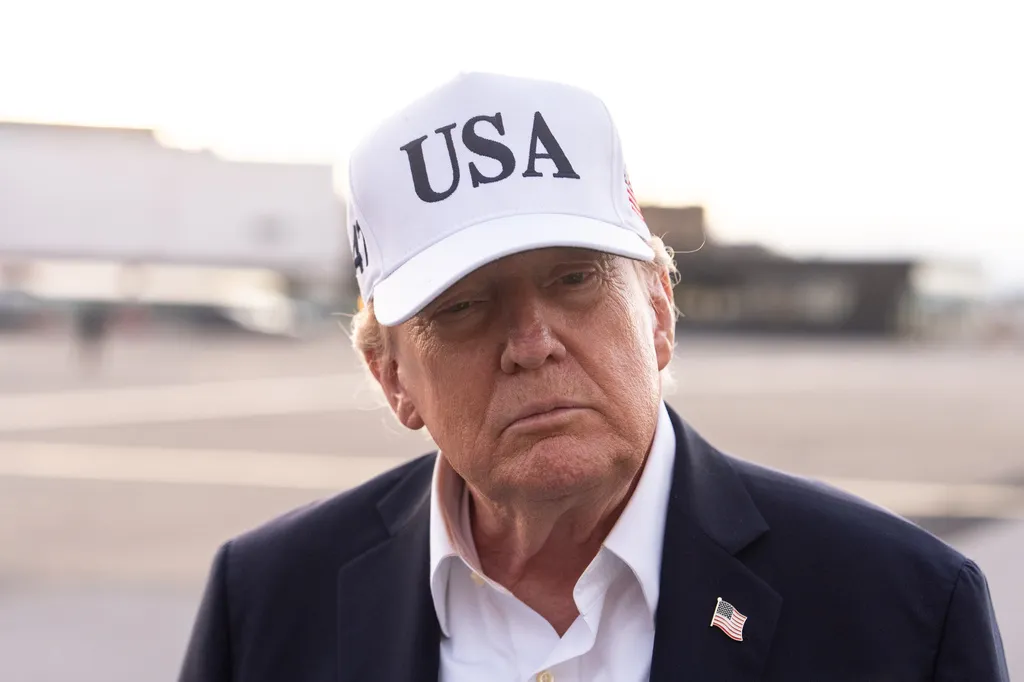
On Sept. 1, just as the national average for gasoline hit $4.09 a gallon , President Trump brought oil refiners and fuel distributors to the White House to discuss expanding refining capacity and bringing prices down. Administration officials said the conversation included “concrete ways to expand capacity, including regulation changes, faster permitting and additional investments.”
Removing federal barriers to new projects is a good place to start, as American refineries are already operating at nearly 97 percent of capacity. But permits alone will only go so far. Unless something is done to stop state governments and foreign regulators from sabotaging American energy dominance, the price at the pump, not to mention U.S. national security, will suffer.
In blue states and municipalities here in the United States, an unholy alliance of progressive officials and their cabal of climate litigators have weaponized climate lawsuits and “Climate Superfunds” to bleed the industry of billions of dollars. Meanwhile, across the Atlantic, European regulators are forcing costly climate mandates into American supply chains.
Together, these forces are inflicting an unnecessary burden on our energy industry at a time when U.S. energy dominance matters most. All of this raises costs that get passed on to consumers and makes new refinery investments harder to justify. Any serious effort to lower gas prices and expand refining capacity has to stop the lawsuits, retroactive charges, and foreign mandates driving rising costs.
To Trump’s credit, his executive order last year directed the Justice Department to identify and challenge ideologically motivated state laws burdening domestic energy production. His administration has since challenged New York’s and Vermont’s “Climate Superfund” laws as well as climate actions in Hawaii and Michigan. That pushback paid off last month when a federal judge blocked the New York superfund, which sought $75 billion in retroactive charges against oil and gas companies based on fossil fuels legally produced and sold between 2000 and 2018.
Vermont’s Climate Superfund, however, remains very much alive, and other states could easily pass their own versions.
Beyond the climate superfund laws, blue states and municipalities are also bleeding energy companies dry in court over damages tied to decades of global emissions. California alone sued five major oil companies and the American Petroleum Institute in 2023 for allegedly “deceiving the public about climate change,” while Multnomah County, Ore., is seeking nearly $52 billion from oil and gas companies over the 2021 heat wave. Hawaii filed one last year alleging “harm to public trust resources,” while Michigan filed this year, accusing the industry of a “conspiracy” to “restrict the development of renewable energy and electric vehicles.”
Whatever the theory, these lawsuits force a handful of American energy companies to spend millions defending themselves in local courts, while losing even a few could expose the industry to hundreds of billions in liability and allow local courts to set energy policy for the rest of the country.
Rather than leave energy companies and the Justice Department to keep fighting the same battle one state and one courtroom at a time, Trump can and should put his full weight behind Sen. Ted Cruz (R-Texas) and Rep. Harriet Hageman’s (R-Wyo.) Stop Climate Shakedowns Act . The legislation would prohibit climate lawsuits in state and federal court and void state energy-penalty laws such as the climate superfunds.
But even then, the administration must still deal with our friends across the Atlantic, where the European Union is using its Corporate Sustainability Due Diligence Directive to require American companies that operate there to police environmental practices throughout their entire supply chains under the threat of fines.
As Rep. Craig Goldman (R-Texas) has noted, a gas-station owner in Fort Worth could get pulled into Europe’s mandates simply because his franchise agreement is with an American fuel company that operates there. The owner does no business in Europe and has no representation there, and yet he could still get stuck paying the compliance costs Europe adds to his contract.
Fortunately, a solution is waiting in the wings here too. The PROTECT USA Act, now before Congress, would stop foreign governments from forcing their sustainability rules on American companies. Goldman’s Stop the EU Overreach Act would also direct the U.S. trade representative to investigate whether the EU directives unfairly restrict American businesses and determine how the United States should respond. Trump should do everything in his power to push both forward alongside the Stop Climate Shakedowns Act.
Pressing refiners to expand capacity should absolutely be part of Trump’s effort to lower gasoline prices. But faster permits and regulatory relief will not be enough to justify billion-dollar investments while blue states pursue retroactive climate charges and European regulators add new costs to American supply chains.
If the administration wants refiners to invest and consumers to pay less, it must stop hostile governments from piling new costs onto American energy companies.
Jason Isaac is the CEO of the American Energy Institute. He previously served four terms in the Texas House of Representatives.
Topics in this story
Gathered from external sources. Rights to this text belong to whoever originally published it.