Why would New York reelect Kathy Hochul amid her affordability crisis?
New York is, for far too many people, anything but affordable.
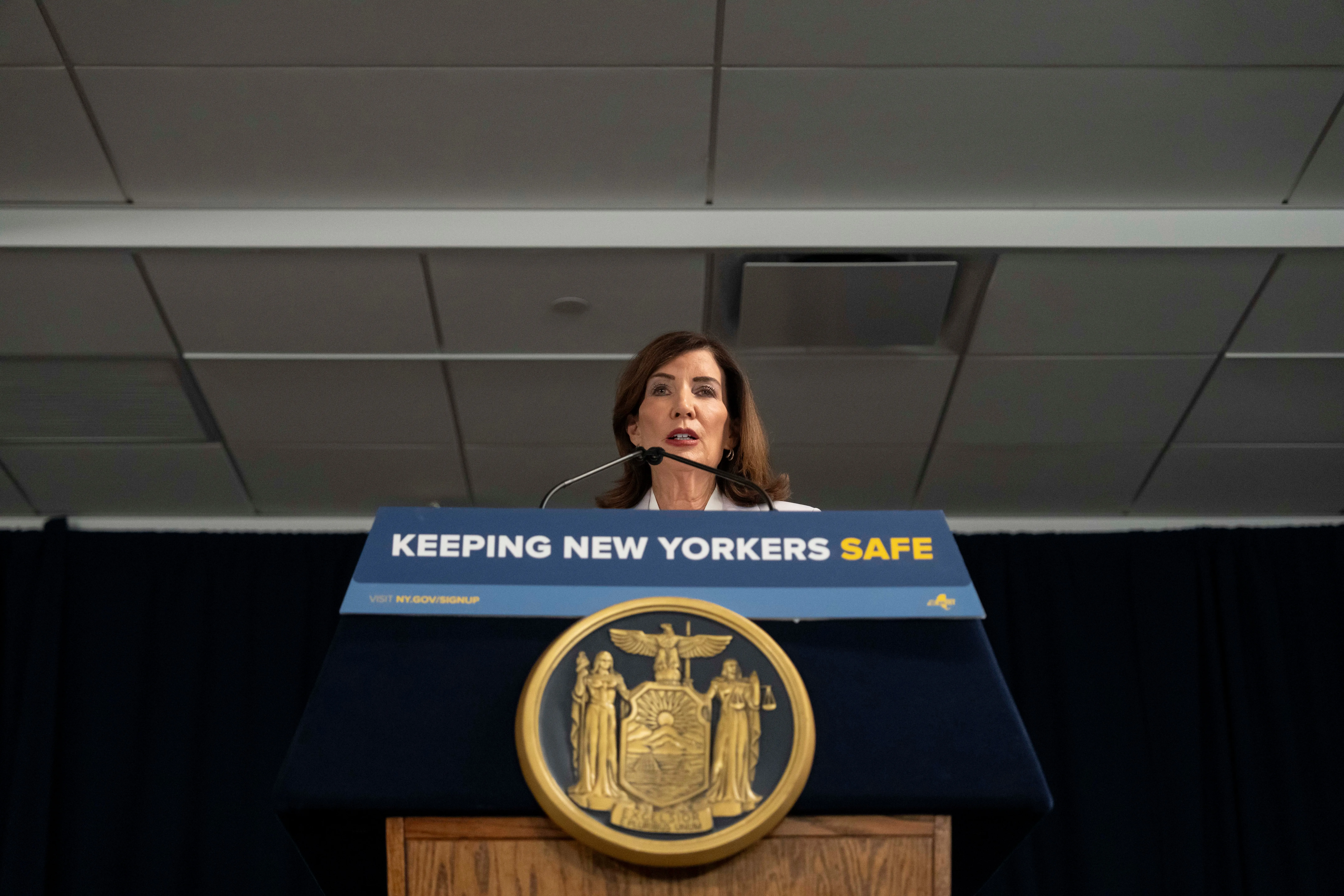
Are New Yorkers suffering from Stockholm Syndrome? That’s the only plausible explanation I can think of for why Gov. Kathy Hochul (D) is leading Republican challenger Bruce Blakeman in the polls.
Stockholm Syndrome describes how kidnapping victims sometimes develop an emotional bond with their abductors, and, as in the original case of a 1973 bank robbery and hostage situation in Sweden, defend and even admire their captors. Hochul may be benefitting from such a response today.
The latest Siena survey shows Hochul, a Democrat, ahead of Nassau County Executive Blakeman by 9 points, 50-41. True, her advantage is slipping slightly , but the same poll shows that 65 percent of New Yorkers expect the governor to be reelected in November.
This makes little sense, with the country so obsessed with “affordability” — why would New Yorkers even consider reelecting the current governor, who has arguably helped make the Empire State one of the least affordable places on earth? According to the World Population Review, New York is the fourth most expensive state in the union overall, also ranking fourth most costly for rents. New York is the 10th most expensive state for groceries, ninth priciest for health care and eighth most expensive for transportation.
In other words, New York is, for far too many people, anything but affordable. Voters should know: it doesn’t have to be this way. Hochul and her disgraced predecessor Andrew Cuomo have made a series of decisions that have driven costs up, but that could be reversed by a change in leadership.
Let’s start with energy. Yes, the war in Iran has inflated the cost of gasoline and other petroleum products, like diesel fuel , in recent months. But New Yorkers have been staring down rising charges for heating their home and filling their tanks since long before President Trump dropped the first bombs on Tehran.
Pandering to the green lobby, New York state officials decided to ban fracking in 2015 and prevent the construction of natural gas pipelines. This was a colossal error. Natural gas is one of America’s most abundant fossil fuels, and one of the cleanest. Hysteria over the possible harm that could come from fracking drove a knee-jerk decision that has caused long-term pain for New Yorkers. Many have likened the politically expedient choice to Hochul’s recent pause on data center construction , which will cost New Yorkers many jobs.
Neighboring Pennsylvania has enacted no such ban on fracking and currently ranks second in the nation in natural gas production , behind only Texas. That helps explain why New Yorkers pay on average $98 per month to heat their homes while the residents of Pennsylvania only shell out $82 every month.
It isn’t just natural gas prices that are putting the screws to New Yorkers. Electricity prices, at 29 cents per kilowatt hour in June, are also through the roof. That compares with 22 cents in Pennsylvania and, for reference, 15 cents in Florida . The suffocating expense of electricity isn’t due to higher feedstock costs, though that plays a role; it also reflects the damaging impact of New York’s push to cut greenhouse emissions, a move Hochul is trying desperately to reverse.
In 2019 New York legislators passed the Climate Leadership and Community Protection Act , meant to reduce emissions by 40 percent from 1990 levels and by 85 percent by 2050. The law also demanded the state switch to 100 percent zero-emission electricity by 2040 . None of these targets could be met without enacting a cap-and-trade program that Hochul claimed would cost New York families more than $4,000 per year by 2031. Not surprisingly, Hochul is moving to postpone these requirements .
It isn’t just energy that has been mishandled in New York. Consider housing. According to an analysis by New York’s own state controller, the Empire State’s housing cost burden relative to income ranks third in the country . New York City rents are among the highest in the nation and continue to climb, despite Mayor Zohran Mamdani’s campaign promises to bring them down. Rents in Manhattan have jumped 10 percent over the last year, reaching an all-time high.
Of course, all prices are subject to the laws of supply and demand, including housing. Cumbersome regulations drive building costs in New York to the highest in the entire world, restricting supply. It costs on average $211 per square foot to build in New York, compared to $160 in Florida, even as the Sunshine State is experiencing a once-in-a-lifetime building boom.
Why are all these comparisons so damaging for New York? According to a report from the nonpartisan Citizens Budget Commission out earlier this year, “New York’s business environment is already challenging, ranking the 10th worst state for starting small businesses, 3rd slowest in average growth in small businesses, and the 2nd most regulated state in the nation.” Those regulations translate into higher costs, which, along with sky-high taxes, get passed along to consumers.
Given that affordability is currently voters’ No.1 issue, how can anyone reelect a governor who has delivered high prices and appears determined to continue along the same path? Hochul knows she’s vulnerable on this score. That’s why she’s trying to hoodwink voters by sending payments to help defray soaring utility costs to low- and mid-level income households, right before the election. Some would call that bribery.
Those checks may please some voters, but they should know that New York cannot afford those payments. As wealthy residents and businesses continue to leave the state, the burden of paying for those handouts will fall on the people who remain, either through direct taxation or ever-higher business taxes.
Spending in New York is out of control, and Hochul is doing nothing to rein it in. But you can’t run a scam forever. Let’s hope time runs out on the governor this November.
Liz Peek is a former partner of major bracket Wall Street firm Wertheim and Company.
Topics in this story
Gathered from external sources. Rights to this text belong to whoever originally published it.