Trump’s antitrust threat to NBC, CBS, ABC, CNN and Fox News: What to know
The Department of Justice (DOJ) took many by surprise when it said over the weekend it would investigate the country’s top television networks on antitrust grounds over a boycott the TV networks carried out last month in response to President Trump’s ban of three news outlets from the White House. The announcement came as…
The Department of Justice (DOJ) took many by surprise when it said over the weekend it would investigate the country’s top television networks on antitrust grounds over a boycott the TV networks carried out last month in response to President Trump’s ban of three news outlets from the White House.
The announcement came as a federal judge is weighing the legality of an effort by the West Wing to keep CNN, one of the networks targeted by Trump’s ban, from carrying out its duties in the press pool rotation.
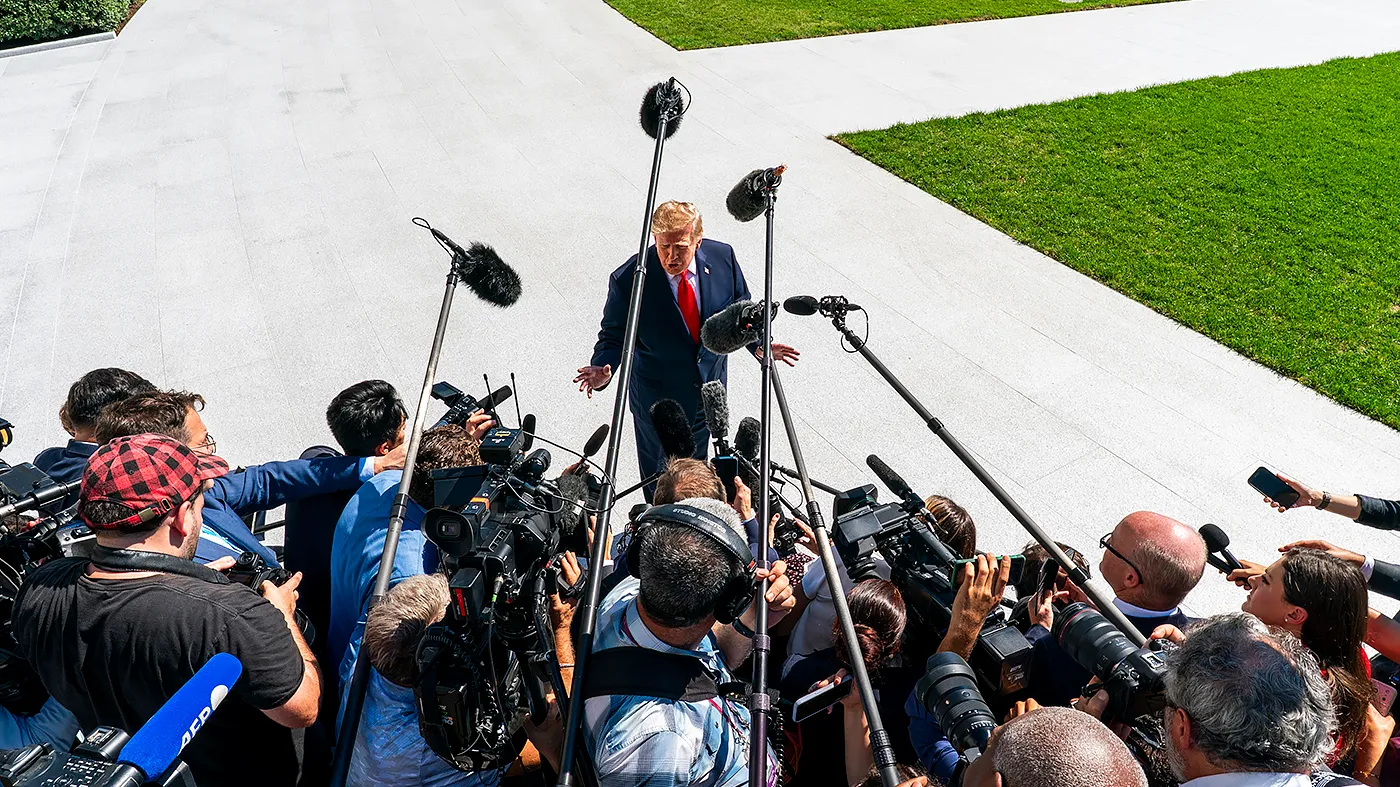
The pool is a rotating group of reporters that travels with and covers the president. The television pool includes a broadcast shared among the networks.
The episode is being seen as a major escalation in Trump’s ongoing war with the national press corps and underscores his continued effort to push back on independent reporting of news organizations.
Here’s what to know about the Trump administration’s latest salvo against the media.
The DOJ is probing whether the five major TV networks — NBC, ABC, CBS, CNN and Fox News — had violated federal antitrust law by boycotting their duties working together to pool coverage of the president.
The five networks briefly stopped providing pool coverage of Trump’s daily activities after he included one of its member outlets, CNN, in a ban of three news organizations from White House grounds.
Despite a federal judge ordering the ban lifted two weeks later, the White House has continued to keep CNN from carrying out pool duties.
The boycott by the major TV networks was seen as an act of solidarity with CNN. The networks said in a joint statement at the time that “no administration should restrict a news organization because it objects to its reporting.”
Trump’s DOJ argues it could be a violation of the Sherman Antitrust Act, a law passed more than 100 years ago designed to stop monopolies in major American businesses and protect competition.
A DOJ spokesperson in a statement called the decision to hold back pool coverage a “group boycott among commercial competitors” and said the department was “simply investigating to determine whether these news organizations have violated the antitrust laws.”
Pooling audio and video footage of the president is a long-standing practice in the national media, adhered to in part as a cost saving measure that allows for networks to take turns traveling with the president and disseminating their coverage to dozens of other media outlets, including local stations and smaller publications.
Probe fuels tension between West Wing, journalists
Tensions between the West Wing and media covering the White House have been festering for weeks.
Trump administration officials have argued journalists do not have a First Amendment right to access certain White House spaces such as the Oval Office and Air Force One.
It’s a theory that underpins the West Wing’s efforts against CNN and was also used to punish The Associated Press last year over the wire service’s refusal to refer to the body of water south of the United States as the “Gulf of America.”
After a federal judge issued an order temporarily lifting the White House’s ban on the three outlets — CNN, MS NOW and Politico — pool coverage by the networks resumed.
There have been two exceptions so far: both when it was CNN’s turn to travel with the president and journalists from the outlet were blocked from doing so by West Wing staff.
The president has accused each of the networks of publishing “fake news” about his administration — news that he argues endangers national security.
Trump has called out reporters from the outlets by name and said repeatedly that he has a “right” to “clear out the fake news,” despite the judge’s ruling.
U.S. District Judge Timothy Kelly, a Trump appointee, is slated to rule on the First Amendment issue related to pool coverage specifically this week.
Press freedom, antitrust experts slam DOJ probe
A growing number of experts on antitrust law and press freedom advocates are casting doubt on the veracity of the DOJ’s move to probe the networks over their temporary boycott.
Bringing an antitrust case against media outlets protected by the First Amendment could be on shaky legal ground, these voices say.
“They would have to show the collective action of these networks is being done for a commercial advantage, and I just don’t see it here,” William Kovacic, former chair of the Federal Trade Commission (FTC), told The Hill on Monday.
Holding back pool coverage of the president, Kovacic said, came out of “genuine concern about the coverage of the news. And that’s right in the center of the First Amendment bullseye.”
“It’s not like they’re trying to get better advertising rates or more subscribers or achieve measurable economic advantage,” the former FTC chair added. “I see it as truly an expression of opposition to an effort by the government to control the news.”
Others suggested it is unlikely the DOJ takes any action against the networks in court.
“Harming Trump’s ego or his craving for attention is not a competitive harm redressable through antitrust law,” said Seth Stern, head of advocacy at Freedom of the Press Foundation. “I don’t know whether they care so much if they lose in court. They’re throwing spaghetti at the wall and hoping something sticks.”
Judge set to rule on First Amendment protections for TV poolers
Kelly’s temporary injunction lifting the ban on CNN, MS NOW and Politico is set to expire Tuesday, meaning the Trump administration could feasibly keep the outlets from the White House grounds again if the judge takes no further action.
The judge initially ruled the government had violated the due process rights of the three outlets and seemed skeptical of the Trump administration’s argument that media companies had endangered national security.
Trump has attacked Kelly in the past, calling him “totally disloyal” and saying the judge would “probably” rule against him. The DOJ is expected to appeal any ruling Kelly makes on the First Amendment issue relating to press access.
Some observers say the DOJ’s probe is a sign the boycott responding to the ban got under the president’s skin and feeds into a political game Trump has been playing against the media for years.
“Trump has spent all this time telling everyone how much he hates the press and wishes they would go away, so you think he would say good riddance if they decided not to cover him,” said Stern, the press freedom attorney. “But apparently that spooked him that the news outlets were able to shut off his megaphone for a few days. It looks like he ended up missing the press more than he thought he would.”
Gathered from external sources. Rights to this text belong to whoever originally published it.