Hamilton holds slight lead over Marshall in Kansas Senate contest: Poll
Democrat Adam Hamilton is narrowly leading Republican Roger Marshall in the Kansas Senate race, according to a new poll. In the Emerson College Polling poll, 48.7 percent of respondents said they would cast their ballot or have already cast their ballot for Hamilton, while 45.2 percent said the same of Marshall. A Libertarian candidate garnered…
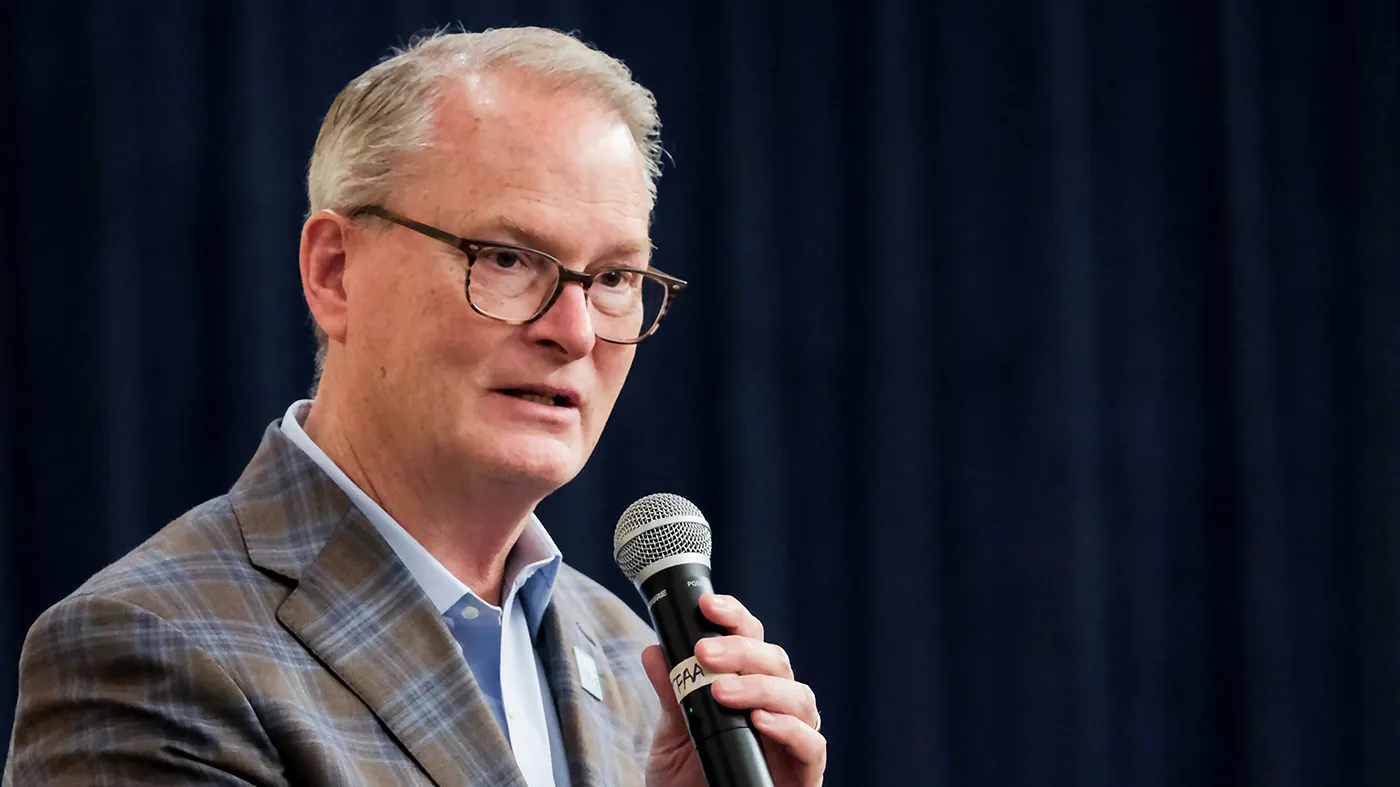
Democrat Adam Hamilton is narrowly leading Republican Roger Marshall in the Kansas Senate race, according to a new poll.
In the Emerson College Polling poll, 48.7 percent of respondents said they would cast their ballot or have already cast their ballot for Hamilton, while 45.2 percent said the same of Marshall. A Libertarian candidate garnered 2.9 percent support.
The credibility interval for the poll, comparable to a margin of error, is 3.5 points.
Hamilton’s lead as a Democrat in Kansas is notable, with the state having a reliably red history. Kansas hasn’t voted for a Democrat for president since the mid-1960s . The state also hasn’t elected a Democrat for Senate since the 1930s .
But the GOP is facing political headwinds this cycle in the form of the unpopular war in Iran, President Trump’s slumping approval ratings and concerns about the cost of living. Amid the war, the Strait of Hormuz, a key waterway for the oil industry, has been closed, driving up energy costs.
In Kansas, a state with a notable agriculture sector, the price of diesel has risen from about $3.46 per gallon last year to about $6.05 per gallon as of Thursday afternoon, according to AAA. And the price of a regular gallon of gas in the state was at about $3.94, up from about $2.72 last year.
Both the nonpartisan election handicapper Cook Political Report and Decision Desk HQ rate the Hamilton-Marshall race as a “toss-up.”
In the Emerson College poll, 51 percent of respondents said they were against Trump’s job performance, while 44.9 percent were for it and 4.1 percent did not have an opinion.
The Emerson College poll took place from Oct. 26 to 28 and featured 800 likely voters in Kansas.
Topics in this story
Gathered from external sources. Rights to this text belong to whoever originally published it.