Appeals court denies Trump administration’s mail ballot restrictions
A federal appeals court on Thursday upheld a block on the Trump administration’s restrictions on mail-in voting, as the Supreme Court considers the case. Three judges on the U.S. Court of Appeals for the 1st Circuit concurred with U.S. District Judge Indira Talwani, who last week blocked the U.S. Postal Service from implementing President Trump’s…
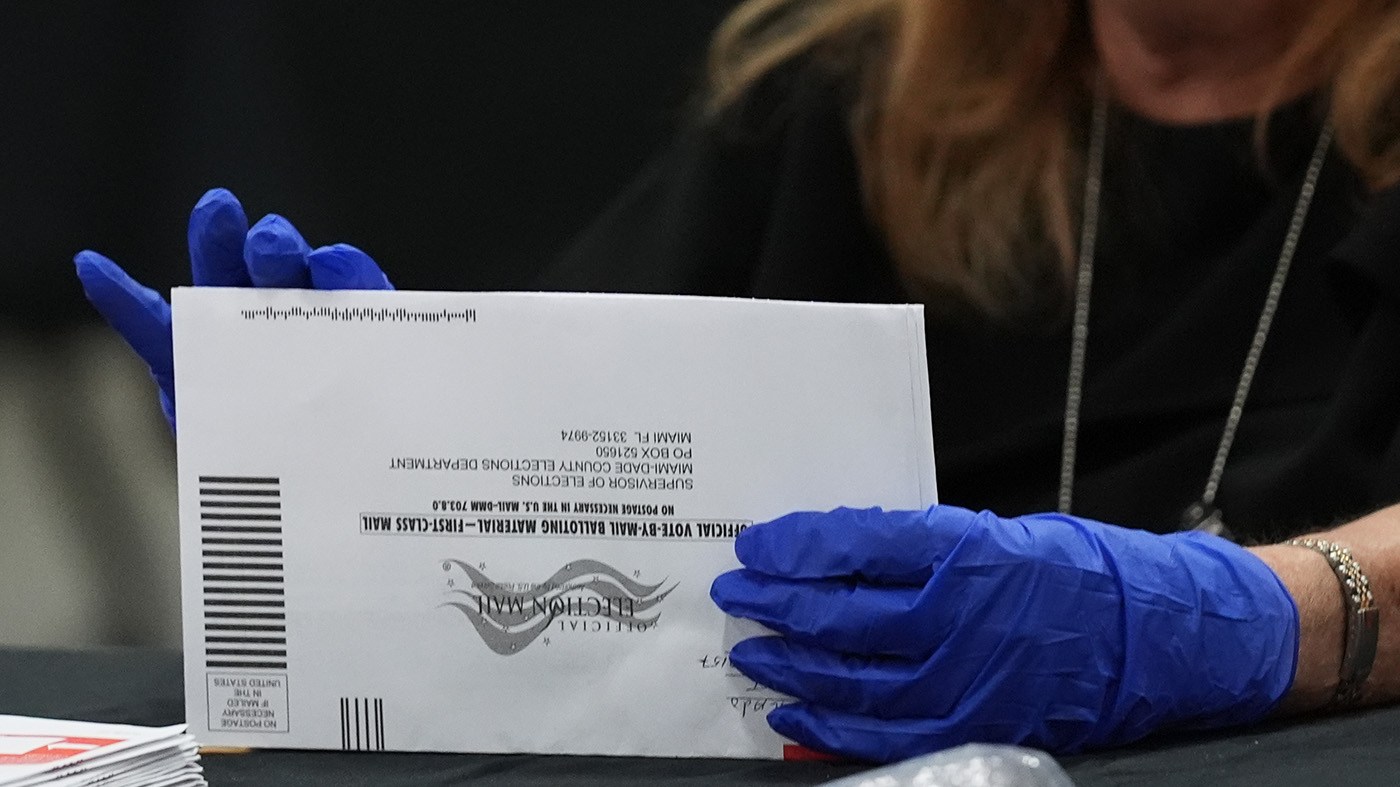
A federal appeals court on Thursday upheld a block on the Trump administration’s restrictions on mail-in voting, as the Supreme Court considers the case.
Three judges on the U.S. Court of Appeals for the 1st Circuit concurred with U.S. District Judge Indira Talwani, who last week blocked the U.S. Postal Service from implementing President Trump’s executive order on mail-in ballots ahead of the November midterms.
That executive order , which Trump signed in the spring, instructed the service to send mail-in ballots only to residents of states that have submitted a list of eligible voters to the administration.
Despite having voted by mail himself, the president has long claimed the practice is rife with fraud, without providing substantive evidence. In blocking Trump’s order last Friday, Talwani wrote there was “no evidence relating to fraudulent mail voting” to support the implementation of the Postal Service’s directive.
Judges Seth Aframe, Gustavo Gelpí Jr. and Julie Rikelman of the 1st Circuit Court agreed with that assessment, writing, “There is no record evidence of past fraud or a likelihood of impending fraud related to” the upcoming midterms.
“Thus, we see no obvious error in the district court’s conclusion that allowing this Final Rule to be effective for the soon-arriving November 3 election will likely result in the disenfranchisement of millions of voters across the country while providing minimal — if any — gains in combating voter fraud,” the judges, all appointees of former President Biden, wrote in a nine-page order .
Talwani, an appointee of former President Obama, has blocked Trump’s order three times during litigation. The Supreme Court overturned her initial block on Aug. 24, ruling Talwani had no authority to rule on a suit Democratic-led states brought against the order before the Postal Service implemented it.
Days later, Talwani barred the administration from going ahead with the mail-in voting restrictions for at least two weeks, ruling the group of blue states and voting rights organizations were likely to succeed in their claims that the policy was unconstitutional.
That was far from the end of the dizzying legal fight over Trump’s executive order. The Department of Justice (DOJ) on Sept. 3 asked the Supreme Court to weigh in on Talwani’s two-week block.
Before the justices could rule on the DOJ’s request, Talwani blocked the Postal Service from implementing the president’s order for a third time on Friday. That led to Solicitor General D. John Sauer sending an updated request to the Supreme Court on Sunday.
In a 40-page emergency application , Sauer argued the administration is likely to succeed on the merits of the cases concerning the policy.
“The Rule ensures that States remain responsible for determining voter eligibility and eligibility to vote by mail, and it does not dictate ballot content, mailing or receipt deadlines, or ballot-counting procedures,” he wrote.
The Supreme Court, which is on recess, will decide the case in an expedited fashion. But complicating matters is the fact that officials in Delaware and North Carolina, two of the states that sued the administration, have already begun mailing ballots to residents.
Seven Republican state election officials have also urged the justices to prevent the administration from implementing the order ahead of Election Day.
In a brief those states and other local election overseers submitted to the court on Wednesday, the officials said the work necessary to implement the Postal Service’s policy “cannot be responsibly accomplished” before the midterms.
Topics in this story
Gathered from external sources. Rights to this text belong to whoever originally published it.