Trump faces down beef backlash. Will import plan pay off?
President Trump is pushing ahead with his plan to import foreign beef as a way to reduce prices for Americans, despite the backlash from cattle farmers and Republicans whose states would be most be most affected. In an apparent effort to soften the blow, Trump signed executive orders Friday, including one that allows ranchers and…
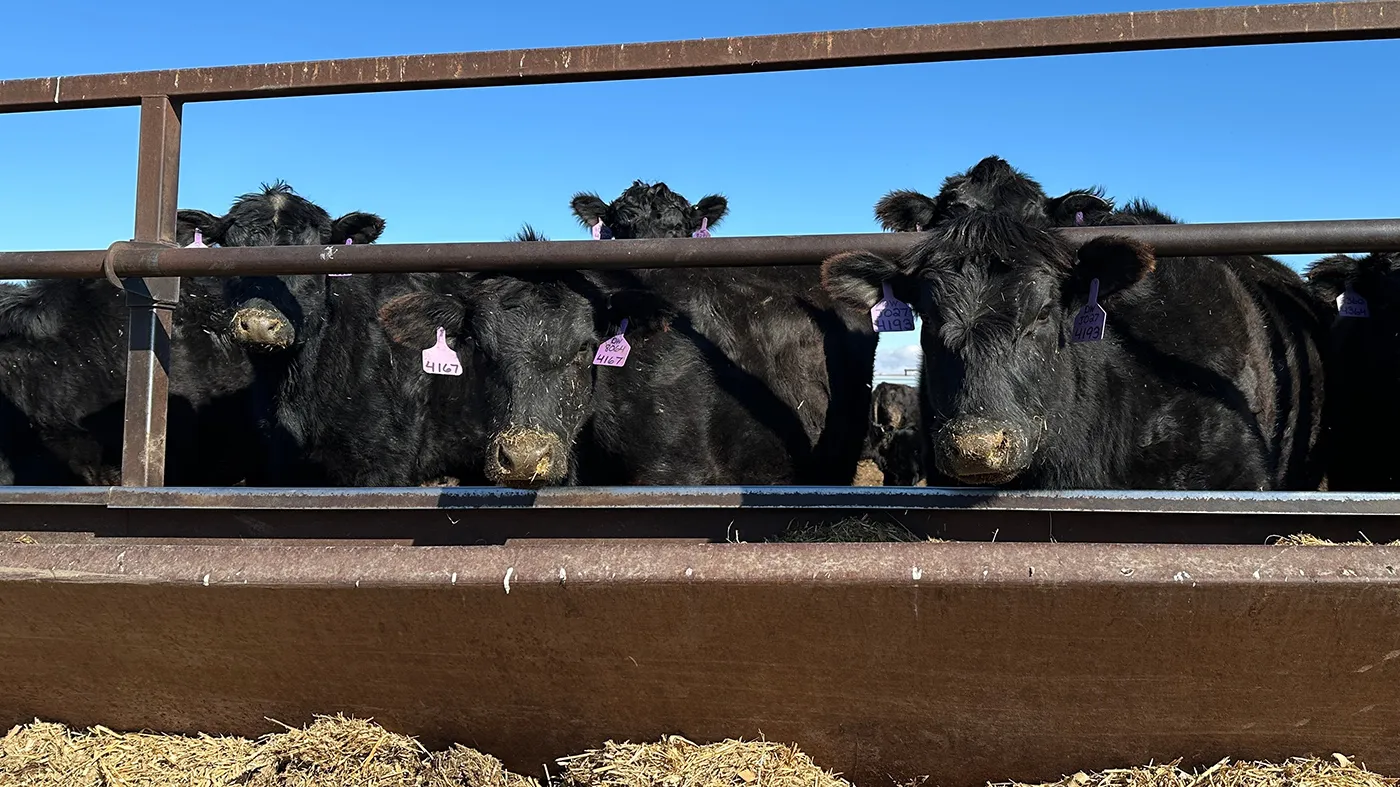
President Trump is pushing ahead with his plan to import foreign beef as a way to reduce prices for Americans, despite the backlash from cattle farmers and Republicans whose states would be most be most affected.
In an apparent effort to soften the blow, Trump signed executive orders Friday, including one that allows ranchers and farmers to process and package their own products, and another that promotes country-of-origin labeling across all foreign beef, which would require congressional action.
Justin Tupper, president of the United States Cattlemen’s Association, said it appreciated the new orders but remained “cautious on what comes next.”
Following the signings in the Oval Office, Trump sought to play down the impact of his beef import plan, telling reporters, “We’re doing it in a very limited fashion because our ranchers can handle it,” adding, “Our ranchers want the prices to be down too.”
When announcing the move last month to import 300,000 metric tons of beef without tariffs for 90 days, Trump said the beef would be sold at 25 percent below current market prices. He revealed for the first time Friday the beef would be coming primarily from Brazil and Argentina.
Those critical of the move say it will barely move the needle on Americans’ cost-of-living concerns, while forcing a key part of Trump’s base to pay a heavy price.
“Trump is right to address the issue of beef prices but stepped in it in doing so in a way that parts of his base are going to react to,” said Doug Heye, a longtime GOP strategist.
“The administration — and Trump in particular — need to be spending all their efforts on lowering prices across the board, including the latest cost driver, Iran,” he added.
Glynn Tonsor, an assistant professor in the Kansas State University Department of Agricultural Economics, said the odds of this deal lowering prices and helping ranchers “are about zero.”
“If there’s something that reduces beef prices for consumers, by definition, that reduces the dollars going back into the industry, because the price clearing the market for retail beef is lower, and therefore one has to pause and say, is that good for producers?” he said. “So, there’s a world where one or the other might happen, but I don’t see any world where both could happen out of the same announcement.”
The 300,000 metric ton figure only represents about a 2 percent increase in beef supply, Tonsor noted.
“I’m on record saying it’ll have very, very small, if any, impact on the price that consumers pay for beef,” he said.
Beef prices have been soaring across the country. The average price of 100 percent ground beef per pound in the U.S. is roughly $6.89, according to U.S. Bureau of Labor Statistics data shared by the Federal Reserve Bank of St. Louis .
The prices have gone up because the U.S. is raising record-low cattle numbers due to several factors, including droughts and rising operational costs, all the while demand remains high.
Data from the Department of Agriculture showed that the U.S started with 86.2 million cattle at the beginning of the year, the lowest cattle inventory since 1951 .
Affordability, meanwhile, remains a top issue for voters ahead of the midterms. Trump captured 62 percent of the rural vote in 2024, but his approval among that voter group has fallen from July to August, according to polls done by ActiVote .
The cattle industry and GOP lawmakers argue that lowering prices for Americans shouldn’t come at the cost of America’s ranchers.
“While America’s cattle producers share the goal of keeping groceries affordable for consumers, flooding the market with government-subsidized, below-market beef is not the way to rebuild the American cattle herd,” Colin Woodall, CEO of the National Cattlemen’s Beef Association, said in a statement.
“This is a critical time of year for cattle producers, as we approach the season where they are making decisions regarding their herds,” he added, saying the import plan throws “cold water” on the investment necessary to expand herds.
David Anderson, a professor and extension specialist in livestock and food product marketing at Texas A&M University, said the markets should have been left to work themselves out.
“You have to have cattle producers that are profitable to get that market signal to expand, to increase beef production which then brings down prices,” Anderson said. “And so, we finally have prices that are profitable and something like this gets announced.”
He said it comes at a bad time when ranchers are making decisions about their herds.
“This was just another announcement, another thing hitting the market to drive down prices,” he said. “Lowering prices reduces that incentive to expand.”
Several Republican lawmakers have spoken out too. Sens. Chuck Grassley (Iowa) and Jerry Moran (Kan.), Rep. Adrian Smith (Neb.) and 50 others wrote a letter to Trump urging him to prioritize policies that would help ranchers.
“Cattle markets are cyclical, and ranchers use the upswings to prepare for the inevitable downturn,” the lawmakers wrote. “Any intervention in the natural system, especially at a time when producers are making marketing decisions, threatens to pick winners and losers and undermine the long-term viability of family-owned cattle operations throughout the supply chain.”
A report from The Wall Street Journal earlier this past week said that Trump met with Joesley Batista, who shares control of JBS, the world’s largest meatpacker, in the Oval Office a day before he made the announcement.
The sources said that during the meeting, Batista lobbied Trump to drop the import tax as a way to mitigate costs of beef for consumers.
In response to the report, the White House said Trump’s “action to address a short-term supply crunch in the beef market was the result of a long policy planning and coordination process involving domestic stakeholders; this action was not done as the result of any one conversation.”
Brandon Scholz, a former Republican turned independent political analyst from Wisconsin, said Trump’s move gives a “false sense of hope to consumers … and then we’re going to start losing our producers and our growers.”
“I think he’s just putting out a false sense of security in front of the midterms,” Scholz said. “I simply can’t imagine that this is something that people are going to go to the voting booth and go, ‘You know, that was really great that Trump got us all that cheap beef.’”
Topics in this story
Gathered from external sources. Rights to this text belong to whoever originally published it.