Supreme Court hears major climate case
{beacon} Energy & Environment Energy & Environment The Big Story Justices appear unconvinced by oil arguments Several Supreme Court Justices appeared skeptical Monday of a request from oil companies to preemptively block a climate change lawsuit that could hold them liable for climate damages. © Greg Nash Many of the justices raised questions about…
Justices appear unconvinced by oil arguments
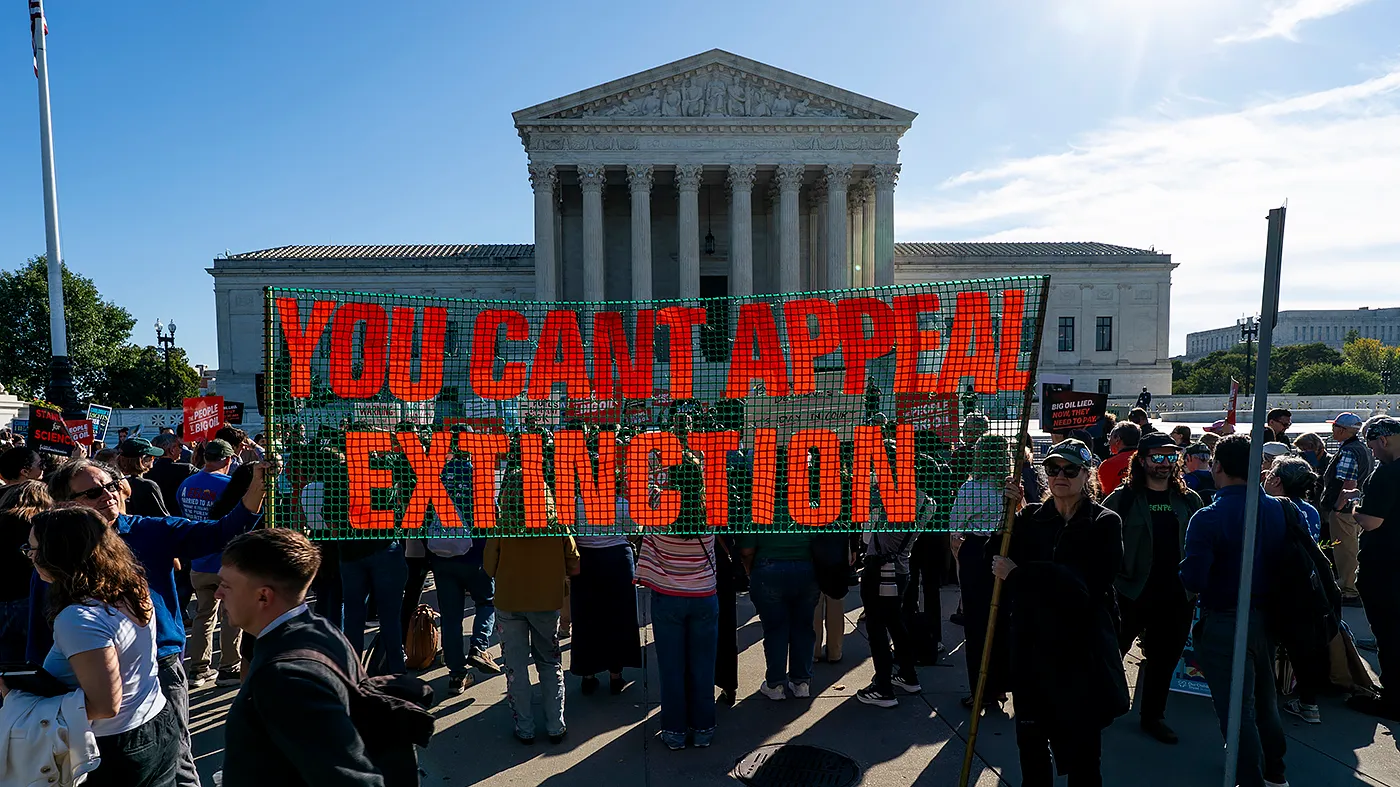
Several Supreme Court Justices appeared skeptical Monday of a request from oil companies to preemptively block a climate change lawsuit that could hold them liable for climate damages.
Many of the justices raised questions about the court’s ability to even take up the case at this time.
“A number of the discussions that you’ve had with my colleagues make me think that we’re really early in this case – that this is sort of premature from the standpoint of this court exercising its jurisdiction,” liberal Justice Ketanji Brown Jackson told Suncor Energy lawyer Kannon Shanmugam.
While Jackson’s skepticism is not necessarily a surprise, several of her conservative colleagues, namely Justices John Roberts and Neil Gorsuch, also asked tough questions of the fossil fuel firm and the Trump administration which backed it.
Suncor, alongside ExxonMobil, has asked the high court to toss a ruling from the Colorado Supreme Court that allowed a suit to proceed. The suit alleged that the energy companies misled the public about their products’ relationship to climate change and created a public nuisance.
The case could have implications for similar litigation around the nation, as states and localities have sued oil and other fossil fuel companies seeking compensation for damages they’ve suffered because of climate change.
The court could rule one of three ways: The justices could expressly block the case or expressly allow it to proceed, or they could rule that they don’t have jurisdiction at this point, which could allow the case to move forward, but could see the issue back at the high court at a later date.
Either of the latter two outcomes could be at least a partial win for the localities, as they would be able to move ahead with their case — at least in the short term.
Welcome to The Hill’s Energy & Environment newsletter, I’m Rachel Frazin — keeping you up to speed on the policies impacting everything from oil and gas to new supply chains.
Did someone forward you this newsletter? Subscribe here.
How policy will affect the energy and environment sectors now and in the future:
Forces of the Saudi-led coalition fighting in Yemen have recaptured several key areas around the strategic Bab el-Mandeb Strait from Iran-backed Houthi rebels, Yemeni officials said Monday, while the Houthis claimed attacks on Saudi oil facilities, airports and military bases as fighting escalated on Yemen’s western coast.
Seven of the world’s largest oil-exporting countries agreed Sunday to maintain their baseline production levels for November, as fuel prices remain elevated amid the Iran war.
News we’ve flagged from other outlets touching on energy issues, the environment and other topics :
State regulators to allow part of NextEra’s political past to be examined in Dominion merger case ( Virginia Mercury )
U.S. Energy secretary visits Ohio to announce $4.2B in nuclear power investments ( WSYX )
Key Republican senators say they were blindsided by Defense Secretary Pete Hegseth’s announced 20 percent reduction of the U.S. military’s general and admirals, and they’re voicing concerns about the lack of consultation with Congress and the possibility that qualified senior officers were sacked for political or ideological reasons. Read more
President Trump said Monday that reporters from The New York Times and other media outlets should be “arrested” over their coverage of his Saturday rally in Ohio. Read more
Topics in this story
Gathered from external sources. Rights to this text belong to whoever originally published it.