Catholic preschools’ lawyer sees a Supreme Court win
Watch The Gavel Live: Hill Insider members can join us live today at 3 p.m. EST as we talk with Nick Sansone, an attorney at Public Citizen leading the legal challenge to President Trump’s arch. Tune in! Nick Reaves thinks he just got his first win arguing before the Supreme Court. “I feel confident!” Reaves told The Gavel moments after…
Watch The Gavel Live: Hill Insider members can join us live today at 3 p.m. EST as we talk with Nick Sansone , an attorney at Public Citizen leading the legal challenge to President Trump’s arch. Tune in!
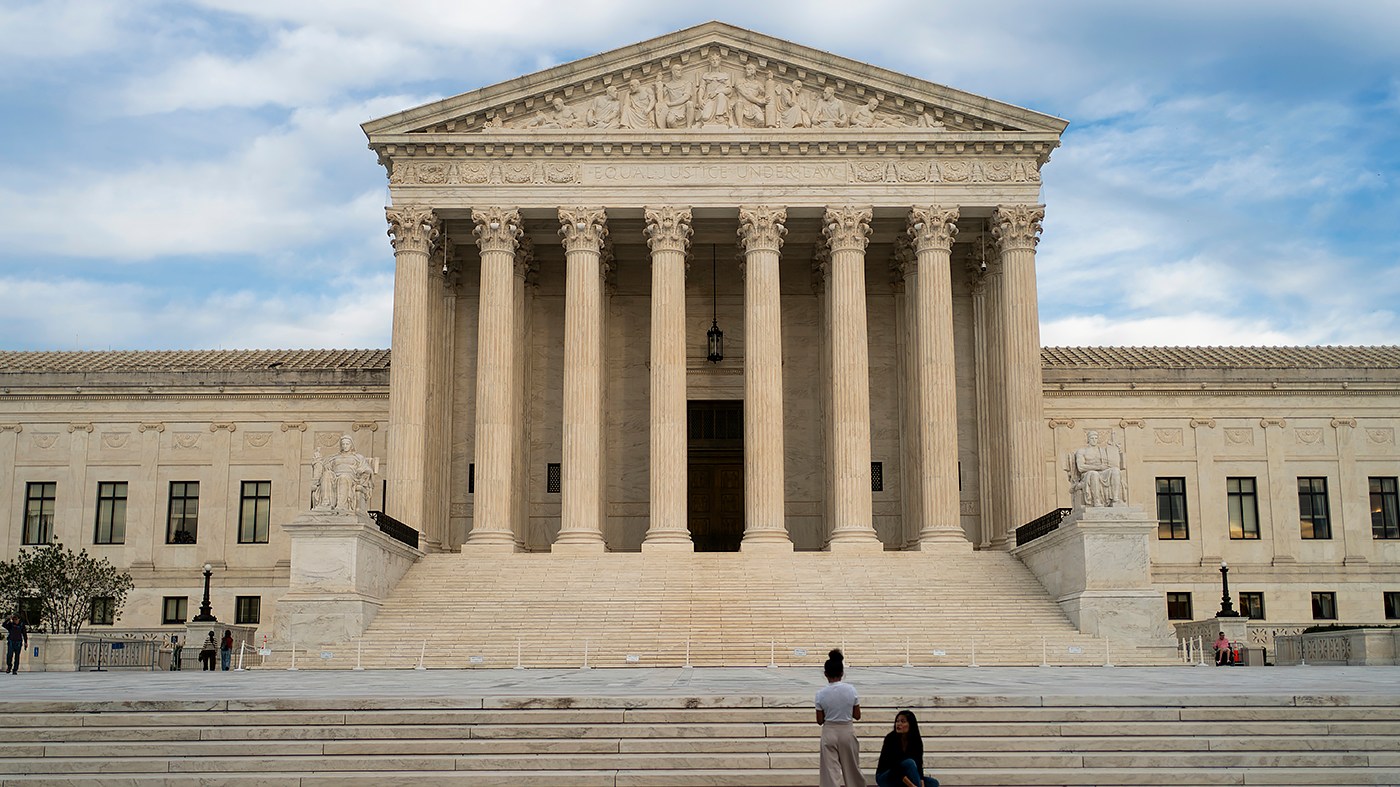
Nick Reaves thinks he just got his first win arguing before the Supreme Court.
“I feel confident!” Reaves told The Gavel moments after he stepped out of the courtroom for one of the biggest cases of the term.
The first-time Supreme Court oral advocate and his team at the Becket Fund for Religious Liberty represent Catholic parishes and parents in their fight for an exemption from a Colorado mandate that preschools must accept kids of same-sex couples if they want to receive public funds.
They argue the mandate violates the First Amendment.
“The headline from the other side is all about exclusion, but at the end of the day, that’s really not what’s actually happening on the ground,” Reaves said. “On the ground, this is about ensuring Catholic families can be equal participants in this program.”
Long before he stepped up to the lectern on Tuesday morning, many court watchers expected Reaves would walk away with a win at the Supreme Court. Still, as he appeared to garner sympathy with the court’s conservatives during the two-hour session, the contrasting pushback from the liberal justices was stark.
“Your rule is, like, not allowing our society to have all people live together,” said Justice Ketanji Brown Jackson .
Justice Elena Kagan looked up to the ceiling at one point, gesturing with her hands as she warned the legal rule the parishes and the Trump administration have requested would “put ourselves in the middle of” hot-button religious disputes that “could go on forever.” Justice Sonia Sotomayor flatly told Reaves he was asking for “a right to reject children.”
“If it’s a sincere religious exercise to exclude Blacks, this principle would permit the exclusion of those Black children?” she pressed.
The hypotheticals came as no surprise. The Catholic preschools have long pointed to how the court has long held racial classifications to exacting scrutiny. They say they’re asking for nothing new, and the warnings from the other side won’t actually become problems.
“The sky hasn’t fallen,” Reaves told us.
He noted critics voiced similar concerns when Becket convinced the Supreme Court to rule that cities can’t refuse to contract with a Catholic foster care group because it wouldn’t certify same-sex couples, a case named Fulton v. City of Philadelphia .
“I think it’s actually telling that you have a lot of the same amicus coming in this case saying the sky is going to fall,” Reaves said. “They said that seven years ago in Fulton, and the sky didn’t fall.”
In that case, three conservative justices — Clarence Thomas , Samuel Alito and Neil Gorsuch — were ready to go further than the majority and overrule a key 1990 precedent that has led courts to uphold laws that burden religious rights, if they are neutral and generally applicable.
So, the trio was expected to be friendly voices for Reaves’ argument. They were indeed.
Gorsuch, for instance, said he struggled to see the concerns voiced by the liberal justices that a win for the Catholic parishes would be the “end of the world.”
“That seems to me to be problematic to suggest, ‘oh, my goodness, it would be a sea change to do what we do in almost every case,” Gorsuch said.
Still, Reaves needs a majority of at least five.
If the liberal justices all vote against him, he can only afford to lose one vote from the other conservatives: Chief Justice John Roberts , Justice Brett Kavanaugh and Justice Amy Coney Barrett .
Kavanaugh told Colorado it could be a “win-win” if they back off their mandate. Barrett questioned whether same-sex couples had actually been turned away from a preschool. The most difficult questioning among that trio arguably came from Roberts, who began by wondering if there was a “significant difference” from the precedents Reaves relies on. Reaves didn’t seem too worried, particularly after the chief warned Colorado’s lawyer they seemed “quite anxious” to bury another past Supreme Court decision.
“I think he’s a good questioner. He asks both sides the hardest question,” Reaves told us.
Welcome to The Gavel, The Hill’s weekly newsletter unpacking the intersection of courts & politics from Zach Schonfeld and Sophie Brams. Email us tips at zschonfeld@thehill.com and sbrams@thehill.com . You can also reach out to us on X (@ZachASchonfeld and @sophiebrams) or Signal (zachschonfeld.48 and sbrams.32).
Judge probing DOJ conduct in golf course case: A federal judge is opening an investigation into whether the Trump administration may have lied to her in the ongoing litigation over Trump’s plan to overhaul the golf courses at East Potomac Park. U.S. District Judge Ana Reyes says she’ll conduct it herself or appoint a special master.
Case against ex-FBI officials dismissed: U.S. Magistrate Judge Zia Faruqui has dismissed a criminal complaint against two former FBI officials accused of lying to Congress about the bureau’s investigations into Hunter Biden’s laptop, finding no probable cause to support charges in what he cast as a political prosecution.
New Comey charges in limbo: U.S. District Judge Trevor McFadden is weighing former FBI Director James Comey’s request to have a third criminal case against him thrown out . Comey has not been indicted by a grand jury on the new charges, which allege that he disclosed sensitive national defense information to the media a decade ago.
Defamation suit against Wall Street Journal tossed, again: U.S. District Judge Darrin Gayles of Miami has permanently dismissed Trump’s defamation lawsuit against the Wall Street Journal for publishing a story about an alleged letter the president sent Jeffrey Epstein for his 50 th birthday. It’s the second time a judge found Trump failed to prove the newspaper acted with “actual malice.”
SCOTUS sets January arguments : The Supreme Court has revealed which cases it will hear when the new year begins in January. A civil contempt fight between Apple and a major video game developer, a trademark strength dispute involving PepsiCo, the constitutionality of six-person juries and more are on the calendar.
Another Dan Sullivan: The Supreme Court admitted “Daniel J. Sullivan” to the bar on Election Day. No, not that one. And no, not that one either. Yes, it was yet a third Dan Sullivan. It gave both Justice Brett Kavanaugh and Justice Elena Kagan a laugh.
No show: A panel of judges waited 30 minutes for Ada Brown, a federal judge in the Northern District of Texas who was suspended for not agreeing to her colleagues’ demands to undergo mental fitness testing, to show up for a hearing last Friday focused on allegations that she made racist remarks from the bench and abandoned her post. She never did. Read the transcript .
Polls are closed. Election litigation not so much.
So far, the Trump administration has faced a string of losses.
The Supreme Court on Monday rejected the Justice Department’s (DOJ) emergency request to set aside 20,000 mail ballots it says were sent to likely noncitizens in California.
A lawsuit seeking to block Alaska from certifying the results of the Senate race if the Republican incumbent loses was also thrown out . And a federal judge in D.C. ruled that the government’s attempts to “impose new procedures for counting ballots, through threats of criminal prosecution of state election officials” are unconstitutional.
Ahead of the election, the Trump administration shifted its strategy.
“We are deploying election monitors in California and across the country to observe compliance with federal law, charging election fraudsters daily, and will pursue other legal avenues to ensure that only eligible American citizens vote,” a DOJ spokesperson told The Gavel on Tuesday morning.
The Justice Department later confirmed it had sent about 1,000 election monitors to all 50 states for the first time to watch the polls. Despite fears, their presence seemingly caused little disruption, with watchdogs noting only isolated incidents of “concerning behavior” in a few states that were quickly resolved.
The Trump administration’s demands have largely focused on claims of noncitizen voting.
It sent letters, including to California and Washington, that requested states’ check their voter rolls for potential ineligible voters, sequester ballots suspected to be cast by noncitizens and not count them until citizenship status can be verified.
States refused and courts agreed. So, the ballots are being counted.
What followed on Tuesday was a massive blue wave that saw Democrats flip control of both the House and Senate in a stunning rebuke of President Trump.
More litigation could arise, as states now prepare to certify their elections in the weeks ahead.
“We’ve seen even before election day, this administration making wild, false claims to try to sow doubt in the election results before anyone had even cast a ballot, and we expect that the administration and many of their allies will continue to do so in the coming days,” Andrew Walchuk, the senior policy director and counsel for voting and fair representation at Common Cause said on Tuesday night. “We are prepared to respond.”
But the shift in power in Congress will make it more difficult for Republicans to challenge the results, and late Tuesday night, Trump told the New York Times he was “absolutely willing” to accept them.
It had been a mixed bag for the administration so far in the courts.
The 9 th U.S. Circuit Court of Appeals lifted a lower court ruling that barred the Justice Department from threatening election officials with criminal prosecution if its ballot demands aren’t met. The court agreed 6-5 to reinstate a divided panel’s ruling that described the DOJ’s investigative steps as “core Executive functions.”
And remember, that’s the same court where a divided three-judge panel had sided against the administration in the ballot segregation phase.
Chief Judge Mary Marguia , an Obama appointee, wrote in a dissenting opinion on the election workers case that those two rulings “cannot be reconciled” because the executive branch has “no right” to dictate state election procedures.
The Trump administration’s demand is based on lists comparing voter rolls with federal immigration records. It claims that tens of thousands of noncitizens are registered to vote in California alone, but opponents have questioned the veracity of that list, and lower court judges have found it isn’t credible or reliable.
An outside analysis conducted by the Coalition for Humane Immigrant Rights — which is actively suing the administration — found that more than 40 percent of the names flagged as noncitizens on DOJ’s list were not registered. The department pushed for criminal contempt sanctions, accusing the group of “political grandstanding” in a way that has nothing to do with its legal standing.
Chief Judge James Boasberg , an Obama appointee who sits on the federal bench in D.C., on Tuesday rejected the DOJ’s arguments that the immigration group violated his order.
Facing setbacks, federal prosecutors have instead turned their focus to pursuing individual criminal charges.
On Monday alone, the Justice Department announced charges against 63 individuals for illegal voting, fraudulent voter registration and related crimes. That brought its nine-week total to at least 195 noncitizens charged across 25 states, officials said, and the numbers have kept climbing in the days since.
“If you vote illegally in this country, and you are NOT eligible to vote, @DHSgov will find you, hunt you down, and you will be prosecuted to the fullest extent of the law,” Homeland Security Secretary Markwayne Mullin wrote Tuesday morning on the social platform X.
Petitions for the Supreme Court to take up cases we are keeping a close eye on this week…
Kidnapping with a car: Congress has limited police power. It has made kidnapping a federal offense by invoking its authority to regulate interstate commerce. So, the statute requires proof the defendant used a “means, facility, or instrumentality” of interstate commerce to qualify. After Alabama charged Derick Brown with murdering a 3-year-old girl, federal prosecutors brought a kidnapping charge against him. They say it qualifies because he was driving a car. Brown wants the Supreme Court to rule that it isn’t automatically a federal offense when an automobile was involved that isn’t proven to have crossed state lines. The case is Brown v. United States .
Alabama redistricting: The fate of Alabama’s congressional map for future election cycles is in the Supreme Court’s hands. In 2023, the justices struck down a design with only one majority-Black district. Republicans redesigned it, but their new version still doesn’t outright create a second district. They say that’s allowed, particularly after the Supreme Court narrowed the Voting Rights Act earlier this year. The court allowed Republicans to use their design for the midterms, but the ruling is technically temporary. Now, Alabama wants the court to effectively make it permanent by summarily reversing a lower ruling that remains on the books. The cases are Allen v. Caster , Allen v. Milligan and Allen v. Singleton.
The justices are also still sitting on several petitions we highlighted in previous editions:
The First Amendment challenge to California’s implicit bias requirement for medical education courses
Baseball legend Roberto Clemente’s sons’ fight against Puerto Rico officials
A case at the intersection of bankruptcy and arbitration law
Qualified immunity battles stemming from a Michigan police shooting and a Minnesota George Floyd protest
A thorny battle over a Louisiana city’s liability
A civil rights lawsuit against the Massachusetts Institute of Technology alleging antisemitism.
The Supreme Court will hear oral arguments in Guerrero v. Johnson , a case concerning when prisoners can file a second attempt to secure release via what is known as a habeas petition.
Daniel Alejandro Moreno-Gama , accused of throwing a Molotov cocktail at OpenAI CEO Sam Altman ‘s home in San Francisco in April, will appear in court for a preliminary hearing.
A status conference will be held in federal court in D.C. for Brian Cole Jr ., the man accused of planting pipe bombs outside the Democratic and Republican National Committee party headquarters on the eve of Jan. 6, 2021.
A federal judge in Rhode Island will hold a remote hearing to consider granting partial summary judgment in a case brought by Democratic state attorneys general challenging the attachment of immigration enforcement conditions on federal victim assistance grants.
A New York appeals court will hear oral arguments in Trump’s latest bid to overturn his conviction on 34 felony counts of falsifying business records for concealing payments to adult film actress Stormy Daniels.
A motion hearing will be held in Davidson County, Tenn., for a lawsuit challenging the constitutionality of the state’s lethal injection protocol that was brought over a year before the botched execution of death row inmate Christa Pike.
Justice Sonia Sotomayor will participate in a discussion on civics education with the CEO of iCivics, Louise Dubé , at an annual symposium hosted by the George Washington Presidential Library in Mount Vernon, Va.
The Supreme Court will release an orders list.
The Supreme Court will hear oral arguments in Neilsen v. Watanabe , a case deciding whether a federal prisoner can sue prison officials for monetary damages under the Bivens precedent for denying him adequate medical care, and Hoffmann v. WBI Energy Transmission, Inc. , which focuses on how just compensation is calculated when a private company conducts eminent domain under the Natural Gas Act.
The Supreme Court will hear oral arguments in Department of Labor v. Sun Valley Orchards, LLC , a case to determine whether the Labor Department can use in-house tribunals to fine employers who violate certain visa rules.
The 9 th U.S. Circuit Court of Appeals will hear oral arguments in the Justice Department’s appeal of a lower court order that blocked a ban on transgender troops in the military.
The Wall Street Journal’s Erin Mulvaney and Andrew Scurria : What Does the Weil Gotshal Implosion Mean for the Law-Firm Industry?
Topics in this story
Gathered from external sources. Rights to this text belong to whoever originally published it.