Lengthy deployments like the USS Lincoln’s hurt military mental health
Members of the military aren’t invincible.
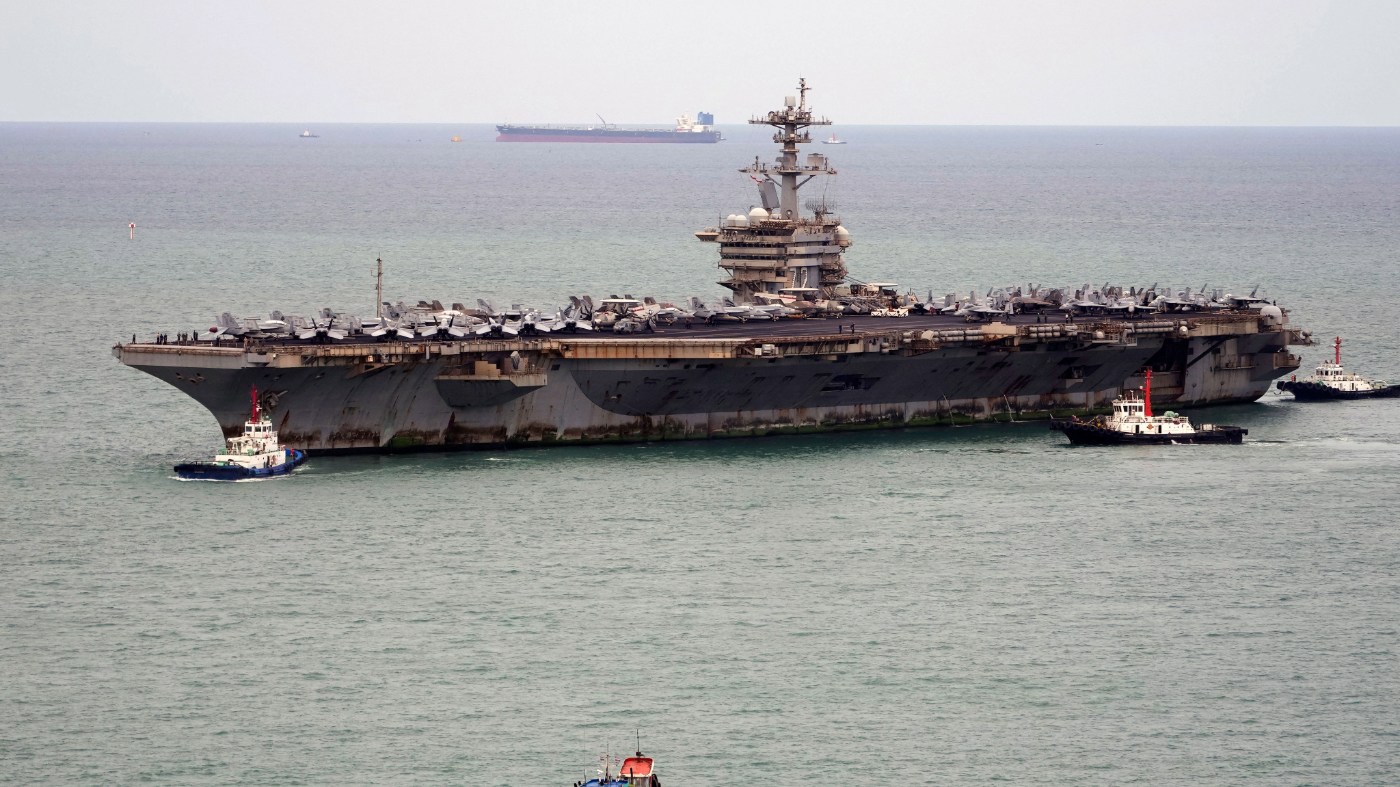
The USS Abraham Lincoln left San Diego last November for what was supposed to be a six-month deployment . Instead, the carrier went to sea for more than 250 days and was on pace for the second-longest deployment on record since the Vietnam War.
The title for the longest modern-era carrier deployment is held by the USS Gerald R. Ford, which spent 326 days at sea — a record set back in May.
The increasing frequency of these long missions raises a serious question: Is the U.S. government doing enough to support the brave men and women aboard these ships as they work tirelessly to protect America’s national security?
Those who have endured long deployments know firsthand the toll these prolonged missions can have on service members’ mental state. The USS Lincoln’s extended time away “can lead to serious mental health issues during deployment, upon return from it, or after completion of military service,” says John Stewart , a retired Air Force chief master sergeant.
Reports of poor conditions aboard these carriers are troubling. Last spring, during the USS Ford’s 10th month of deployment, a fire broke out on board that displaced 600 sailors from their beds. Many were forced to sleep on floors and tables throughout the ship.
According to family accounts of those aboard the USS Lincoln, reports of food shortages, a lack of supplies and broken plumbing have caused a worrisome drop in sailor morale. Worse, multiple sailors have reportedly tried to jump overboard from the USS Lincoln. This must be taken seriously, as facts show suicide is the number one cause of death among active-duty American military personnel.
These disturbing allegations demand a thorough investigation — which some members of Congress have requested . Yet it is unclear whether any inquiry will happen. Secretary of Defense Pete Hegseth has brushed aside claims about the deteriorating conditions aboard the USS Lincoln, saying they have been “completely misrepresented.”
President Trump, when asked about the extended length of the USS Lincoln’s mission, said the ship’s time at sea “ was not nearly long enough ,” suggesting future carrier deployments could be as long — or potentially longer — than the beleaguered ship’s recent assignment.
And the Pentagon chose to terminate the publisher and top editor at Stars and Stripes, the military publication that broke the story about the strenuous environment aboard the USS Lincoln.
Sen. Richard Blumenthal (D-Conn.) wrote to Secretary Hegseth, saying the Pentagon “owes” the sailors “not only adequate supplies, maintenance, and support during this deployment, but a sustainable force-generation model that does not rely on repeatedly extending sailors and ships to meet persistent operational demands.”
Other questions remain as to what the Pentagon is doing to proactively address the mental health of those impacted by these long carrier missions. The U.S. Navy and broader Armed Forces have worked to destigmatize mental health and encourage military members to seek help if they need it. But a deeply rooted cultural perception remains, and many of those in uniform still feel compelled to internalize their own personal struggles.
Toughing-it-out is the military mentality, and seeking help is often misperceived as a sign of weakness. A recent study found nearly 60 percent of veterans and military personnel who would otherwise benefit from mental health support avoid seeking treatment for fear of being judged or seen as unfit for service, among other factors. That misguided sentiment can discourage people from acknowledging problems until it’s too late. We must dismantle this outdated mindset.
Members of the military aren’t invincible. They’re not incapable of feeling the effects of stress, loneliness or exhaustion. And when these challenges are too difficult for them to bear, the Pentagon must establish a culture where consulting professional help is considered an act of valor, not a lack of strength.
Lengthy deployments are sometimes unavoidable. Military operations are fluid, and situations arise that often require soldiers to persevere through difficult circumstances. But when they occur, America’s service members must have confidence that they will have access to essentials — food, water, hygiene products and functional plumbing — so that they can perform their duties to the best of their abilities.
Hegseth’s refusal to even acknowledge the taxing conditions aboard the USS Lincoln is a failure in leadership. It also stands in stark contrast to what he has told recruits and their families, where he has promised that he would “have their back.”
We owe a massive debt to the men and women who proudly defend our country. Having their back requires more than pledging commitment and expressing thanks for their service.
It demands our elected leaders have the courage to acknowledge when we have made mistakes, the conviction to put corrective measures in place so we don’t repeat them and the fortitude to provide soldiers the care and supplies they need to do their job effectively.
America’s service members deserve nothing less.
Lyndon Haviland, DrPH, MPH, is a distinguished scholar at the CUNY School of Public Health and Health Policy.
Topics in this story
Gathered from external sources. Rights to this text belong to whoever originally published it.