Family planning in the US should also support egg freezing
Our programs are designed to assist when women want to restrict their childbearing but offer no support when women want to have children.
Last month, Rep. Alexandria Ocasio-Cortez (D-N.Y.) brought a lot of attention to the plight of women who hope to have children later in life because they are at a point in their careers when they are not ready to be mothers, have not found a partner or, perhaps, because they are not ready financially or emotionally.
Ocasio-Cortez is freezing her eggs and has posted about the experience on Instagram. She has been praised and criticized for sharing her experience. But whether one thinks it appropriate or not, her account demonstrates the importance of this option for many women who hope to have children at some point in the future.
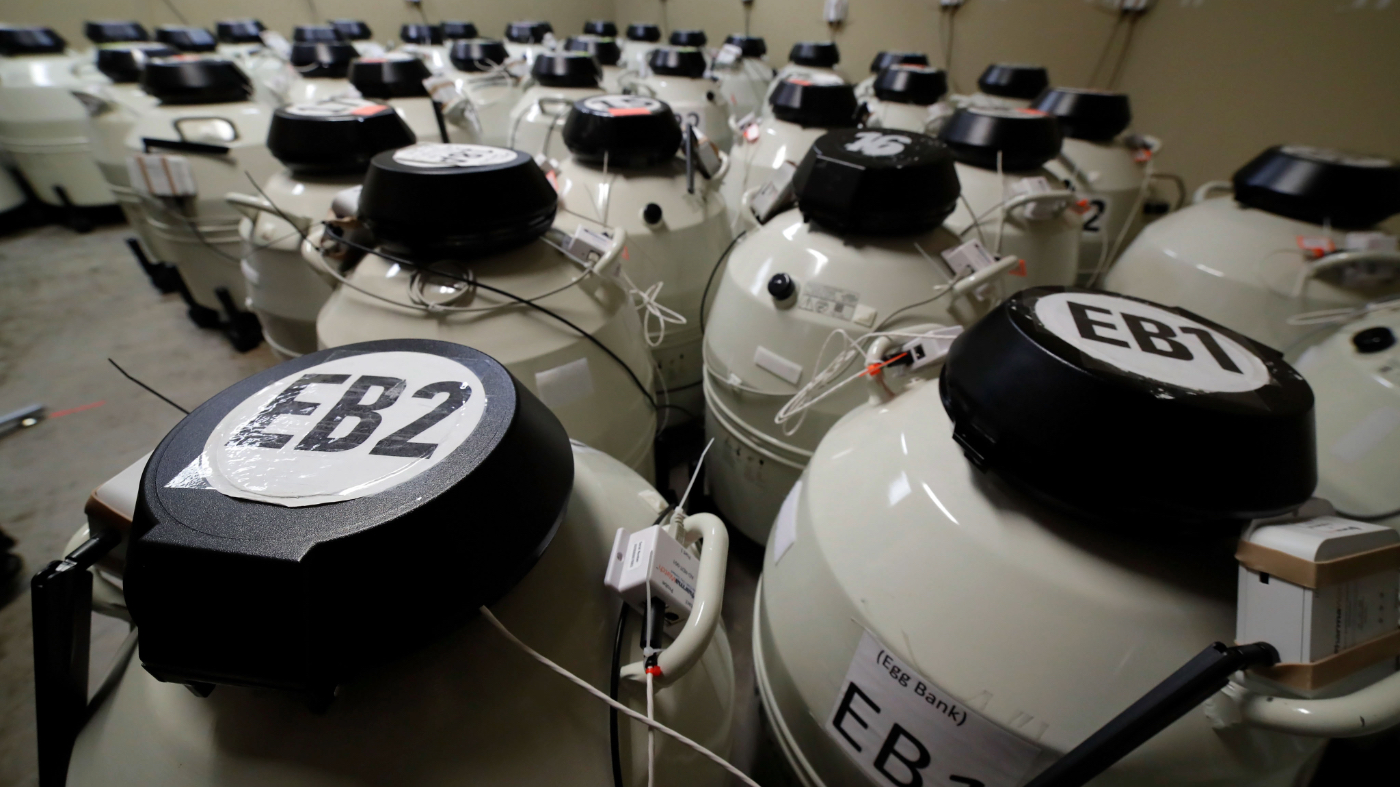
It is an alternative more women are pursuing as they stay in school longer and wait later to start their families. Reproductive health research has consistently shown that as women age, it becomes harder for them to become pregnant and to carry a child to term. Egg freezing is an option that potentially allows women to have biological children at older ages.
Although Ocasio-Cortez enjoys many perks as a member of Congress, she is like most women in the U.S. when it comes to health insurance coverage and fertility. Her medical plan, provided through Congress, does not cover egg freezing, so she is paying out-of-pocket. By her account, she paid as much as $10,000 .
The majority of women with private health insurance in the U.S. can relate — few have coverage of egg freezing . While any insurance company has the option to add provisions to their policies, it often takes a state mandate to get an insurance company to take on such a large increase in costs, and most states do not mandate that private health insurance carriers cover egg-freezing. When they do, it is often tied to a medical condition whose treatment reduces or halts a woman’s ovulation, such as chemotherapy or other highly invasive procedures. Elective egg freezing is not generally part of private health insurance coverage.
Given that, it should not surprise anyone to learn that low-income women have no support through public insurance either. Medicaid does not typically cover egg freezing , so Medicaid recipients who want to delay parenthood likely do not have that option. However, unlike Ocasio-Cortez, they do not have the financial resources to save for the process. Low-income women must either have children before they are ready to or forego the option to become a parent at all.
This demonstrates the asymmetry in family planning in the U.S. If a woman wants to avoid having children, contraceptive supplies and services are covered extensively in private health insurance policies. One can gain access to IUDs, oral contraceptives or any one of a number of birth control options at no or little cost. Low-income women also have complete coverage for contraceptive supplies and services through many publicly funded family planning programs, including Title X, which funds health care clinics for low-income women, or the Medicaid family planning program.
However, if a woman wants assistance in planning the timing of her childbearing, it is not available. This is but one-example of the lopsidedness of family planning in the U.S. Our programs are designed to assist when women want to restrict their childbearing but offer no support when women want to have children.
Much has been made of data that show that the number of births in the U.S. has been declining for decades . Some demographers project that our population will stop growing by the mid-2050s and then begin to shrink. Our Social Security program is already vulnerable to reductions in the number of young workers, but our demographic decline will affect our economic growth and military strength over time as well.
The U.S. must start thinking more about policies that promote population growth in addition to policies that help women control their fertility. Both are necessary for a healthy family planning program. The U.S. is one of the few nations that does not recognize the importance of birth promotion as well as birth control in family planning.
Leonard M. Lopoo is the Paul Volcker Chair in Behavioral Economics at Syracuse University’s Maxwell School. He is the author of the recently published book “Wanting Children: Family-Planning Policies and the Engineering of America’s Population.”
Topics in this story
Gathered from external sources. Rights to this text belong to whoever originally published it.