This election, trust the candidate that dares to touch Social Security
If candidates take benefit cuts off the table — or if they insist on taking taxes off the table, they are not leading; they are misleading you.
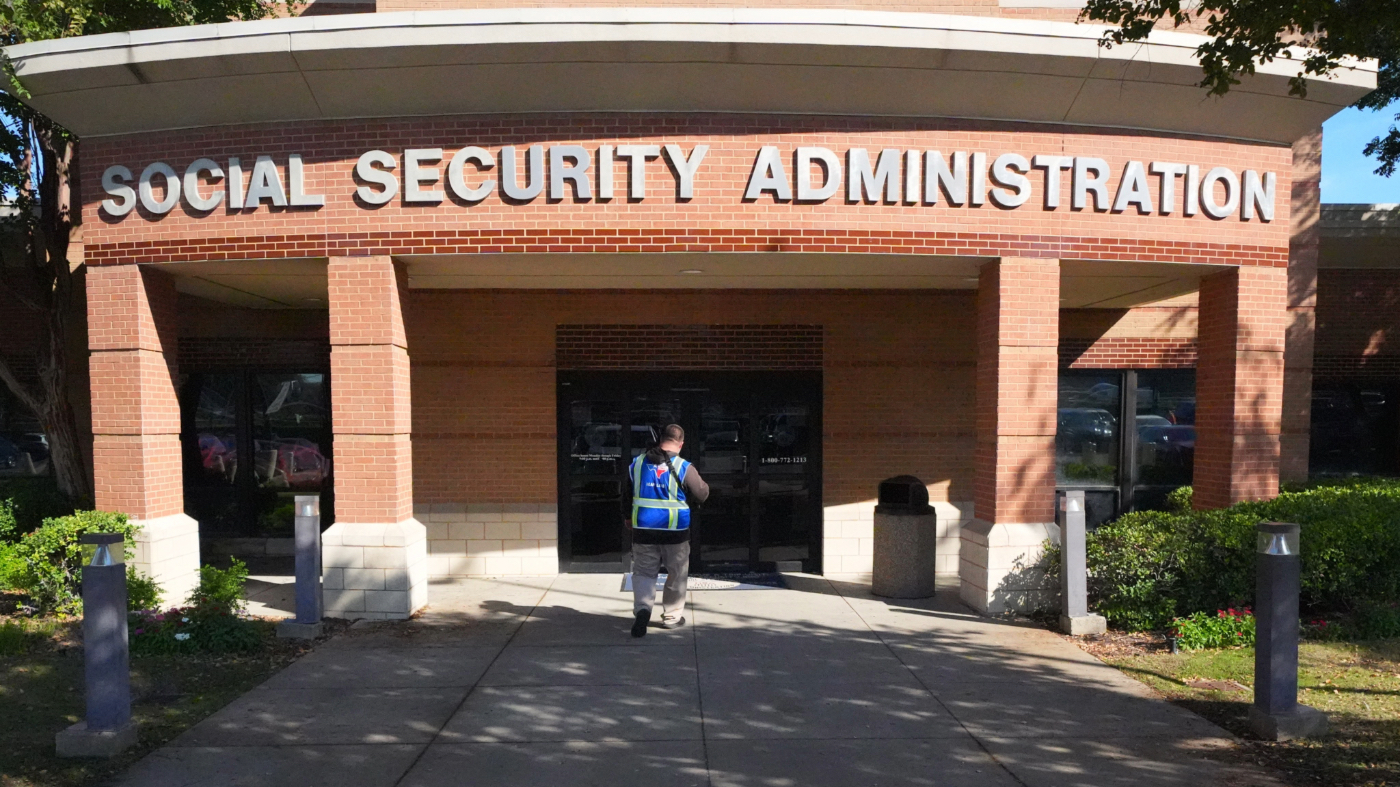
We’re told every election cycle that this one will be the most consequential of our lifetimes. But for the more than 70 million Americans who rely on Social Security, this election really does matter — because senators elected this November will need to save Social Security before their terms are up.
For an issue this important, the silence thus far is unnerving.
Every year the Social Security Trustees issue a report warning about the program’s impending fiscal cliff — now slated for 2032 , just six years away. Starting in that year, the Social Security Trust Fund will be exhausted, and annual payroll tax revenue will cover only 78 percent of promised benefits. The Trustees have issued this warning for decades. You would think our elected leaders would have done something by now to avoid the cliff.
Yet, year after year the president and Congress ignore the Trustee’s warning. Why?
The answer is simple, but sad. Our leaders will not lead. For their part, Democrats have largely refused to consider any restraint on the program’s costs. Meanwhile, Republicans have largely refused to consider revenue to cover those costs. With a few exceptions — such as recent stirrings among Republicans suggesting an openness to changing the payroll tax cap — both sides remain opposed to compromise.
In 1983, I was in my first term in Congress — actually in my first weeks on the job — and Social Security was in a crisis with less money flowing in than flowing out. Sadly, then, like now, politicians waited until the last minute to fix the problem.
The solution we enacted combined benefit restraint with additional revenue. We increased the retirement age gradually from 65 to 67. In addition, we accelerated payroll tax increases alongside higher taxes on wealthy retirees. Those changes were expected to maintain solvency in the Social Security system for 75 years.
But the projections were wrong. They were too optimistic in certain ways, such as fertility rates and wage growth. Since 2010 , Social Security has faced annual cash shortfalls, drawing down its reserves to pay full benefits.
Social Security’s Trustees now project this fundamental imbalance between the program’s costs and its revenues to continue, and to grow. Very soon, these deficits will exhaust the program’s reserves. Instead of maintaining solvency until 2058, as hoped, we are facing a serious shortfall in 2032.
Again, politicians are waiting until the last minute. Then, like now, the fix will require both reducing costs and adding revenue. And waiting carries a measurable cost. For example, the oft-cited solution to eliminate the payroll tax cap could have closed the 75-year solvency gap if enacted in 1995. Now, it would close two thirds of the gap .
The cost of delay is made even worse when you consider there really is no shortage of options to restore solvency to the Social Security System. Among the many options out there are extending the payroll tax to higher income levels, linking the retirement age to longevity, capping cost-of-living-adjustments for wealthier retirees or offering a flat rate adjustment . You can even try fixing the program yourself using interactive reform simulations . In doing so, you will learn that there is no easy, pain-free fix.
The bottom line is that waiting longer only makes matters worse.
That is why this election matters so much. The future of Social Security is very much on the ballot this year. Regardless of party, Americans deserve to know what our leaders are planning to do to avoid an unacceptable outcome. How candidates talk about this will be telling.
First and foremost, be wary of politicians who say they will not touch Social Security. If they won’t touch it, they can’t fix it.
Be skeptical too of politicians who claim they will protect your Social Security without saying how. Protecting Social Security requires some tough choices about costs and revenues. Everything has to be on the table. If candidates take benefit cuts off the table — or if they insist on taking taxes off the table, they are not leading; they are misleading you.
Protecting Social Security is a nice slogan. But it is not a solution.
Tim Penny is a co-chair of the Committee for a Responsible Federal Budget. He represented Minnesota’s 1st Congressional District in the U.S. House of Representatives from 1982 to 1994.
Topics in this story
Gathered from external sources. Rights to this text belong to whoever originally published it.