Hollywood handouts shouldn’t come before environmental cleanup
New evidence highlights the type of spending that benefits communities one can overlook when jetting from Los Angeles to Gotham.
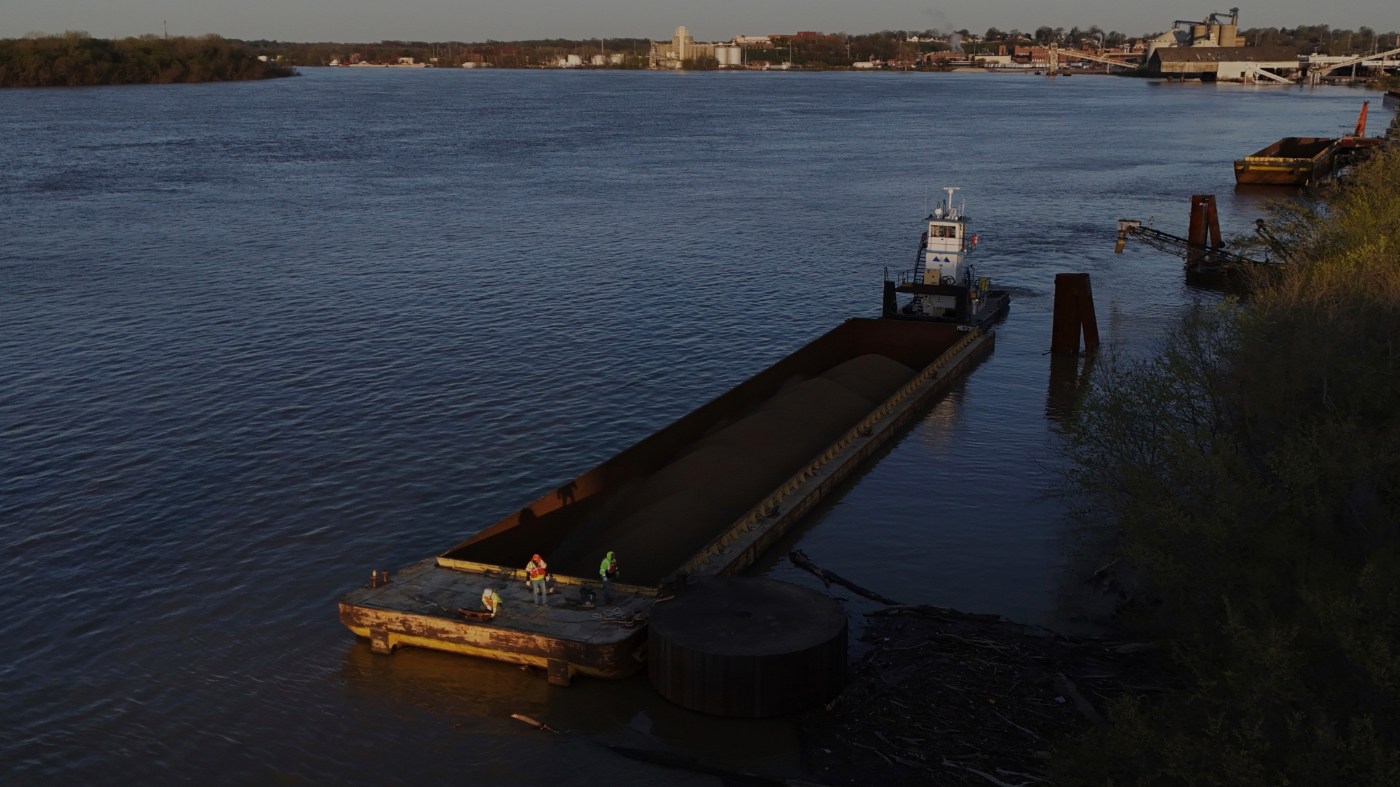
Representatives from both parties are drafting a federal tax incentive for the movie industry — a move likely to give taxpayers a poor return on their money. New evidence highlights the type of spending that benefits communities one can overlook when jetting from Los Angeles to Gotham.
State and local governments have a history of throwing cash at firms to entice them to their jurisdiction. My review of credible studies regarding relocation incentives found that, on average, 93 percent of relocating firms would have come anyway. Incentives for Hollywood fit the pattern. An audit of Georgia’s Film Tax Credit found that for each dollar the state gave, 19 cents came back. Although tax revenue is just one metric, it shows the unfavorable deal taxpayers gave for Hollywood to come down to Georgia.
Governments at all levels should exit the business of ad-hoc corporate tax incentives and focus on what they are uniquely positioned to do: fund broadly enjoyed goods that others won’t. A prime example is funding the cleanup of environmental hazards that plague many communities and the restoration of the amenities they once enjoyed. A corporation can pocket a tax incentive and move on; no one can pocket a river made healthy for fish and people or a site suitable for new homes.
Abandoned mine drainage contaminates as many as 39,000 miles of streams in Appalachia alone. Interviews with residents of mine-affected areas reveal that mine-polluted waterways foster pessimism about the future and neglect in the present, with one type of pollution, mine drainage, leading to others, trash dumping. People leave such places if they have the chance: from 1990 to 2020, Pennsylvania communities with mine drainage problems and no restoration saw their population decline by 9 percent . That’s almost 1 in 10 people moving elsewhere.
Supported by public funding, grassroots organizations have built and maintained hundreds of wetland systems to treat mine drainage, improving water clarity for miles downstream. Residents near restored waterways report a new sense of pride of place and optimism about the future. As a result, longtime residents stayed and new ones came, especially those with more education.
The cost? About $240 per resident of a Census tract with restoration. By comparison, the federal Empowerment Zone program, which mainly consisted of business incentives, spent $1,500 per resident and attracted fewer people to select Census tracts.
Treating abandoned mine drainage is one of many possibilities for high-return public investments that cannot be uprooted and offshored. Brownfields are another. Remediating them — assuming no responsible party exists to do it — turns a community hazard into an asset for repurposing.
An example is Pennsylvania’s Hazardous Sites Cleanup Act program, which helped turn the site of a former steel and coke plant in Pittsburgh into innovation centers and advanced manufacturing facilities. A study of brownfield cleanups showed that by increasing property values they would generate, with reassessments, enough tax revenue in one year to more than cover cleanup costs. Compare that to the Georgia film tax credit that repays 19 cents on the dollar.
The bipartisan Ohio River Restoration Program Act , sponsored by Sens. John Fetterman (D-Pa.) and Todd Young (R-Ind.), aims to remediate toxic substances, protect drinking water sources, restore fish and wildlife habitat and create opportunities for public access and recreation. The act won’t produce Hollywood blockbusters, but its proposed funding is $350 million a year.
Meanwhile, Los Angeles filmmakers flying over the Ohio Valley can tap New York’s film tax credits for up to $700 million a year.
Jeremy G. Weber is professor at the University of Pittsburgh School of Public and International Affairs and author of “Statistics for Public Policy: A Practical Guide to Being Mostly Right” (or at Least Respectably Wrong), University of Chicago Press.
Topics in this story
Gathered from external sources. Rights to this text belong to whoever originally published it.