Despite Senate Success, College Sports Bill Faces Uphill Battle in the House
"The stars have to align in the House for the bill to pass.”
The Protect College Sports Act (PCSA) is expected to easily pass the Senate after garnering overwhelming support during two procedural votes this week.
Once the bill passes the Senate, which could happen next week, lobbying machines both for and against the bill will turn their focus toward the House. But despite unprecedented bipartisan momentum, the PCSA faces an uphill battle in the House.
The roadblocks include a condensed timeline, Democratic opposition, potential Republican defectors, and perhaps even a tepid response from House Republican leadership, sources in and around Capitol Hill tell Front Office Sports. Given the slim Republican majority in the House, the bill likely can't afford to lose any Republicans—or may need to flip a few Democrats.
If the House can't get the bill to Trump's desk by the end of 2026, lawmakers would have to restart the entire legislative process next year.
"It's not dead by any stretch," one source tells FOS . "But the stars have to align in the House for the bill to pass."
The bill, first introduced by Sens.Ted Cruz (R., Texas), Maria Cantwell (D., Wash.), Eric Schmitt (R., Mo.) and Chris Coons (D., Del.) in May, seeks to double the revenue-sharing cap but implement NIL, transfer, and eligibility restrictions. It also provides protections for women's and Olympic sports at certain wealthy schools, offers the ability for schools to pool media rights to sell together in the future, and imposes rules around realignment and the football coaching carousel.
The first hurdle is time. The House won't return to session until after the November midterms, guaranteeing that the PCSA wouldn't be taken up until the "lame duck session" in between elections and the new Congress. That's a notoriously difficult period to pass any legislation. Multiple sources questioned the commitment of House Republican leadership to push the bill through the chamber.
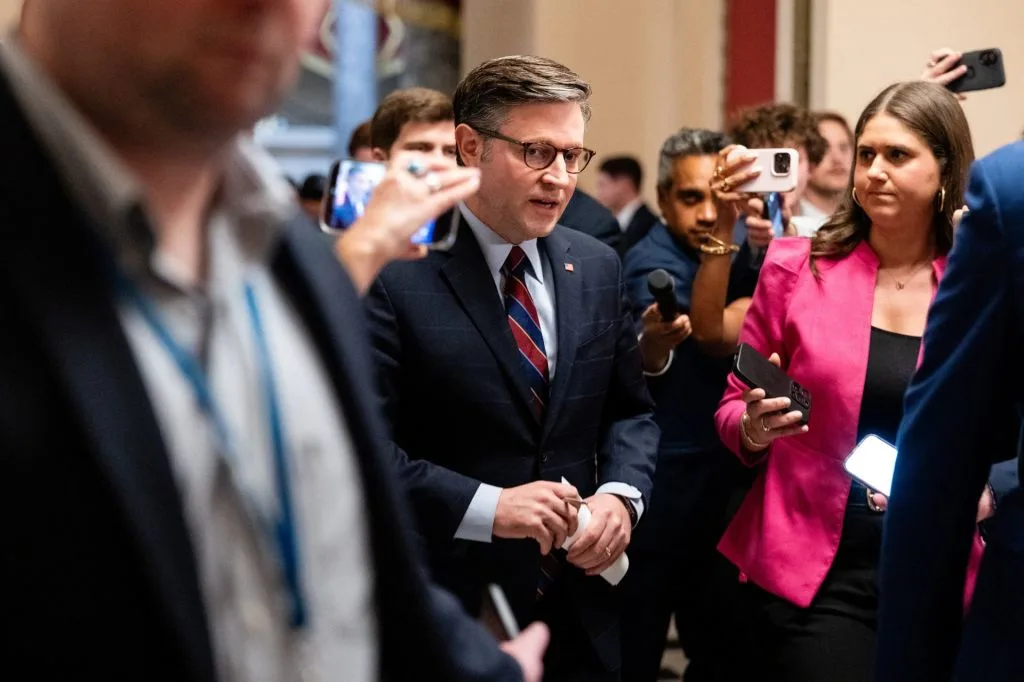
Earlier this week, House Speaker Mike Johnson (R., La.) said he was interested in moving the legislation forward, but may want to make changes. Meanwhile, House Majority Leader Steve Scalise (R., La.), could have concerns with the bill, one source said, given his allegiance to the SCORE Act (a much more partisan bill that offers more antitrust protections to the NCAA and prevents athletes from being deemed employees than the PCSA). A representative for Scalise didn't immediately respond to a comment request.
"I think they [Johnson and Scalise] want to get something done," Sen. Schmitt told FOS earlier this week. "We're going to work through timing and schedule and all those sorts of things, but I think people are generally very positive here." Schmitt confirmed discussions around potentially bringing the House back into session before the midterms, though that's up to Johnson.
Another issue House Republicans could contend with: defections from Florida House Republicans.
During Senate procedural votes, Florida Sens. Rick Scott and Ashley Moody voted against advancing the bill because of concerns from FSU and Miami over the conference realignment provisions, FOS previously reported . On Friday, both FSU and Miami released statements confirming their issues over the expansion provision and thanking the Florida senators. At least one Miami representative has said they will lean on Florida House members as well, a source familiar with the matter told FOS .
President Donald Trump may have something to say about the Republican defectors. Trump has voiced his support for the PCSA and has blessed members of his presidential committees Cody Campbell and Randy Levine, as well as others, to advocate for the bill on his behalf. Trump called Scott and Moody about their opposition to the bill, the aforementioned source said (in addition to calling them out in a Truth Social post).
"It remains to be seen how much pressure the President is willing to put on them, and how effective [the White House] can be," another source tells FOS .
Meanwhile, some House Democrats and left-leaning groups are expected to put up a big fight in the House to prevent any Democrats from voting yes.
The Congressional Black Caucus, which sources say has much more power in the House than in the Senate, has come out against the bill, as have the AFL-CIO and NAACP . In line with other CBC members, House Minority Leader Hakeem Jeffries (D., N.Y.) has previously taken a strong stance against legislation supported by the SEC. Jeffries's office didn't immediately respond to a comment request.
Rep. Lori Trahan, (D., Mass.), could also put up a fight. Trahan has already proven her influence as one of the key representatives lobbying against the SCORE Act. She's expected to consider lobbying strategies against the PCSA in the coming weeks during the recess, a House aide said. "It's pretty tough," the first source said, "to fight against the [Congressional] Black Caucus and Lori Trahan."
Topics in this story
Gathered from external sources. Rights to this text belong to whoever originally published it.