A tale of two political ads
What we will remember from this season are the two ads the ended it — and possibly ended the political aspirations of some would-be politicians.
It’s finally election day after a long and bruising campaign season. Regardless of who ends up controlling the House and the Senate, this election season will be remembered for two ads, one from the Right and one from the Left, which defined it by finding new lows in American politics. Yet they also revealed that many Americans—on either side—had found their floor in terms of what they would tolerate from people seeking office.
The first ad was put out by the Republican candidate for governor in Ohio, Vivek Ramaswamy. The ad featured the biological mother of his Democratic opponent, Amy Acton, calling her daughter a liar. It seemed like powerful stuff, until you learned the backstory: Acton’s mother has not seen her daughter since Amy was 12. That’s when Amy accused her stepfather of raping her.
Rather than stand by her own daughter, Acton’s mother stood by her alleged rapist, fleeing the state with him after an indictment was handed down and a warrant issued for his arrest, and staying with him until his death.
That is the woman Ramaswamy trotted out as an authority on Acton’s truth telling: a woman who stayed with her daughter’s alleged rapist, abandoning her child at the tender age of 12 to do so.
The ad initially appeared on social media. At first, it wasn’t clear who had released it, leading many Republicans to condemn the ad and to urge Ramaswamy to do the same. Yet it turned out that Ramaswamy’s campaign was actually responsible for the ad — indeed, Ramaswamy himself pushed for the ad over the objections of his staff.
To cut the ad, an agency called The Strategy Group tracked Acton’s mother down to a church parking lot, where she was living in her car with a bunch of cats. Some of Ramaswamy’s staffers felt uncomfortable with the state of Acton’s mother, who did not appear well. Ramaswamy overruled them, slapping his name on the ad and airing it on television throughout Ohio. When criticized for it, he doubled and tripled down on the ad, insisting that Acton’s mother was fair game, and he was joined in this efforts by Vice President JD Vance and President Trump himself.
It was utterly depraved to make the ad, air it, and defend it. The ad weaponized the child rape of his opponent for naked political gain. It was the kind of thing many Americans assumed was utterly beneath even the most contemptible politician in America.
But if we were wrong to expect politicians like Ramaswamy to have anything close to a moral compass, we were not wrong about our fellow Americans. Ramaswamy had already been trailing Acton in the polls when the ad came out, but his polling cratered afterward. The ad was nothing short of an October surprise planted by Ramaswamy against himself — the nail in the coffin of any political aspirations he might have going forward. And not a minute too soon.
The American people had found their floor of what they would no longer tolerate.
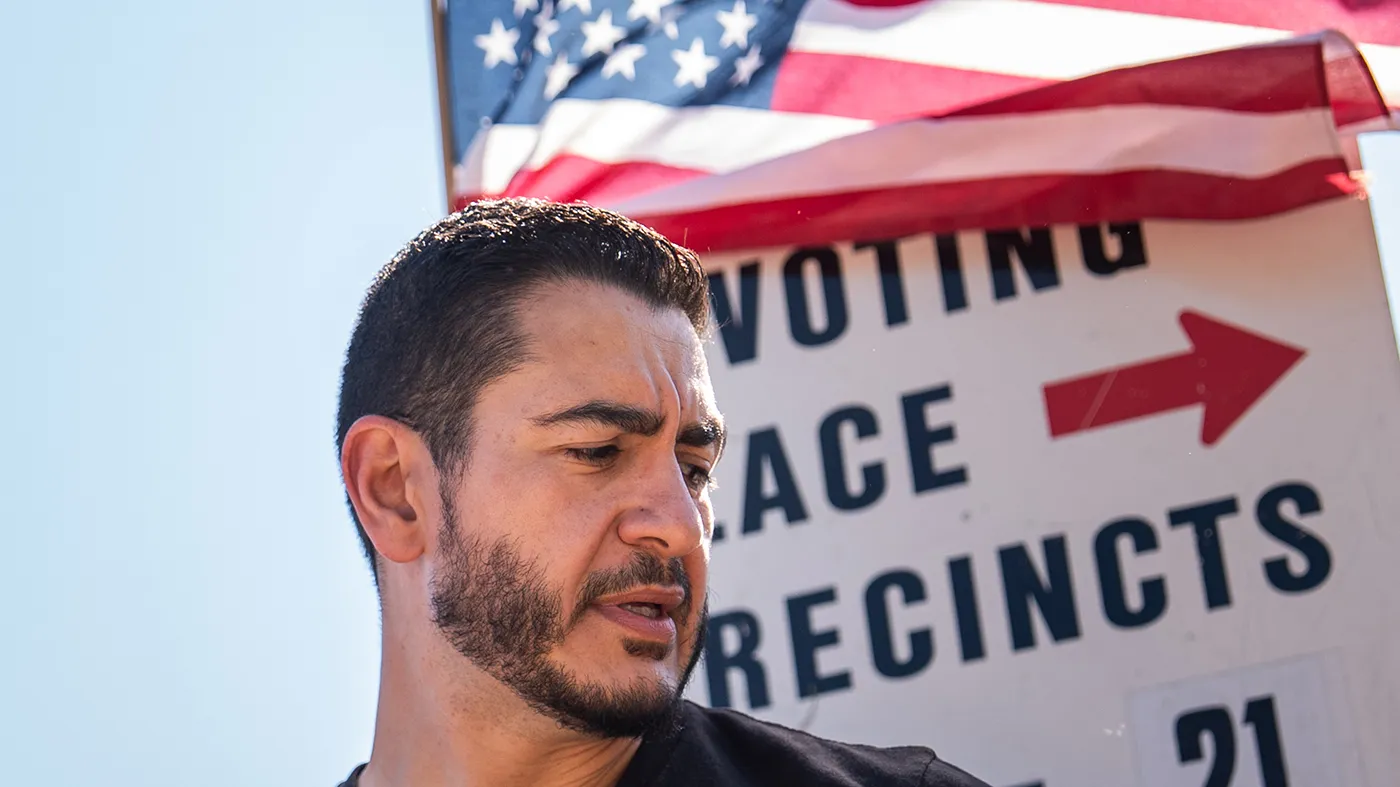
Something similar happened on the Left with an ad that came out in support of the Democratic nominee for Senate in Michigan, Abdul El-Sayed. The wasn’t put out by El Sayed’s campaign but by YouTuber Cenk Uygur’s left-wing political action committee, Rebellion PAC. The ad featured a couple in a grocery store choosing items for their children, and having to put them back one after another because the money for bananas had to go instead to “killing Palestinians.” It ended by riffing off another famous ad from 2024: “Mike Rogers is for they/them” — with pictures of Israeli politicians — ”Abdul El-Sayed is for you.”
The ad was widely denounced as antisemitic, including by many Democrats, who pointed out how the ad sought to blame Jews for the fact that you can’t afford to feed your kids. Many called on El-Sayed to condemn the ad, but when he addressed it, he did so in a mealy-mouthed way that left many wanting: His campaign put out a statement saying the ad was “not affiliated in any way” with him or his candidacy. and “no one speaks for Abdul but himself and his campaign.”
That is not, as many pointed out, a condemnation of the ad. It is in fact the opposite—a refusal to denounce a message that scapegoats Jews for Michigan’s problems.
El-Sayed didn’t wat the negative consequences, but he couldn’t honestly condemn the ad; after all, as his primary challenger, Rep. Haley Stevens (D-Mich.), pointed out, El Sayed had repeatedly made the same argument dramatized in the ad throughout his campaign. He blamed taxpayer aid to Israel for everything from Michigan’s failing schools to its failing health care. It was of a piece with his choice to campaign five times with Uyghur’s nephew, the Twitch streamer Hasan Piker, who compared Jews to the Ku Klux Klan last week and said American deserved 9/11. Piker, too, was someone El-Sayed repeatedly refused to denounce.
El-Sayed later said he “disagreed” with the contents of the ad, but he was not pressed to explain how. Inquiring minds want to know.
Stevens had been invited to appear alongside El-Sayed at a campaign event on Sunday. She stipulated as a condition of her appearance that he denounce both the ad and his own rhetoric, which had engaged in similar scapegoating of Jews. In response, El-Sayed told Stevens to take a hike, which she did — right over to his Republican opponent Mike Rogers’ campaign.
Like many Republicans in Ohio sick to their stomachs over Ramaswamy’s ad, Haley Stevens had found her floor.
We will find out soon the results of the midterms. But what we will remember from this season are the two ads the ended it — and possibly ended the political aspirations of some would-be politicians.
Batya Ungar Sargon is the host of “ Batya !” which airs Saturday nights at 7 p.m. Eastern Time on NewsNation, the nation’s fastest-growing cable news network and a sister company of The Hill.
Topics in this story
Gathered from external sources. Rights to this text belong to whoever originally published it.