The Memo: Michigan Senate chaos may preview Democratic clashes ahead
Chaos in Michigan is raising the stakes even higher in one of the most closely watched Senate battles in the nation. The political world was agog on Sunday when Rep. Haley Stevens (D-Mich.) endorsed the GOP’s Senate candidate, former Rep. Mike Rogers (R-Mich.), over her party colleague Abdul El-Sayed. Democrats immediately and fiercely denounced Stevens,…
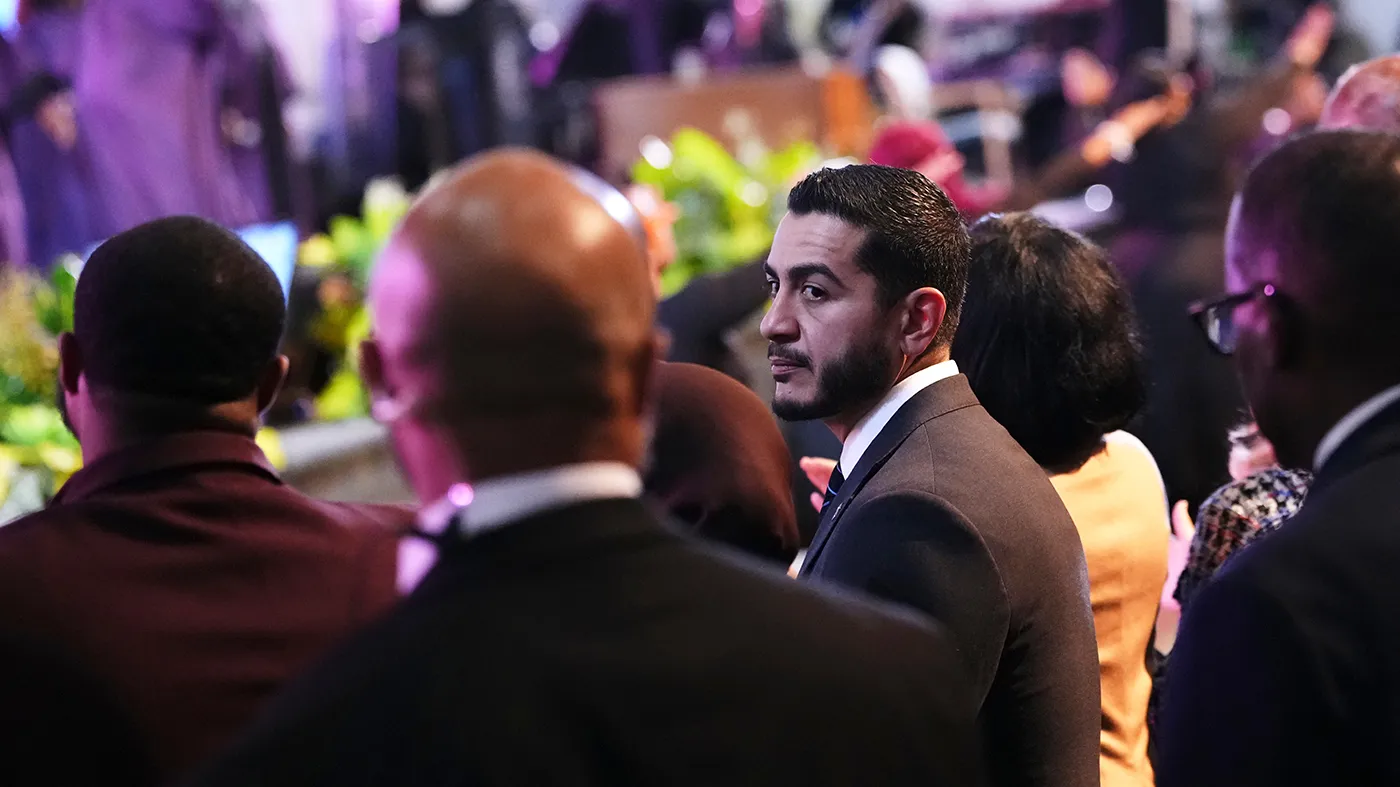
Chaos in Michigan is raising the stakes even higher in one of the most closely watched Senate battles in the nation.
The political world was agog on Sunday when Rep. Haley Stevens (D-Mich.) endorsed the GOP’s Senate candidate, former Rep. Mike Rogers (R-Mich.), over her party colleague Abdul El-Sayed.
Democrats immediately and fiercely denounced Stevens, and several senior lawmakers made it known she had promised them she would make no such endorsement of Rogers — right before doing so.
The Michigan Senate race was always compelling.
On one side, El-Sayed is seeking to become the first Muslim senator in the nation’s history, having vanquished Stevens in a bitter primary that divided in large part over views of Israel.
On the other, Rogers is seeking to hold back the anti-Republican tide that appears to be rising elsewhere in the nation. President Trump has sought to buoy Rogers but has done so through Islamophobic attacks on El-Sayed, whom he has repeatedly called a “jihadist.”
During weekend rallies, Trump said the Senate would have “to get a special metal detector for Abdul” if El-Sayed were elected. A previous use of that attack line had prompted El-Sayed to respond , “I’ll go through a metal detector every day. You sit through a lie detector one time. That’s the deal.”
Stevens’s shock decision to endorse Rogers, however, also threatens to play into tensions between the left and the centrists in the Democratic Party that have risen sharply in recent months.
Although El-Sayed does not identify as a socialist and is not a member of the Democratic Socialists of America (DSA), he is plainly identified with the left of the party. Pledges to back Medicare-for-All and to rid politics of big-money influences are a central part of his platform.
The available evidence suggests El-Sayed could prevail, regardless of Stevens’s late backing of his opponent.
The El-Sayed campaign said it raised $1.2 million in just four hours after the congresswoman’s endorsement of Rogers. The bizarreness of Stevens’s move — and the strange interviews she gave to justify it, most notably to CNN’s Anderson Cooper on Sunday evening — appear to have caused Democrats to coalesce behind El-Sayed even more strongly. And the final spate of polls from the highly-regarded New York Times/Siena College partnership put El-Sayed up by 11 points.
An 11-point victory for El-Sayed in a state Trump won, albeit very narrowly, two years ago would be a startling result. Even some supporters of the candidate don’t expect him to prevail by that much. And those same supporters also have keen memories of how the polls in the primary were way off, predicting El-Sayed would defeat Stevens by double-digits, when he actually won by a single point.
If El-Sayed were to lose, internal party mayhem is guaranteed. Social media voices on the left excoriated Stevens for her endorsement of Rogers over the weekend — and so too did some centrist figures.
Former Clinton strategist James Carville took to YouTube to insist that Stevens’s “political career is over” — a common view in Democratic circles — and suggest she had not got a high enough price “if you’re going to sell your soul.”
CNN commentator Van Jones, another centrist figure who often draws criticism from the left, said on the network that “Haley just flushed herself down the toilet.”
Meanwhile, House Minority Leader Hakeem Jeffries (D-N.Y.) told Politico that Stevens had made a “terrible decision” and that the party would consider “appropriate next steps” regarding her conduct when Congress returns.
Some on the left, appalled as they are by Stevens’s decisions, are reluctant to see her move as emblematic of the broader struggle between the Democratic Party’s left flank and its more centrist establishment, however.
“I think this is a one-off,” progressive strategist and organizer Jonathan Tasini told this column. “I don’t think you can draw a line from her behavior to the bigger picture of the Democratic Party.”
Be that as it may, the tensions between the left and the center could easily ramp up after the election.
Beside El-Sayed’s electoral fate, a number of other candidates from the harder edges of the left are almost sure to be elected.
Two DSA members, Darializa Avila Chevalier and Claire Valdez, are likely to win House races in New York. Chevalier defeated a Democratic incumbent in her primary, as did another New York progressive who is all but sure to be on his way to Congress after Tuesday, Brad Lander.
In Colorado’s 1st District, DSA member Melat Kiros (D) is again a near-certainty to win, having dispatched Rep. Diana DeGette in the primary. DeGette had first been elected to the House in 1996, the year before Kiros was born.
The new crop of left-leaning figures will join the original members of the so-called “Squad,” all of whom are overwhelming favorites to win reelection: Reps. Alexandria Ocasio-Cortez (D-N.Y.), Ilhan Omar (D-Minn.), Ayanna Pressley (D-Mass.) and Rashida Tlaib (D-Mich.). Speculation is rampant that Ocasio-Cortez could run for president — or primary Senate Minority Leader Charles Schumer (D-N.Y.) — in 2028.
Despite all that, centrist figures argue that the party should not take what they see as the wrong lessons if Democrats have a strong night on Tuesday.
“Are you trying to make blue places bluer, or are you trying to turn red and purple places blue?” Jim Kessler, executive vice president at the centrist Third Way asked rhetorically. “For Democrats, we need to win majorities.”
Kessler argued that the real story of this midterm cycle so far was how moderate Democratic candidates have put states that are usually seen as reliably Republican, or at least GOP-leaning, in play. He alluded to Senate candidates such as James Talarico in Texas, Adam Hamilton in Kansas and Josh Turek in Iowa.
“If the polls are anywhere near accurate, centrist Democrats are about to rewrite the Senate and electoral college map,” Kessler added. “We are going to be winning places that were pipe dreams for Democrats for 20, 30, or in some cases the last one hundred years. Centrist Democrats are expanding the map.”
Even Tasini, who spoke to this column briefly on his way to do door-to-door canvassing in Portland, Ore., argued that the left should not get too carried away even if its candidates do well, noting that the majority of Democrats in federal office remain centrist in orientation.
“We will have a bigger megaphone,” he said of the left. “There will be more members who can hold forth on the House and Senate floor about these issues. But I don’t think we’ll have hit nirvana, or that in two years we are going to transform the country.”
Others on the left may be less patient, however — and that could spell new clashes to come.
The Memo is a reported column by Niall Stanage .
Topics in this story
Gathered from external sources. Rights to this text belong to whoever originally published it.