Why conservatives have shifted on Israel
The political formation of young conservatives is increasingly happening on the internet.
After investing $32 million into Michigan’s Democratic primary, the American Israel Public Affairs Committee, known as AIPAC, planned on spending heavily to defeat progressive candidate Abdul El-Sayed in the general election. To AIPAC’s surprise, Republican nominee Mike Rogers turned down its offer.
While the Trump administration continues to tout its pro-Israel line, the rest of the party is starting to shift. The conservative turn on Israel has been years in the making. What was once an unimpeachable consensus on the right has fractured under pressure from a new generation of internet-savvy conservatives.
I went through millions of online comments to document this shift. The generational gap within the conservative coalition is hard to overstate.
According to a recent New York Times/Siena poll , 72 percent of Republicans under 30 believe President Trump has been too supportive of Israel. Only 11 percent of conservatives over age 65 agree.
Even among evangelicals — historically the most reliably pro-Israel demographic — less than one-third of young people favor Israel over the Palestinians. This generational shift has been on open display since the start of the Iran War; a conflict younger Republicans are only half as likely to support as their older peers.
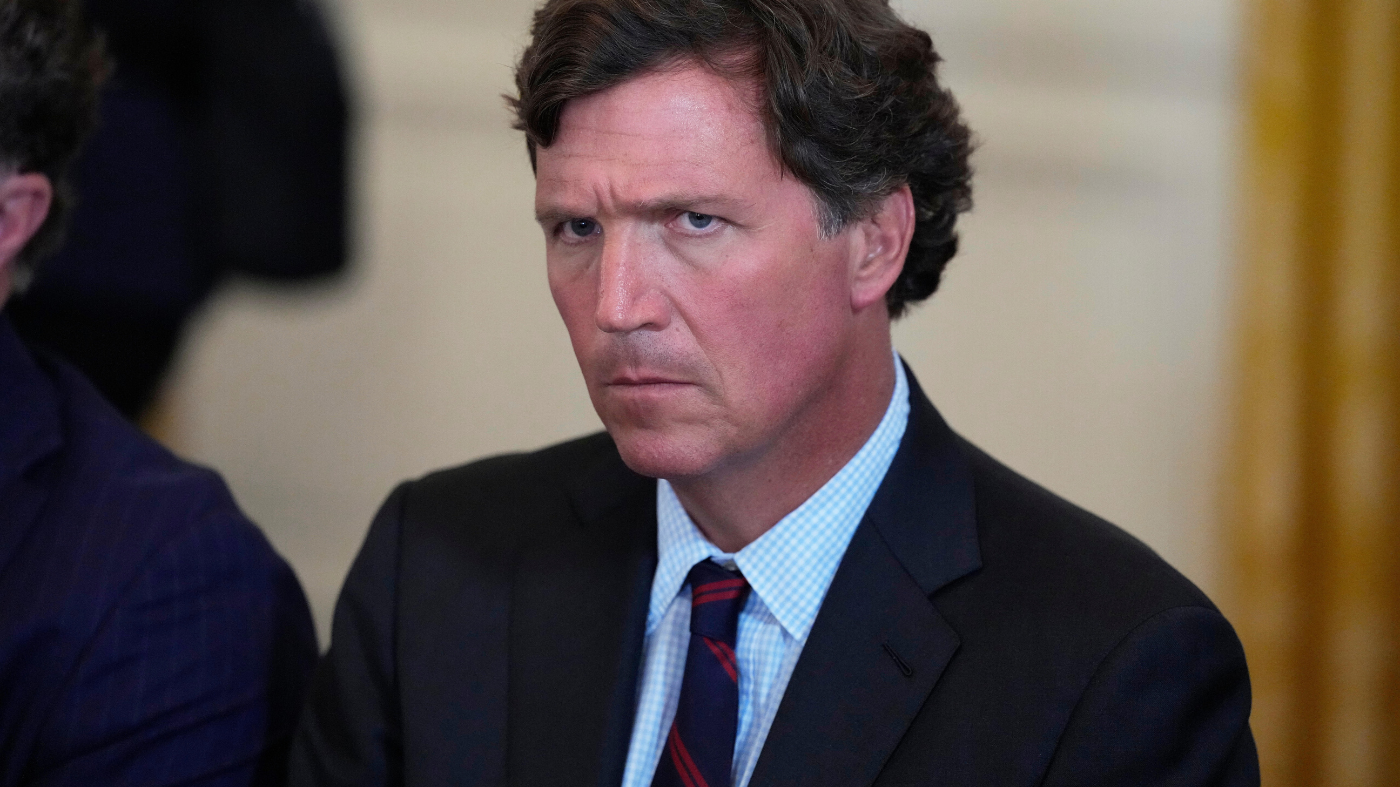
The political formation of young conservatives is increasingly happening on the internet. Many young Republicans gravitate toward controversial figures such as Tucker Carlson or Steve Bannon, who have challenged the traditional consensus on Israel. A noteworthy share of Republican staffers in Washington follow white nationalist streamer Nick Fuentes — the political director of the College Republicans of America is an avowed fan. Meanwhile, Ben Shapiro, staunchly pro-Israel and once a darling of young conservatives nationwide, had seen a huge drop in YouTube viewership as of earlier this summer.
But the recent internet wars on the right are a symptom rather than the cause of the conservative turn on Israel. My analysis of one of the internet’s largest conservative chat groups — Reddit’s r/conservative subreddit — found that negative comments averaged around 40 percent of Israel-related posts even prior to October 2023.
Carlson and Candace Owens, popular podcasters of the online right, turned against Israel long before the first U.S.-Israel-Iran war. The shift at the party base, in other words, precedes the recent backlash over Israel’s alleged hand in Trump’s war on Iran.
The reasons range from the eschatological to the political. Among young evangelicals, support for Israel plummeted from 75 to 33 percent between 2018 and 2021 and has stayed remarkably stable since. This has much to do with a change in theology. Whereas Christian Zionists traditionally believe that Jewish control of the Holy Land is a sign of the Second Coming, younger pastors have largely moved away from such millenarian prophecies. My clustering algorithm showed less than five percent of conservative commenters focus on religious ties.
Antisemitism seems to play a role as well. A Yale poll found that two-thirds of self-described “extreme conservatives” held antisemitic views. Jew-hating “Groyper” trolls dominate many of the darkest corners of the internet, giving a resurgence to old antisemitic ideas. And news of mounting anti-Christian attacks in Israel have revived age-old conspiracies of a perpetual war between Jews and Christians.
Still, the conservative shift is not merely a reflection of domestic politics. Young Americans have come of age amid a succession of right-wing Israeli governments that openly reject a two-state solution and have done little to refute accusations of widespread discrimination and apartheid . Fewer than one in 10 young Americans back Israel’s actions in Gaza — a remarkable consensus for an age group uniquely polarized along gender and party lines.
For a generation tired of foreign engagements , America’s special relationship with Israel feels much like an anachronism. Among the Redditors in our dataset, concerns over Israel’s political influence played a role as well — a fear only heightened by Netanyahu’s role in the war in Iran.
So far, the MAGA establishment, hesitant to buck Trump’s lead, has been slow to respond to these concerns. Rep. Thomas Massie (R-Ky.), a Trump critic who is not seeking reelection, was a lone Republican vote in favor of an amendment blocking military assistance to Israel. Florida gubernatorial candidate James Fishback, whose campaign mixed anti-Israel sentiment with nativist rhetoric, finished a distant third in his state’s Republican primary. As with immigration and trade a decade ago, Republican elites today lag far behind the younger party base when it comes to the issue of Israel.
There are signs that Republican leadership is catching up. JD Vance, widely seen as the Republican frontrunner for 2028, has already made not-so-subtle hints that there is daylight between himself and Trump on Israel. Meanwhile, AIPAC backing is increasingly becoming a liability on the right as well.
Trump has reportedly worried out loud that he will be the last pro-Israel U.S. president. Many young conservatives are hoping he is right.
Johannes Lang is an AI researcher and McCain Global Leader focusing on the domestic politics of U.S. foreign policy.
Topics in this story
Gathered from external sources. Rights to this text belong to whoever originally published it.