The Hill’s election night cheat sheet
In today’s issue: ▪ What to know as polls close ▪ Trump gives final pitch ▪ What’s next for Haley Stevens? ▪ Will Iran strikes resume? After a long, tense and sometimes drama-filled campaign cycle, Election Day is finally here. What are the pivotal races? When will we know the outcomes? How much sleep do…
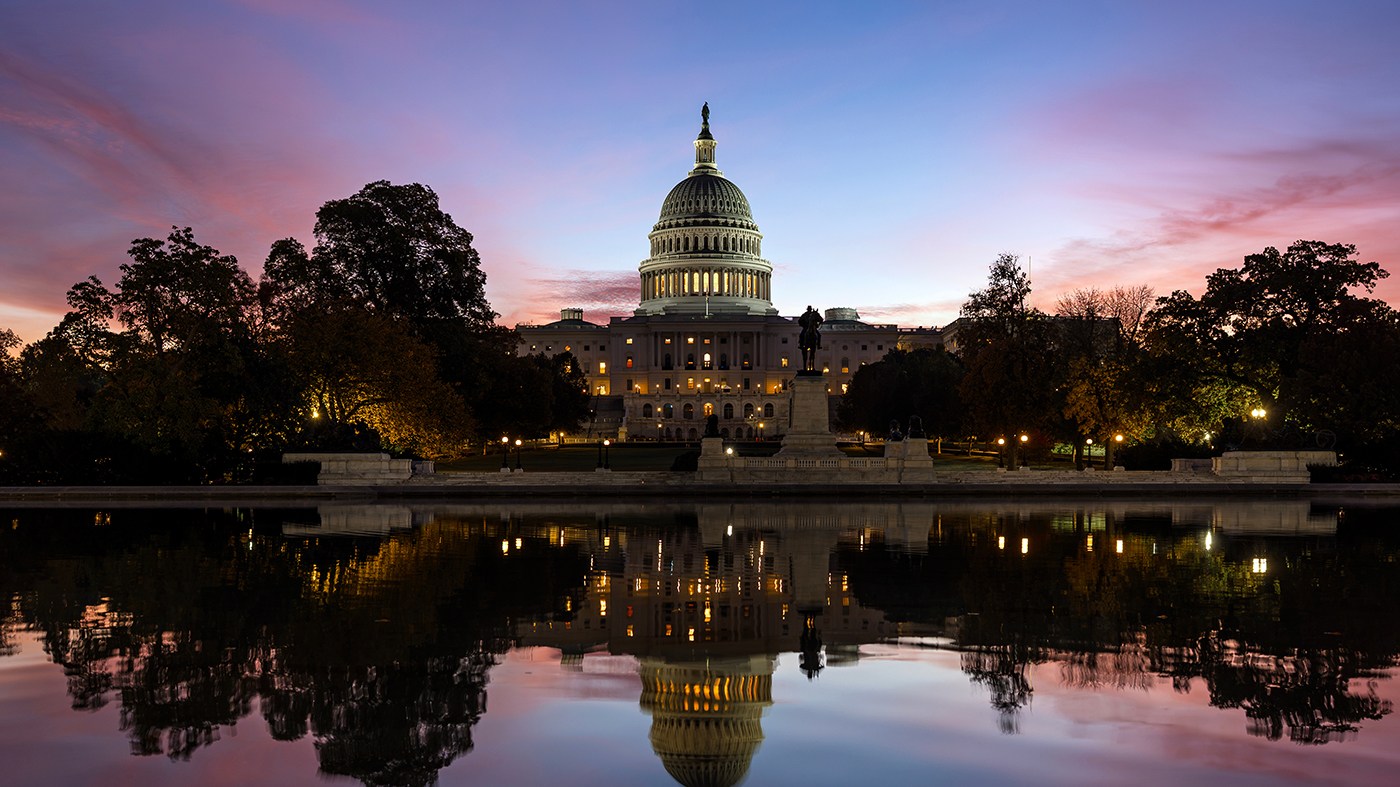
After a long, tense and sometimes drama-filled campaign cycle, Election Day is finally here.
What are the pivotal races? When will we know the outcomes? How much sleep do you need to function on Wednesday? We’ll answer these questions and more in our election night cheat sheet, with some help from our friends at Decision Desk HQ (DDHQ) .
What’s on the line tonight? Just the course of President Trump ‘s final two years in office and the future of both parties.
Once polls close, starting at 6 p.m. EST, results will start coming in rapid-fire moving west. If there’s a “blue tsunami,” as some are predicting, we could know the result within hours. If it’s closer than polls predict, it could take days.
Here’s what to keep an eye on as polls close and returns come in.
Democrats are overwhelming favorites to win control of the House. The forecast from DDHQ has ticked up even more in the cycle’s final days, reaching 84 percent ahead of Election Day.
Some of the earliest polls to close will give a hint of whether a Democratic wave will turn into a tsunami or a ripple.
One of the first places to watch, right as the first polls close at 6 p.m., is Kentucky’s 6th Congressional District. Rep. Andy Barr (R-Ky.) is vacating the seat to run for governor, and Democrats have expressed some hope that the district could be in play.
Democrats don’t need to win the seat to signal a good night for them. But if Democrat Zach Dembo can stay competitive, that could be a good sign for his party.
In Indiana’s 5th Congressional District, Rep. Victoria Spartz (R) is expected to hang on, but a strong Democratic performance in the Indianapolis suburbs could be telling.
When 7 p.m. rolls around, all eyes will be on Florida’s 14th and 25th districts, which are prime pickup targets for Republicans after the state’s mid-decade redistricting left Democratic Reps. Kathy Castor and Jared Moskowitz with tougher fights. Flipping either seat would be a sign that Republicans are holding their own.
In Virginia, Rep. Jen Kiggans (R) is a key target for Democrats, and her fate could signal the direction of the rest of the night.
Democrats are favored to win Senate majority, but barely. Each state’s vote-counting procedures will play a key role in how the night develops.
Democrats’ most-likely pickup seems to be North Carolina, a state that is known to count votes fast. Results from Georgia and Florida will also likely come earlier in the night. A Democratic win in Florida would be bad news for Republicans nationwide.
If Democrats flip North Carolina and oust Sen. Susan Collins (R) in Maine — a state former Vice President Kamala Harris won in 2024 — attention will likely quickly shift to Ohio and Texas. But Texas’s slow-counting Harris County could delay a race call if the contest is razor-tight.
Based on DDHQ’s forecast, Ohio may end up being the clincher. All other things equal, the odds of Senate control swing hard toward whichever party wins the Buckeye State — and it may signal the political winds in Iowa and Kansas too.
Democrats are favored to win 51 seats, including Alaska, where the last polls won’t close until 1 a.m. EST. If Ohio or another tossup state flips before then, Senate control could be decided before the Last Frontier declares a winner.
It depends on two key factors: when you go to sleep and how close key races are. If Democrats pull off big wins, control of both chambers could be called before midnight eastern.
The House is considerably more likely to be clear sooner than the Senate, as Democrats only need to net a few seats to win a majority in the lower chamber.
If the main battlegrounds are close, this could drag into Wednesday. Texas and Michigan could still be counting ballots well into the night, and if no candidate wins a majority in the first round of ranked choice voting in Maine and Alaska, it could be weeks before we have a winner.
Vote counting in Maine could take up to two weeks, according to the state government . And Alaska accepts ballots for up to 15 days after Election Day, meaning the counting could stretch into mid-November. And with the legal and political scrutiny surrounding the race, a final decision could take even longer.
This drawn-out scenario is unlikely, but not impossible.
Of note, the Senate was called for the GOP by The Associated Press at 12:06 a.m. in 2024. But it wasn’t called until four days later in 2022.
The House was called for Democrats at 3 a.m. in 2018, but the call in each cycle since then took at least a week.
Expect a night of excitement and surprises either way. The Hill’s Julia Mueller dives into five Senate races that could provide upset victories to an underdog. Insiders can read more here .
▪ The Hill : Your hour-by-hour guide to the midterms.
▪ The Hill : House races to watch for early signs of a midterm wave.
▪ The Hill Insider : Why Democrats can survive a polling miss.
Thousands of voters in Washoe County, Nev., received mail-in ballot return envelopes with a printing error that included the word “FALSE” on them. A spokesperson said about 32,000 envelopes were affected, and the error wasn’t limited to any political party. They said the issue was identified and corrected in subsequent batches of envelopes.
Snap Inc., the parent company of Snapchat, has settled claims alleging the platform was intentionally designed to be addictive for young users, joining fellow tech giant Meta in settling the case from a woman who alleged she was harmed by their products. The deal’s details remain confidential and came two days before a scheduled trial.
The U.S. plans to mediate another round of talks between Russia and Ukraine in Abu Dhabi next week , special envoy Steve Witkoff said. He added that U.S. negotiators would meet with NATO allies this week to discuss security guarantees for Ukraine and supporting the country’s reconstruction.
President Trump speaks in front of the Lincoln Memorial Reflecting Pool and Washington Monument, Nov. 2, 2026, in Washington. (Mark Schiefelbein, Associated Press)
FINAL REFLECTION: The president used his final speech to the public before Election Day to announce the reopening of the Lincoln Memorial Reflecting Pool and to tout other changes around the nation’s capital, only mentioning the midterm elections roughly 20 minutes into his remarks.
“As you know, this is the last day before the midterm elections, the most important midterm I believe in our lifetime,” he said. “The Democrat Party has nominated the most extreme and dangerous slate of candidates in American history. These are the most dangerous candidates ever put up.”
The president pointed to several candidates, including Michigan Democratic Senate nominee Abdul El-Sayed , repeating claims about potential ties to the Muslim Brotherhood, and the rogue candidate Dan Sullivan in Alaska running against the incumbent senator with the same name.
Trump touted his achievements over the last two years, saying, “I’ve kept every single promise I made, except far more,” and he repeated his promise that he would give American adults a $5,000 check if Republicans win the midterms.
But he also seemed to acknowledge the unfavorable odds Republicans face.
“For some reason, the sitting president doesn’t win the midterms, but we gave this a very strong shot,” he said.
▪ The Hill : Forecasts of midterm blue wave put Trump’s legacy on line.
▪ The Hill Insider : 10 Senate seats most likely to flip.
DISPUTED VOTES: The Supreme Court swiftly rejected the Trump administration’s effort to force California officials to set aside roughly 20,000 ballots that the federal government claims belong to people suspected of being noncitizens.
The court’s one-sentence order did not include an explanation and had no noted dissents. It came hours after the Trump administration filed an emergency appeal with the high court after California persuaded lower courts that the administration has no authority to force the state to verify those voters’ citizenship.
The administration had warned that the clock was running out. All sides agreed that ballots could not be separated once they were processed, and election officials already received hundreds of thousands of mail ballots ahead of Election Day.
▪ The Hill : Data analysts flag mismatches in administration’s eligible list.
▪ The Hill : Judge blocks DOJ from threatening election officials.
BATTLE OF RIGHTS: The Supreme Court will hear arguments today in a major case that pits religious liberty against LGBTQ rights, with justices set to decide whether Colorado can require Catholic preschools that receive public funding to admit children of same-sex couples.
Colorado’s universal preschool program funds 15 hours of weekly preschool for a child, but the school must agree to provide families an “equal opportunity” to enroll regardless of various conditions, including sexual orientation and gender identity.
The Archdiocese of Denver, two Catholic parishes with preschools and parents of preschool-age children, say Colorado violated their First Amendment right to religious liberty by refusing to grant them an exception. The state says the same rules apply to every institution that accepts public funding.
The case could have broader implications for publicly funded religious institutions.
▪ The Hill : Judge dismisses case against ex-FBI agents in Hunter Biden probe.
HALEY’S CONSEQUENCES : House Democratic Leader Hakeem Jeffries (N.Y.) said party members will consider “next steps” for how to address Rep. Haley Stevens ‘s (D-Mich.) surprise endorsement of Republican Mike Rogers when Congress returns next week.
“Haley Stevens made a terrible decision, blindsided everyone and isolated herself from the House Democratic Caucus,” Jeffries told Politico on Monday.
Some party members have reportedly called for Stevens to be punished or even kicked out of the caucus over her backing of Rogers in Michigan’s Senate race over El-Sayed. Stevens’s decision came as tensions between her and El-Sayed worsened but still came as a major shock to her fellow Democrats.
Party members have widely condemned the move and reiterated their support for El-Sayed.
▪ The Hill : The Memo: Michigan chaos may preview clashes ahead.
▪ The New York Times : Inside the El-Sayed-Stevens meltdown.
The president will meet with U.S. Ambassador to Portugal John Joseph Arrigo at 1:30 p.m. He will attend an election night viewing reception at 7 p.m.
National Guard troops control a street near a closed intersection where President Trump was holding an event, in Washington, Sept. 8, 2026. (J. Scott Applewhite, Associated Press)
ON GUARD : National Guard troops will play some role around midterm election security today in at least seven states.
Guard members in plain clothes will help monitor ballot boxes in seven Washington state counties; monitor and defend election networks in Iowa; and assist with election cybersecurity in Colorado, among other examples, The Hill’s Ellen Mitchell reports .
Federal law doesn’t allow armed personnel to be stationed at a place where an election is being held, unless there is an attack on a polling location and federal force is needed. But governors have increasingly called on their National Guard troops to monitor cybersecurity and assist local officials, Mitchell reports.
Seven states have publicly acknowledged the Guard playing a role in their midterms.
Meanwhile, Democrats have expressed concern that the Trump administration may use the military or immigration officers to intimidate voters at the polls, contest results or seize voting machines. The Department of Homeland Security has said it doesn’t plan to send immigration officers to the polls.
The Guard remains deployed in Washington, D.C. and will patrol on Election Day. City officials have asked for the placement of troops near mail ballot drop boxes to be limited.
▪ The New York Times : Election security agency retreats ahead of midterms.
▪ CNN : Election officials brace for foreign threats.
A woman holds an Iranian flag as part of a pro-government campaign in downtown Tehran, Iran, Oct. 26, 2026. (Vahid Salemi, Associated Press)
DEAL OR NO DEAL: The U.S. military struck radar detectors and missile launchers on Iran’s Qeshm Island on Monday.
“This was a defensive measure for Iranians using surface-to-air missiles against U.S. assets,” a U.S. official told NewsNation .
The strike came just a day before the midterms as new questions are arising over Trump’s next steps in Iran.
Regional experts tell The Hill’s Filip Timotija and Laura Kelly that the president appears to be leaning toward military escalation in the short term over reaching a potential deal with the Middle Eastern country.
“That seems to be where Trump is headed,” Eric Brewer , deputy vice president for the Nuclear Materials Security Program at the Nuclear Threat Initiative said in an interview with The Hill on Monday.
Jonathan Ruhe , a fellow for American Strategy at the Jewish Institute for National Security of America, said all signs point to the conflict resuming, noting Trump seems to think there is a “short war” option to achieve a “decisive” result.
“Trump’s most effective strategy against the Iranians is this longer-term and more patient but painful economic warfare strategy with the blockade and the aggressive sanctions,” Ruhe told Timotija and Kelly.
Mediators have been pushing both countries to reach a deal to end the war, with Qatar leading the push for renewed talks, backed by Egypt, Saudi Arabia, Pakistan and Turkey. Even Vice President Vance sent a letter to Iran’s security chief Mohsen Rezaei last week, according to The Wall Street Journal, in an effort to revive peace negotiations.
Trump has predicted that, once the midterms are behind him, the war in Iran will quickly come to its conclusion, but he has not been clear on how that would happen.
“The ball is in the U.S. court, because our demands have been stated very clearly and transparently, and Iran’s demands are reasonable and logical,” Iran’s foreign ministry spokesperson Esmaeil Baghaei told reporters Monday in Iran.
▪ The Hill : Iran offers to open Strait of Hormuz on several conditions.
▪ The Hill : Volodymyr Zelensky warns Russia could exploit midterms to launch attack.
The 119th Congress did more by making government do less , Rep. Lisa McClain (R-Mich.) writes in The Hill.
Democrats ready for blame game, whatever actually happens today , The Hill’s Chris Stirewalt writes .
Bill Murray performs at the 10th annual Love Rocks NYC concert benefiting God’s Love We Deliver at the Beacon Theatre on March 5, 2026, in New York. (Evan Agostini, Invision, Associated Press)
And finally … Actor Bill Murray stole the show Monday when he walked onto the set of CNBC’s “Squawk Box” to interrupt an interview with Trump’s top economic adviser, Kevin Hassett .
“Why is that man always smiling?” Murray asked as anchor Becky Quick handed him a microphone.
Hassett responded that his smile is because he’s thinking about Murray and that he’s a fan of Murray’s film, “Groundhog Day.” The actor said he’s “concerned — not worried — but concerned” about Hassett’s consistent grin.
Anchor Joe Kernen proposed that Hassett’s smile may be due to last week’s economic data , which showed the economy grew by 3.4 percent last quarter.
Topics in this story
Gathered from external sources. Rights to this text belong to whoever originally published it.