Rubio, Hegseth point finger at Musk in Starlink slowdown
Top Trump administration officials are starting to point fingers squarely at SpaceX founder Elon Musk for the decision to slow down his company’s Starlink sa...
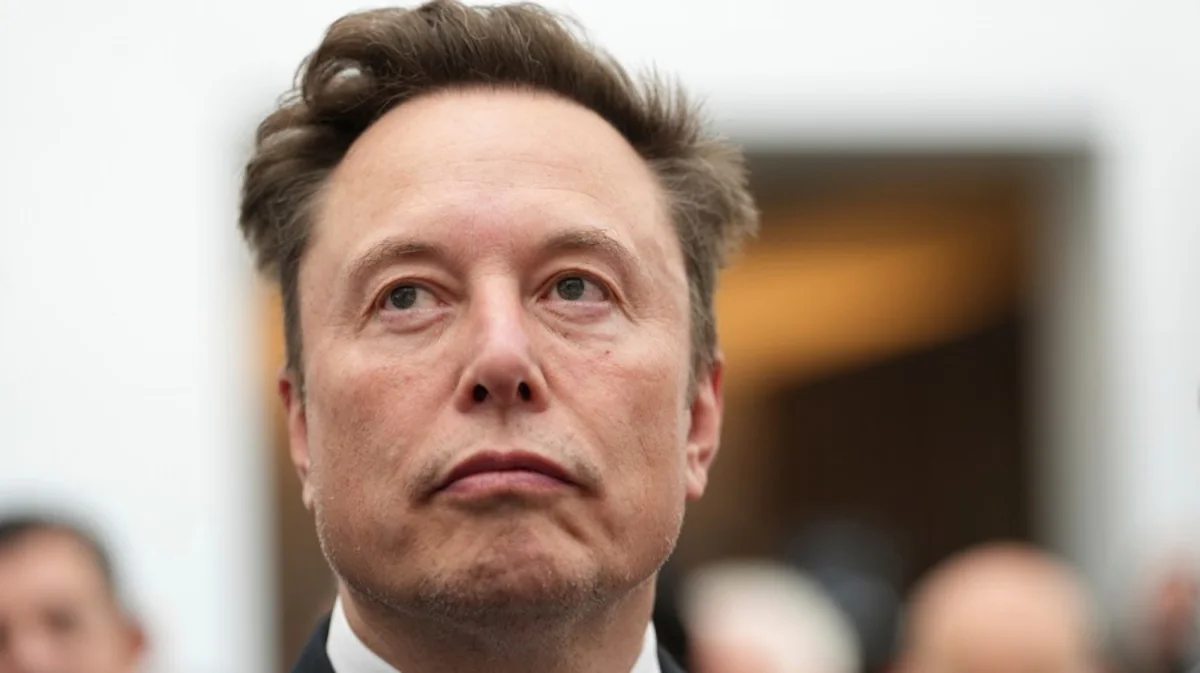
Top Trump administration officials are starting to point fingers squarely at SpaceX founder Elon Musk for the decision to slow down his company's Starlink satellite internet services and its military counterpart Starshield for Ukraine, which has been muddled in uncertainty over the culprit.
Looking to deflect the controversial move — which was swiftly admonished by powerful congressional Republicans and Democrats — Secretary of State Marco Rubio on Wednesday said Ukraine's access to Starlink was up to Musk and not the White House.
"The bottom line is that that is governed by a private commercial contract as to how their stuff can be used and what speeds they'll allow it to be used at," Rubio told reporters while traveling to India.
And Defense Secretary Pete Hegseth, speaking to reporters on Tuesday, suggested Starlink's slowdown was a commercial matter and not a result of any orders from the White House.
"There are terms of service that ultimately need to be complied to, and that's where Starlink has the option to make those decisions," Hegseth said.
Taken together, the comments are a change of tune from President Trump's original assertions last week that neither he nor Musk was responsible for the disruption. Rubio also on Saturday had insisted that no one ordered the slowdown.
The about-face comes after The Wall Street Journal reported Tuesday that Musk ordered the slowdown of the satellite services, a vital tool Ukraine uses to defend itself from Russian missile and drone attacks.
Trump's role is unclear. The Journal reported that at least one person claimed Musk and Trump spoke prior to the slowdown. Reuters reported last week that the order to throttle Starlink came from inside the White House, in a directive to the Pentagon. Sources speaking to Reuters did not specify who at the White House made the decision or who was responsible for implementing the order.
"I don't know who did it but I was not involved," Trump told reporters Wednesday when asked.
Trump and Musk have experienced periods of fallout in their relationship but appear on the upswing today. A low point in their relationship occurred during a major public spat in June 2025, where Musk alleged that files on the disgraced financier and convicted child sex offender Jeffrey Epstein were kept secret to protect Trump.
But the relationship has rebounded since then. Trump awarded Musk the National Medal of Science earlier this month. And Musk has provided more than $276 million for Republicans in the midterm elections, The New York Times reported .
Outgoing Texas Sen. John Cornyn (R) on Wednesday said he doubted Trump had no hand in the slowdown, as he doesn't believe Musk "would do this without at least the acquiescence of the White House."
"I think it's frankly shameful," Cornyn said on CNBC's "Squawk Box." "I think we should be supporting the victim, not the aggressor."
Starlink's slowdown in Ukraine came after Ukrainian President Volodymyr Zelensky lashed out at Trump for waiving sanctions on Russia and making a deal to purchase diesel from Russian President Vladimir Putin. Zelensky called Trump "weak" for making the deal.
Part of Trump's response to Zelensky was to blame him as the obstacle to peace with Putin.
Republicans holding back blame on Trump for Starlink's throttling are demanding an investigation and accountability. Reps. Brian Fitzpatrick (R-Pa.) and Don Bacon (R-Neb.) have threatened to block Trump's agenda during the lame-duck session if answers are not provided.
"This is a very, very serious matter. It cannot be glossed over," Fitzpatrick told CNN on Tuesday, following the Journal report.
Fitzpatrick said if Musk ordered Starshield's slowdown, "that is likely a violation of the law."
"He has decisionmaking authority over Starlink, the civilian commercial product, but not Starshield, which is a military-grade national security tool. No individual civilian should have any decisionmaking authority over how that's deployed," he said.
Adding to the confusion, Rubio, who also serves as national security adviser, has said Ukraine does not have access to Starshield.
"Starshield is a defense product ... the United States military uses," Rubio told reporters last week.
"It's not at this moment available to Ukraine, and that's under conversation. It's under discussion right now of how they would want to use it."
Zelensky on Tuesday said he discussed with Rubio "the situation with Starlink/Starshield, which needs to be restored" and called the conversation "constructive" in a post on the social platform X .
Part of that conversation is whether the U.S. could give Ukraine the ability to hit targets deep inside Russia, in particular missile launchers, in exchange for halting Ukrainian strikes against Russian oil refineries.
Trump has demanded Ukraine halt strikes against Russian energy infrastructure, claiming that they are related to high diesel prices in the U.S., though they largely stem from the U.S. war against Iran.
Russia has refused to halt strikes against Ukrainian energy sites, in particular civilian electricity and heating infrastructure. Zelensky's allies in Congress have backed a proposal for the U.S. to give Ukraine the ability to hit Russian missile launchers in exchange for halting Ukrainian strikes against Russian energy facilities.
"President Trump can lower prices at the pump today by simply agreeing to this deal!" Sen. Roger Wicker (R-Miss.) wrote Sunday in a post on X. Wicker's pushback came after Trump announced he would buy Russian diesel to lower prices in the U.S.
Ukraine's ability to hit Russian launchers would rely on accessing Starlink inside Russia, where it's currently blocked. A bipartisan group of lawmakers — seven Republicans and 16 Democrats — wrote to Trump on Wednesday urging him to call Musk and give Ukrainians that access.
"With one phone call, you could both save lives and give Vladimir Putin greater incentives to negotiate," the lawmakers wrote.
"If Ukraine cannot reliably intercept Russian 'arrows,' it must be able to shoot the 'archer.' The Starlink system run by Mr. Musk's company SpaceX could help with that."
Topics in this story
Gathered from external sources. Rights to this text belong to whoever originally published it.