Another change election and a whipsawed America
The most likely scenario for next week’s election is … that no one will learn anything. I can say that with some degree of confidence because in the last five election cycles or so, the learning curve has been so flat that if it was a politician’s posterior, President Trump wouldn’t even notice it. Campaigns,…
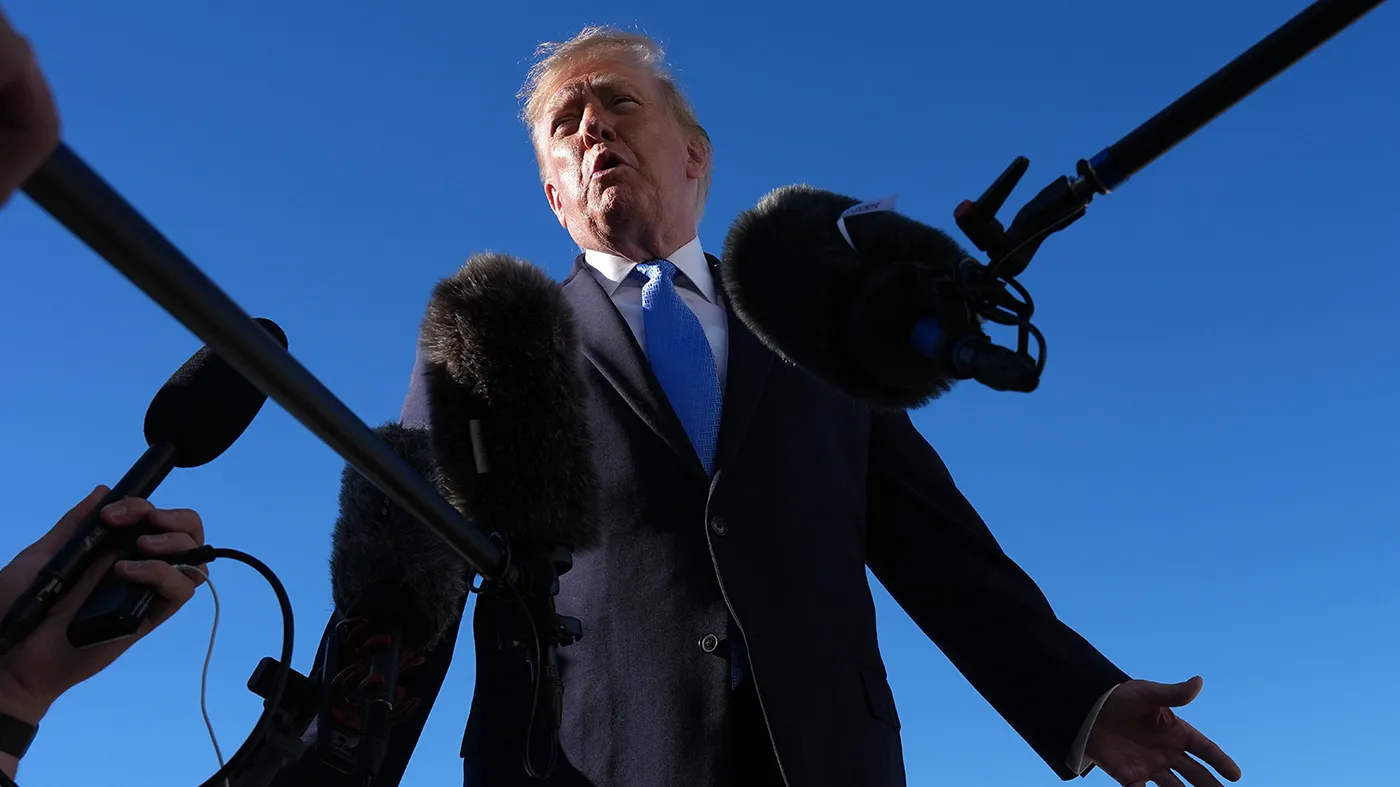
The most likely scenario for next week’s election is … that no one will learn anything.
I can say that with some degree of confidence because in the last five election cycles or so, the learning curve has been so flat that if it was a politician’s posterior, President Trump wouldn’t even notice it.
Campaigns, individuals, parties and super PACs are going to have spent northward of $12 billion on this year’s midterms. That will end up being something like $115 for every voter, but all they’ll have to show for it is a kitchen trashcan full of junk mail. Washington has been a ghost town for weeks as lawmakers dare not be caught making any laws so close to the election. News outlets from the most local to the international have shifted into constant coverage mode for what is, even in the most robust case, a relatively low-turnout, low-stakes election.
We are — by virtue of both the curse that has afflicted the party in power in all but three midterm elections since the Civil War and sky-high consumer prices — heading for divided government. Gridlock is coming. How big the Democratic majority is in the House or whether the blue team can manage a clean sweep in Senate races to take the upper chamber isn’t a matter of no importance, but it is certainly an issue of marginal significance.
It matters a great deal to me because I have, as imprudent and self-flagellatory as it may seem to you, devoted my vocational life to the questions with answers hidden deep within the crosstabs of exit polls, swing district turnout numbers and in the arcana of Senate procedure. I care about those things because I want to know where the country is going, but also because I’m interested in where we’ve been.
Next week’s results will still tell me something about what’s happening under the hood in the engine of this beautiful big-block V8 of a nation. Alas, though, I already know what I’ll likely find: People are frustrated, fed up and want something else.
American voters have been seeking one thing above all others since at least 2014: change. In that time, we’ve seen control of the House flip three times and the Senate change hands twice, plus one 50-50 tie. We are heading for a fourth change in the House and maybe a third switch in the Senate in just 12 years. Not only is that more flipping than in the first part of this century, but the majorities have also been shorter in duration and smaller in size than in even that relatively choppy period.
Like a frustrated IT worker on the help desk, the American electorate keeps saying to the government: Have you tried turning it off and then turning it back on?
And just like the technophobic employee at the other end of the line, Washington only responds with an error message.
There have been at least three substantial political realignments in the past 100 years in which the parties have dramatically changed their geographic and demographic coalitions, but you’d still have to go all the way back to the 1870s and 1880s to find a period as politically unsettled as our own. That was the last time we saw such unstable majorities in Congress. And the last time the presidency switched parties in three consecutive elections was from 1884 to 1892. That was also, not coincidentally, the last time a president served nonconsecutive terms — the criminally underrated Grover Cleveland.
Our Gilded Age forebears even went for a fourth presidential flip, sending the White House back over the net in 1896. And if you were betting, you’d say that we were going to do the same in 2028.
The reasons for the instability today have some substantial overlap with the causes back in the days of girthsome Grover. Weak national parties have been supplanted by other forces: wealthy patrons and populistic mobs. William Jennings Bryan knew the Hasan Pikers of his day, and J.P. Morgan would have had to tip his cap to Elon Musk.
But also, the nation itself is unsettled. Like the post-Civil War era, America is going through a long period of demographic, technological, economic and social change. The nation faces the future with a mix of hopeful wonder and profound dread. Whether it’s electrification or artificial intelligence, big changes to the ways that people live and work are bound to be reflected in their political preferences.
Now, as it was then, we have declining birth rates, lots of immigration, shifting population centers and a sometimes-violent clash between tradition and progress. And in the most Gilded Age feature of all, rank corruption has convinced many that the system itself may be beyond saving.
If you’re a Democrat, you need to believe that the arc of history will start bending away from the entropy of the 2010s and 2020s on a bracing fall night a week from today. You have to believe that because, otherwise, what have you been annoying your friends and family for all these weeks?
The same goes for Republicans. You have to believe that a heroic goal line stands to save the Senate and keep the governorship of some state you don’t even live in really matters. If not, what was the point of all those Facebook comments?
But take it from me, we are nowhere near the end of the entropy. Next week won’t solve anything. It will only again express the electorate’s wish for something different. But, maddeningly, not what that something should be.
That’s the question we’ll start hashing out as soon as the last votes are cast next Tuesday and begin a presidential cycle under the glaring judgment of an electorate that only seems to agree that whatever it is we’ve been doing hasn’t been working. But just don’t count on any of the candidates to take that lesson from the results.
Gathered from external sources. Rights to this text belong to whoever originally published it.