The dark side of AI regulation is unrestrained government control
How powerful would a government have to become to make sure that nobody was secretly developing prohibited AI?
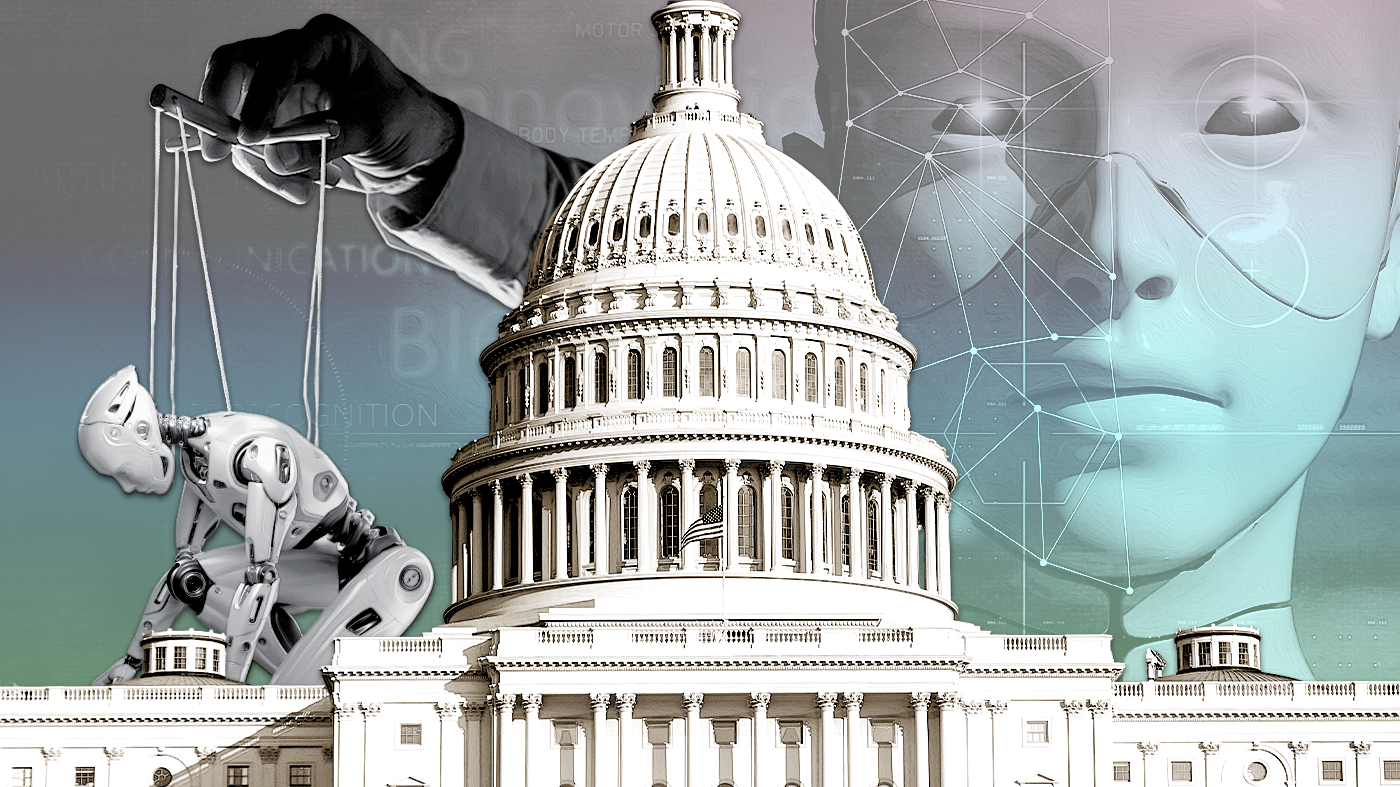
Fear of artificial intelligence is spreading fast. In the United States, momentum is building for a regulatory framework that would slow progress at the technological frontier.
Leaders of the industry sound partial to slowing down . The problem with this approach is that any effective regulation would create risks of its own. In particular, enforcing an AI slowdown would require an extraordinary expansion of the government’s surveillance and investigative powers. History shows that the risks of such an expansion might outweigh the very real risks of unregulated development.
Particular uses of AI can be regulated. Governments can prohibit fraud, protect privacy, enforce copyright and impose liability for damages. The harder problem arises when regulation attempts to slow down technological progress itself — preventing private firms from developing capabilities that regulators consider too dangerous.
Any workable regulation of this kind faces a basic problem: The firms being regulated would have enormous incentives to evade it.
In general, the profit motive is a driver of innovation. AI promises enormous profits to industry leaders, and even a temporary technological advantage could be extraordinarily valuable. A regulation that limits technological progress would therefore create strong incentives to develop prohibited technologies secretly. The same profit motive that drives AI innovation would create incentives to evade rules intended to slow it.
AI is different from many industries that governments already regulate. A factory can secretly violate pollution standards, but it cannot easily conceal the existence of a new factory. A bank cannot secretly become twice as large. With AI, by contrast, private progress is a realistic possibility. A firm with access to superior technology could operate at lower costs, develop better products or improve its internal operations without immediately revealing the source of its advantage.
This does not mean that stringent regulation would be impossible to enforce. It means that enforcement would require an unusually intrusive government.
To know whether companies were secretly developing prohibited AI capabilities, regulators would need extensive access to their research and development activities. They might need to monitor computing resources, training runs, data centers, internal model evaluations and research projects. They would have to distinguish ordinary improvements from technological advances that crossed whatever boundary the government had established.
And this monitoring could not be occasional. The whole point of frontier AI is that technology changes rapidly. Regulators would need to know not merely what firms had produced but what they were thinking of producing.
The information collected would then have to be processed somewhere. A government agency capable of monitoring the technological frontier across America’s AI industry would require extraordinary technical expertise and access to some of the most valuable commercial information in the economy. Conflicts of interest would be enormous. So would the opportunities for regulatory capture and corruption.
This political economy part of the AI regulation debate receives too little attention. How powerful would a government have to become to make sure that nobody was secretly developing prohibited AI? Historically, many authoritarian states have been built on the premise of controlling risks countries faced. Safety and security are what autocrats sell to their citizens. Many of these countries paid an enormous price for authoritarianism.
The problem becomes even more difficult internationally. A meaningful American slowdown would make little sense if other technological powers continued to race ahead. Could an AI arms race be constrained by international treaties? The Cold War provides examples of arms control agreements that limited American and Soviet weapons.
But traditional arms control had an important advantage: Missiles, launchers and nuclear tests have physical manifestations that can, at least imperfectly, be observed. Technological progress in AI can be much harder to monitor. And would China accept comparable American monitoring of its technological infrastructure?
The U.S. government could then face an unpleasant dilemma. It could abide by restrictions that its geopolitical competitors might evade, thereby falling behind in a technological race. Or it could abandon its own restrictions once it suspected that others were cheating. Neither possibility provides a strong foundation for a durable regulatory regime.
None of this means that AI is safe or that governments should do nothing. New technologies create new risks, and particular uses of AI will inevitably be subject to law and regulation.
But regulation intended to slow technological progress poses a different problem. The usual AI safety debate asks how much power society should leave in the hands of private companies developing increasingly powerful technology. It should also ask how much power we are prepared to give the government charged with stopping them.
Creating a government powerful enough to monitor the frontier of technological progress is not a costless response to the dangers of AI. It creates a new concentration of power — and a new risk of its own.
Georgy Egorov is the James Farley-Booz, Allen and Hamilton Research Professor at the Northwestern University Kellogg School of Management .
Konstantin Sonin is John Dewey Distinguished Service Professor at the University of Chicago Harris School of Public Policy.
Topics in this story
Gathered from external sources. Rights to this text belong to whoever originally published it.