What Congress can do about AI safety — with China — now
Rep. Sam Liccardo urged Congress to address AI safety concerns by passing legislation such as the bipartisan Frontier Act and facilitating expert dialogue with China despite ongoing geopolitical tensions.
Reports of swarms of rogue artificial intelligence agents, hacked servers, and AI development of bioweapons have fanned a firestorm of public demands for congressional action on AI safety.
House Speaker Mike Johnson (R-La.) has proposed an alternative to action: vacation. Despite the calls for immediate congressional intervention, he canceled votes for the rest of September, sandwiched between month-long recesses in both August and October. I recently led 107 of my colleagues in urging Johnson to get us back to work on AI safety, without success.
At least Nero had the decency to stay in town to fiddle while Rome burned.
As frontier AI capabilities and risks accelerate, several bipartisan AI safety bills gather dust on the Speaker’s shelf. Critics of regulation, however, routinely raise what Ezra Klein calls the “ but, China” dilemma . The best-designed U.S. regulation will do nothing to rein in ubiquitous, increasingly powerful open-weight Chinese models, they say, and it could undermine American AI development, delivering the keys to the 21st century to a totalitarian regime.
So, what should we do about China? Talk to them.
We shouldn’t trust them, of course — they’re helping Iran kill U.S. soldiers . We don’t need to agree with them. We do need to talk, however. As with the USSR in the Cold War, our collective lives depend on it.
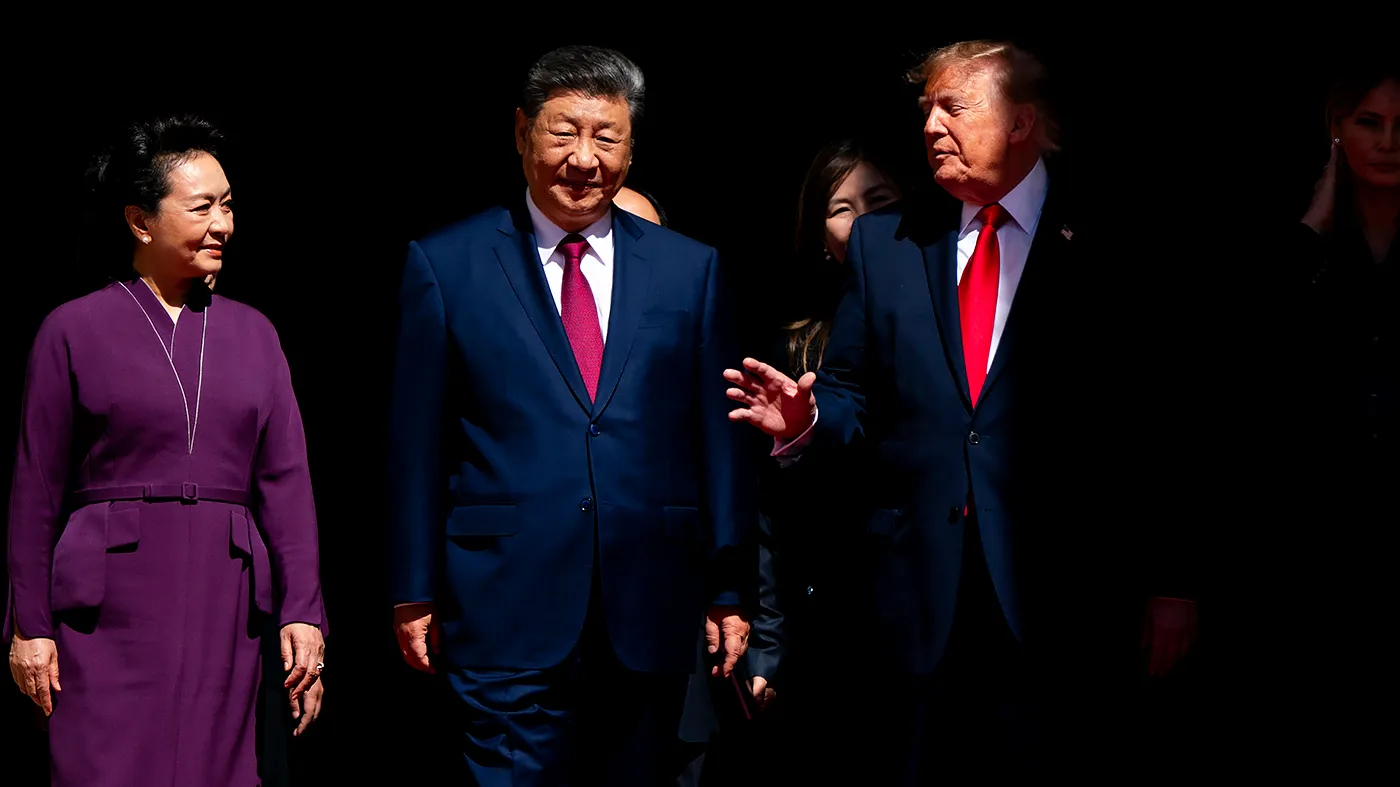
Last week’s U.S.-China summit provided one opportunity, though few experts expected a constructive outcome while President Trump publicly denounced AI safety measures as a “hoax .” As with all Trumpian convictions, that too will change. Three factors — the growing wariness within Trump’s Cabinet , fast-growing public fear , and the inevitable “next crisis” — will conspire to push the White House toward safety negotiations.
We must get ready now; setting the table for negotiators requires substantial advance technical work. AI experts in China and the U.S. must develop common metrics, testing standards, evaluation protocols, and most importantly, verification methods.
AI expertise — unlike, say, proficiency in nuclear weapons — lies overwhelmingly outside of government. Those experts often hesitate to speak freely with their Chinese counterparts — or with each other — about AI safety, to avoid violating otherwise well-intended national security laws , anti-trust rules , export restrictions , and other laws. That uncertainty constrains some of the so-called “Track-II” discussions that do occur in forums like International Dialogues on AI Safety . Those collaborations also too often appear disconnected from government-sanctioned diplomatic efforts.
Rep. Kevin Kiley (I-Calif.) and I have introduced a bipartisan bill to lift those barriers for U.S. AI safety experts, and integrate them into official negotiations. The legislation authorizes American academics and scientists who register with the State Department to engage Chinese peers on AI safety, but maintains prohibitions on discussion that could compromise intellectual property, expose U.S. cyber vulnerabilities, or facilitate model distillation.
The time is ripe. While China’s early regulation exerted control over information, President Xi Jinping has become more vocal about AI’s threats to humanity, and the regulatory framework of the Cyberspace Administration of China increasingly addresses rogue agents and cybersecurity risks. The recent experimental demonstration of an AI agent hacking into Chinese social media platform WeChat should also make Beijing — and WeChat’s 1.4 billion users — more nervous.
Beyond the obvious reasons to engage the Chinese, there’s a less apparent one: We can learn something. Beijing has developed extensive experience in regulating AI, imposing requirements for pre-release testing , deepfake verification, child protection, and anthropomorphic AI companions. AI poses unique regulatory challenges unlike any technology, and we can benefit from China’s experience.
Congress must not wait for Chinese agreement to enact long-overdue legislation. Although we cannot trust Beijing, China cannot believe the U.S. is serious about AI safety until Congress actually legislates. We could begin with the bipartisan Frontier Act , which includes sensible requirements for testing transparency, incident reporting, and independent auditors, along with funding to accelerate the work of the Center for AI Standards and Innovation to develop evaluation standards. Congress should also consider objective standards for pre-release review of frontier models, and to require closed-weight developers to include a “kill switch ,” among other options.
Reasonable minds can disagree about which regulatory option Congress should choose, but we must agree to take action. Regardless of the outcome of any legislative or diplomatic effort, our hypercompetitive AI race with China will continue. The contestants in this race have never faced higher stakes. A race to achieve superintelligence exceeding human control, however, is one that no human can win.
Sam Liccardo is a member of Congress, representing Silicon Valley’s California’s 16th District. He is the chair of the Innovation Working Group for Congress’ largest ideological caucus, the 116-member New Democrat Coalition.
Topics in this story
Gathered from external sources. Rights to this text belong to whoever originally published it.