How Trump ignited a midterm drubbing for Republicans
Americans delivered an emphatic repudiation of President Trump Tuesday as Democrats took control of both chambers of Congress by wide margins.
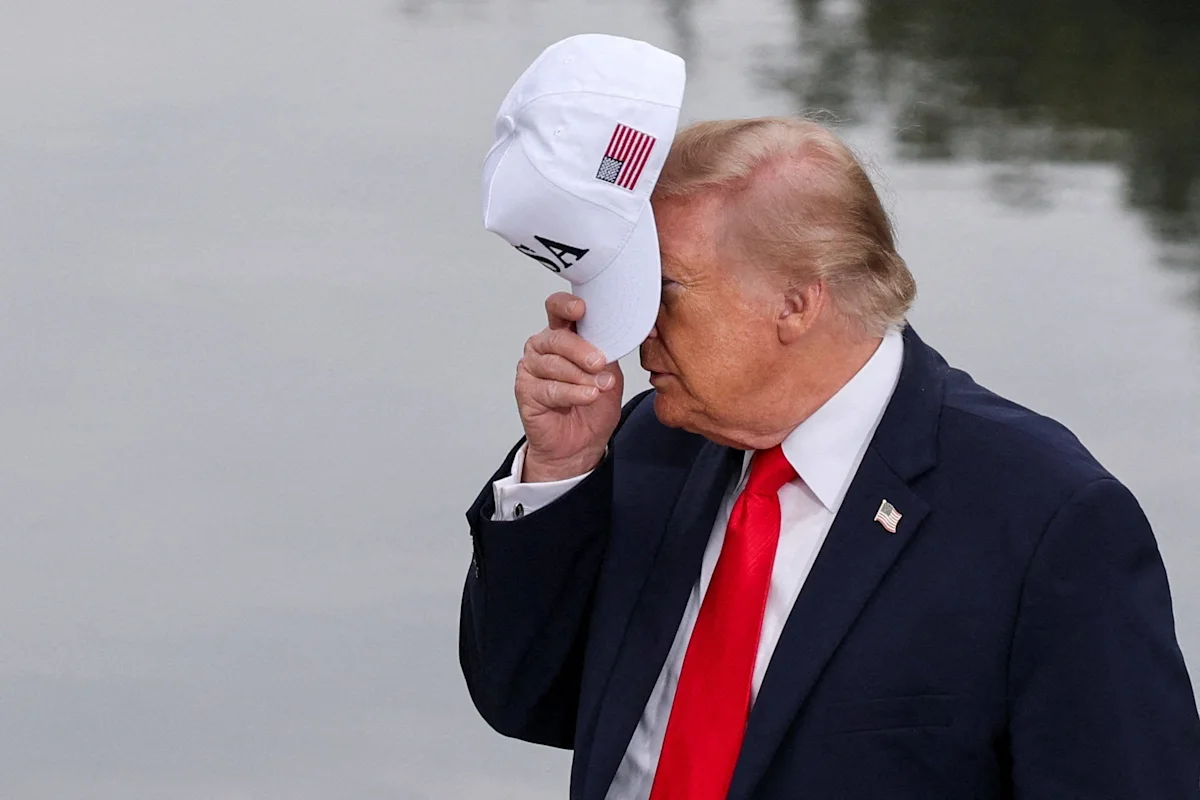
WASHINGTON — Americans delivered an emphatic repudiation of President Donald Trump's second term Tuesday as Democrats won control of both chambers of Congress by wide margins and scored wins deep in red territory after running against Trump's unpopular war in Iran and his economic agenda.
In a midterm election that Trump embraced as a referendum on himself — actively pleading to his supporters to "pretend I'm on the ballot" — Republicans were dealt a crippling blow as a massive blue tsunami swept away battleground GOP candidates.
"It seems like voters took Trump seriously when he told them to vote as if he were on the ballot," said Sarah Matthews, who served as a deputy press secretary during Trump's first administration, adding that the president "has no one to blame but himself."
Republicans lost Senate races in Texas , South Carolina, Kansas, Ohio and Iowa ‒ GOP bastions that Trump carried by double digits in 2024 and to which he personally made multiple visits in the homestretch of the midterm campaign .
Texas hadn't elected a Democrat to the Senate since 1988; and Kansas not since 1932, when Hebert Hoover was president . Democrats were projected to win nearly every key battleground Senate race despite largely fighting on political terrain that strongly favored Republicans, while also flipping enough Republican-held seats to comfortably win the House.
"In sweeping and decisive victories, the American people have rebuked the depravity, corruption, and incompetence of the failed lame duck president, Donald J. Trump," Democratic Georgia Sen. Jon Ossoff said in his victory speech.
The staggering GOP loses amounted to a resounding midterm thumping for Republicans on Trump's watch — one that the president quickly tried to distance himself from.
"I wasn't on the Ballot and if I was, we would have won IN A LANDSLIDE!" Trump wrote on social media as it became clear the GOP was heading for a dismal election night.
The outcome makes Trump a lame-duck president legislatively for his final two years in office, threatening the iron grip he's held on the Republican Party for the past decade — particularly as attention shifts to a 2028 presidential election that won't feature him as the party's nominee.
Historically, sitting presidents with Trump's level of unpopularity stay far away from the campaign trail during midterms to allow their party's candidates to distance themselves from the White House.
But Trump, despite his record-low approval ratings hovering below 35%, barnstormed the country with more than two dozen rallies in a push to energize MAGA supporters — even if his presence might have undercut the same Republican Senate candidates he aimed to help.
In an election dominated by Americans' concerns about the economy and rising cost of living, Trump mocked the term "affordability" as a creation of Democrats and said higher gas prices were a "small price to pay" for achieving his administration's aims in Iran.
Rather than focusing on the economy during his final speech before Election Day, Trump devoted the bulk of his closing argument to talking about his recent renovations to the Lincoln Memorial Reflecting Pool. Trump boasted about clearing algae from the D.C. landmark and installing the best granite, waiting until more than 20 minutes into his speech to finally mention an election was taking place the following day.
Trump delivers closing midterm message at Reflecting Pool
Longtime pollster Frank Luntz said voters who went from casting ballots for Trump in past elections to backing Democrats felt misled by his campaign promise to lower costs. Luntz pointed to a focus group he conducted of Republican midterm voters from Texas, Ohio, Georgia and South Carolina who supported Trump in 2024 but voted for Democrats in Senate races this year.
"They felt disappointed and just disillusioned with what's happened over the past two years, specifically over affordability," Luntz said. "They all ‒ no matter what part of the country they were from ‒ complained about how high prices had gotten and how they had been promised lower prices."
"This is no endorsement of the Democratic Party or the Democratic agenda," Luntz added. "It was rejection on what happened, or more importantly what didn't happen, over the last two years."
The Reflecting Pool event encapsulated a broader theme that handcuffed Republicans: Throughout the campaign, Trump seemed more interested in talking about his legacy Washington projects — his White House ballroom and helipad, his plans for a triumphal arch and renovated Washington golf course — than kitchen-table issues that registered with voters.
Democrats capitalized on the disconnect.
A senior White House official, who spoke to USA TODAY on the condition of anonymity, defended Trump's midterm strategy, arguing he put the party in a better position with a relentless campaign schedule that included 30 events in 20 states over a four-week stretch.
Trump would've been criticized if he hadn't been aggressive in trying to help the party, the official said.
After the Democratic rout was on, Trump conceded the war in Iran weighed on Republican candidates, telling Fox News in an interview, "I think a part of it was Iran."
Yet he was still apparently unwilling to accept blame for the devasting outcome for Republicans.
"I don't like to consider it a defeat for me. I wasn't on the ballot, if you're on the ballot it's different than if you're not on the ballot," Trump told Fox News.
The president's decision to thrust himself into the center of the midterm campaign despite voters' deep misgivings about his performance may have helped sink candidates in key races by tying them more closely to him. Some tried to distance themselves from Trump, but were swept out anyway.
Some of the most stinging GOP loses came in states where Trump endorsed close allies in the primary who went on to struggle in the general election. Perhaps the most glaring example was the scandal-plagued Texas Attorney General Ken Paxton, who unseated four-term Sen. John Cornyn in the state's Senate primary with the president's backing but consistently trailed Democrat James Talarico in polls before his defeat on Nov. 3. Trump's endorsement of Darline Graham, a political novice and the sister of the late Sen. Lindsey Graham, boosted her through the primary, but resulted in a shocking general election defeat in a state Trump carried by 18 percentage points.
"It certainly didn't help that he handpicked weak candidates who only made matters worse," Matthews said.
Ultimately, though, even Republicans viewed as strong candidates were unable to overcome the dismal political climate for the GOP, one driven by deep discontent with Trump. That includes Sen. Susan Collins of Maine, a political survivor who had overcome poor polling in previous elections and carved out a reputation as an independent-minded moderate willing to vote against Trump. She lost her bid for a sixth term to Democrat Troy Jackson.
"Bad night is an understatement," said Charlie Black, a Republican strategist. "We lost every seat in play and some that we did not know were in play."
The results leave the president politically weakened, facing a hostile Democratic Congress that is eager to rein him in.
Democrats have signaled they will launch an aggressive oversight campaign, with Trump administration officials facing a barrage of congressional hearings and potential subpoenas.
Trump's critics are eager to shut down his controversial second term agenda, which has featured mass deportations, sweeping tariffs and military actions that have drawn strong criticism.
The president told Fox News on election night that he hopes to work with Democrats, mentioning immigration as an area where both sides might be able to come together.
"I could work with them on many, many things," Trump said.
Yet he also vowed to wield his veto pen liberally to block Democrat priorities and force them to negotiate, saying: "After a couple months of vetoes, they'll call and they'll say 'How do we get this stuff done?' And we'll work together."
Trump, however, also faces the possibility of growing dissent within the ranks of his own party, with the midterms showing the perils of Republicans aligning too closely with the president.
The election could be an inflection point for the GOP, which Trump has dominated for a decade but now must grapple with his waning appeal to voters and find a path back to winning battleground states ahead of the 2028 election.
"When the very person you've spent years defending starts costing you elections, that loyalty becomes a whole lot harder to justify," Matthews said.
Topics in this story
Gathered from external sources. Rights to this text belong to whoever originally published it.