Judge says Rollins’s religious holiday messages likely violated First Amendment
A district court judge on Thursday said U.S. Department of Agriculture (USDA) Secretary Brooke Rollins likely violated the First Amendment after sending emails to her staff about Jesus Christ, God, Christmas and Easter. Rollins had sent out four holiday-related emails, which prompted federal employees to file a lawsuit in May. U.S. District Court Judge Trina…
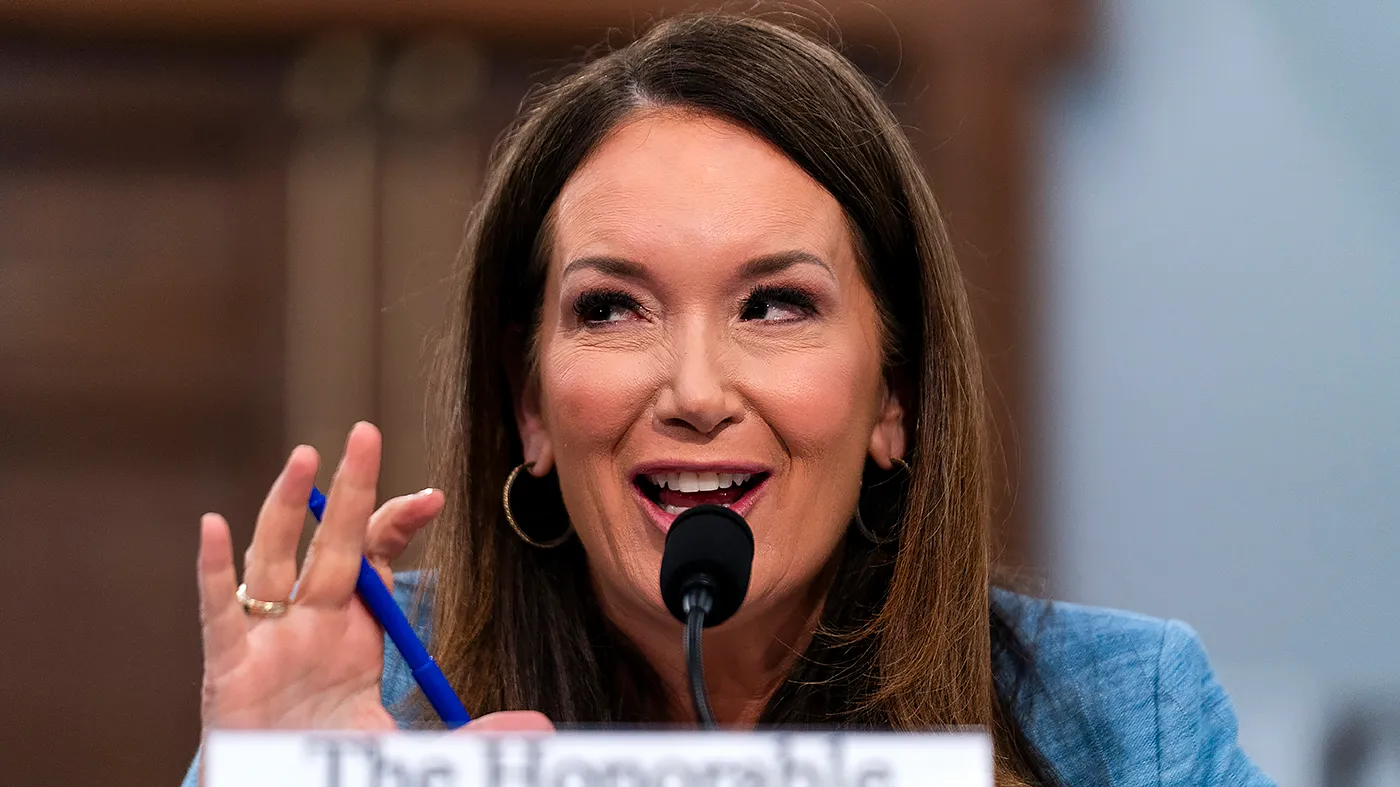
A district court judge on Thursday said U.S. Department of Agriculture (USDA) Secretary Brooke Rollins likely violated the First Amendment after sending emails to her staff about Jesus Christ, God, Christmas and Easter.
Rollins had sent out four holiday-related emails, which prompted federal employees to file a lawsuit in May. U.S. District Court Judge Trina Thompson agreed with the employees on the emails referring to Christmas and Easter.
Thompson issued a preliminary injunction blocking Rollins from sending out faith-laden emails. The Biden-appointed judge wrote in her ruling that Rollins’s “good faith intentions … are not the issue here.”
“The April 5, 2026, and Dec. 23, 2025, messages go too far,” Thompson wrote. “They suggest acquiescence that amounts to coercive pressure; a pressure of conformity sufficient to raise an Establishment Clause violation.”
She elaborated that protecting “private devotion and spiritual reflection from government influence comes to the fore.”
“The wisdom of the Founders was in recognizing that independence requires freedom of conscience,” she continued. “The command of the Establishment Clause, thus, is to prohibit the government from using its authority to try to sway an individual’s decision about whether and how to practice their faith … this court requires the Secretary to observe her own directives.”
The Easter email told USDA employees that God had “granted each of us victory and new life. And where there is life –– risen life –– there is hope.” The email begins with “Happy Easter — He is Risen indeed!”
Thompson said the comparison between employees and “the very first disciples to encounter our risen Lord in the Upper Room almost two thousand years ago” portrays “the agency’s work as a mission to serve her particular Christian views.”
The Hill has reached out to the USDA for comment.
Politico first reported on the Easter message earlier this year, when USDA employees claimed the messages made them “feel excluded and unwelcome, and they fear the negative consequences of not sharing the Secretary’s religion or expressing their own different beliefs in the workplace.”
The employees were represented by Americans United for Separation of Church and State, Democracy Forward and Bryan Schwartz Law.
Americans United president and CEO Rachel Laser said in a statement that the decision should send a message to the Trump administration “that it cannot misuse taxpayer resources to preach, hold government-sponsored prayer services during work time and broadcast Christian Nationalism over official communication channels. Not on our watch.”
“I am heartened and relieved to see the court upholding the Constitution and protecting employees from further inappropriate messages from the secretary,” USDA employee Ashley Miller said in a statement from Democracy Forward. “It was quite scary to come forward, but I am proud we did so, knowing this will help everyone across USDA.”
Rollins has been very open about her Christian faith, posting excerpts of Scripture on social media. She also takes part in Bible study groups with other Trump administration Cabinet members.
The Establishment Clause of the First Amendment prohibits the federal government from establishing any official religion or showing preference to any one religion over others. It was also established to prohibit state-sponsored churches like the Church of England, according to the U.S. Courts website.
The amendment’s Free Exercise Clause protects people’s right to practice their own religion as long as it does not run afoul of a “compelling” governmental interest, as cited by the 1944 Prince v. Massachusetts decision. The Supreme Court ruled at the time that the state could force children to be inoculated despite parents citing their faith as against inoculation.
Topics in this story
Gathered from external sources. Rights to this text belong to whoever originally published it.