Contempt of Congress yields mixed results
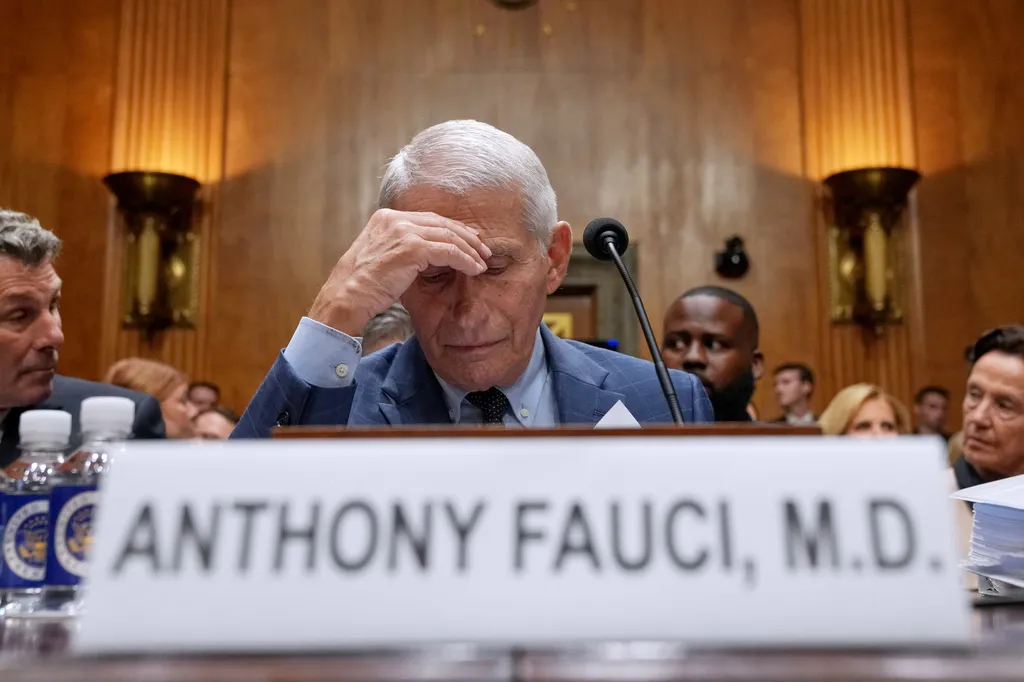
A recent controversy involving Anthony Fauci’s refusal to testify before the Senate Committee on Homeland Security and Governmental Affairs highlighted the complexities of congressional contempt power and its application within the current political landscape.
Contempt of Congress is one of those ephemeral things that floats somewhere between the Constitution and the rules of the House and Senate but is not mentioned in any of those foundational documents. Yet, as an “implied power,” it is one of the most essential tools parliamentary bodies have to carry out their lawmaking and oversight responsibilities.
While Great Britain can boast it is the only parliamentary democracy without a written constitution, the contempt of Parliament power has long been recognized there. That power was carried forward in the American colonial legislatures and then in the U.S. Congress.
It wasn’t until 1857 the contempt power became enshrined in one of our laws . That law reads, quite simply that any person summoned by either house as a witness to give testimony or produce papers and who refuses to do so shall be guilty of a misdemeanor punishable by a fine of up to $1,000 and imprisonment of up to 12 months.
Prior to that statutory enactment, Congress held its own trials to punish those who refused to cooperate with congressional inquiries. Congress even provided a musty jail cell in the bowels of the Capitol to imprison recalcitrant witnesses until they cooperated.
The most recent and dramatic example of a contempt case unfolded on Aug. 6, when the Senate Committee on Homeland Security and Governmental Affairs, chaired by Sen. Rand Paul (R-Ky.), was holding hearings on the COVID-19 pandemic. Anthony Fauci, former chief medical adviser to President Joe Biden and prior to that director of the National Institute of Allergy and Infectious Diseases, refused to respond to more than 100 questions put to him, instead invoking his Fifth Amendment right against self-incrimination.
Consequently, the committee voted along strict party lines to find Fauci in contempt of Congress. Paul vowed to take the contempt case directly to then-Acting Attorney General Todd Blanche for prosecution rather than first put the matter to a vote before the full Senate where a 60 vote threshold would be needed to pass the resolution.
What made this incident more bizarre was that Fauci had already received a blanket pardon from President Biden for any possible federal offenses relating to Fauci’s federal role that occurred between January 2014 and Jan. 19, 2025. It was a preemptive pardon in that no charges had been lodged against him. Paul thought that was a sufficient shield to obviate the need for invoking the Fifth. Fauci, on the other hand, viewed the whole inquiry as a set-up — a “perjury trap,” as he put it.
Even though Paul sent a letter to the Justice Department the same day the committee voted on contempt, he did not immediately file a formal referral request to Vice President JD Vance, in his capacity as president of the Senate, to certify the contempt. That was not done until Aug. 25.
According to a Wall Street Journal report last week , this has put the Trump administration in a difficult position. Trump is reportedly reluctant to press the Justice Department to act, for fear the referral might be summarily dismissed.
Trump said that although Fauci “made a lot of mistakes,” during COVID, he stopped short of saying he should be prosecuted. Moreover, he said he respects the presidential pardon as “a powerful thing.”
If the Fauci contempt matter is referred to Justice, the U.S. Attorney for the District of Columbia will have discretion over whether it should be prosecuted. The Trump’s seeming ambivalence on the issue has allowed the Department of Justice some wiggle-room in its decision.
In the 117th Congress, Trump aides Steve Bannon and Peter Navarro were indicted, tried, convicted and imprisoned for refusing to testify on the Jan. 6, 2021 attack on Congress. Two others found in contempt, Mark Meadows and Peter Scavino, were not indicted.
In the current 119th Congress, former President Bill Clinton and former Secretary of State Hillary Clinton initially refused to honor a subpoena for testimony on the Jeffrey Epstein scandal. When the House Oversight and Government Reform Committee threatened to cite them for contempt of Congress, they had a change of heart and agreed to appear voluntarily in closed session to answer questions under oath.
The contempt power is still considered a “club behind the door,” both to encourage and threaten subpoenaed witnesses to appear and present requested documents. The fact that it is being gamed more recently does not detract from its importance in enabling Congress to conduct oversight by getting the information it needs to do its job in a thorough and fair manner.
Don Wolfensberger is a 28-year congressional staff veteran, culminating as chief of staff of the House Rules Committee. He is author of, “Congress and the People: Deliberative Democracy on Trial” (2000), and, “Changing Cultures in Congess: From Fair Play to Power Plays” (2018).
Topics in this story
Gathered from external sources. Rights to this text belong to whoever originally published it.