If the Supreme Court wants to protect freedom of the press, here is its chance
Herridge did the right thing in protecting her sources. The justices now have a chance to protect her.
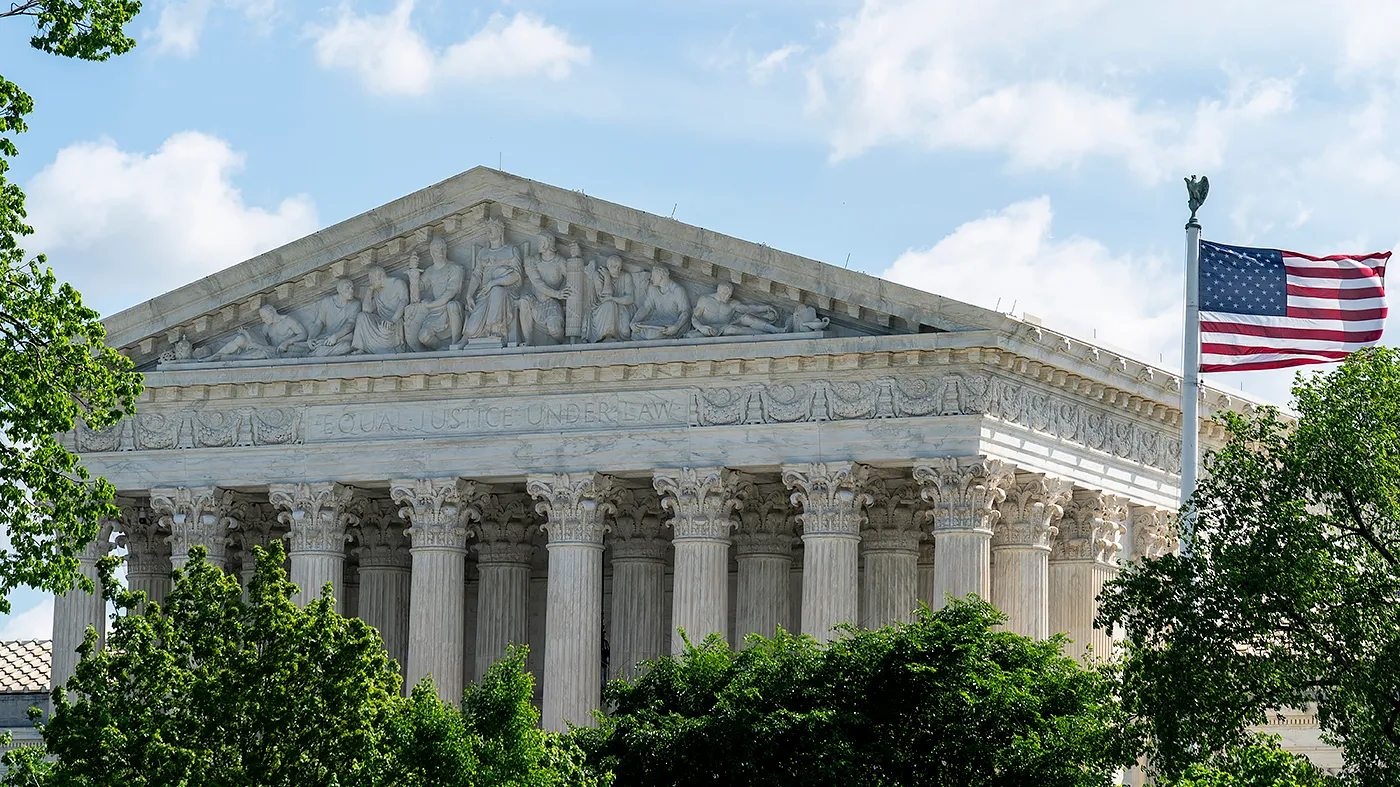
This month, Journalist Catherine Herridge is in the fight of her life — and the stakes for the country could not be higher. The former Fox and CBS reporter has long been one of the most prominent investigative journalists in the U.S., particularly on national security stories. She is now on her last appeal to the Supreme Court, attempting to protect the most vital prerequisite of the free press: confidentiality of sources.
At issue is a 2017 story that aired on Fox News concerning a Virginia-based training firm patronized by Pentagon officials . Herridge exposed ties of the University of Management and Technology to the Chinese military. It was the kind of difficult, complex story that made Herridge such a respected figure in her profession. The subject of the story, University of Management and Technology founder Yanping Chen, sued, claiming that the exposure had led to her loss of employment.
Such lawsuits are usually brought against journalists by disgruntled subjects under defamation or other grounds that are quickly dismissed by courts. But Chen brought a novel claim against various officials under the Privacy Act. She alleges that they disclosed to Herridge protected information about an FBI investigation. Rather than sue Herridge directly, Chen subpoenaed her to disclose the names of her sources. Herridge sat for a deposition but refused to breach confidentiality.
This is not Herridge’s first rodeo in fighting for journalistic values. Years ago, CBS News forced her out and seized her files containing confidential source information . Despite considerable costs, Herridge eventually stared down the network and forced it to return the files.
Notably, much of the Fox News story about Chen was available in the public domain. For example, a whistleblower and FBI informant had said publicly that Chen had admitted to him that she had been a colonel in China’s People’s Liberation Army. He also alleged that she told him to lie about that fact when called to testify before a federal grand jury.
Because Herridge refuses to disclose her sources, we do not know how much she actually relied on non-public information. This puts her in an impossible position: She would have to reveal sources in order to show that Chen’s claims are meritless.
In making her Privacy Act claim, Chen cited the disclosure of many facts already available publicly, including contradictions of her denials on being part of the Chinese military. The only information that had not already appeared in the public domain appears to be photographic, including a picture of Chen in a Chinese colonel’s uniform.
In this case, Herridge had the misfortune of seeking relief in Washington, D.C., where judges have been relatively permissive in allowing such disputes to go to trial. In 2023, U.S. District Judge Christopher Cooper, an Obama appointee, tossed aside protections that other circuit courts recognize under the First Amendment. He ordered Herridge to identify her confidential sources, then held her in contempt when she refused, imposing a crippling $800-a-day fine. Even that was not enough for Chen, who tried to have the penalties increased to $5,000 a day.
Before the fines were paused in August pending appeal, Herridge had to write a check every day from her two children’s college funds. “These fines are designed to break you emotionally and professionally,” she told me. “I would walk every day to the mailbox with our oldest son for emotional and moral support.”
Unfortunately, a panel of three judges on the D.C. Circuit Court of Appeals upheld Cooper’s ruling. Herridge therefore went to the Supreme Court for an emergency injunction against the daily fine. The court refused to intervene immediately, although Justice Brett Kavanaugh indicated that he wanted to grant the relief.
Herridge is now back before the Supreme Court, which will have a final opportunity to take the case and prevent a catastrophic blow to press freedoms. If the court again punts, then any aggrieved subject of a news story could effectively strip journalistic sources of confidentiality by alleging a Privacy Act violation.
The cause of this pileup is the highly permissive standard adopted by the D.C. Circuit for the single most important jurisdiction for investigative reporting. To compel disclosure, Chen needs only to show that the source is central to her case and that she has exhausted other avenues of discovery. This test exposes every reporter who breaks a story in Washington involving government abuse or waste. Imagine if Bob Woodward and Carl Bernstein had been sued under the Privacy Act by Nixon administration officials and forced to disclose the identity of Deep Throat.
Other circuits have a balancing test that allows for a more contextual resolution of such disputes. Another approach would be to deny such compelled disclosures when the case (as here) would not likely survive a motion for summary judgment. Chen, who lost her position because of information already in the public domain, cannot possibly show meaningful injuries from these photographs.
The irony in the case is crushing. Chen is an alleged former colonel in the People’s Liberation Army, using the U.S. Privacy Act to gut a Constitutional right not recognized in China. Of course she still has rights in this country, but the question is not whether she can sue under the Privacy Act — it is what standard she must meet before the courts make a journalist betray confidential sources.
Herridge got the story right and did the right thing in protecting her sources at great personal cost. The justices now have a chance to protect her. They should take her case. Not only has it created a split among the circuit courts, but it also has a compelling record to reconsider the confusing 1972 decision in Branzburg v. Hayes , which one appellate judge ridicules for being “about as clear as mud.”
Herridge is not seeking immunity or a favor. She is a tough reporter who just wants to do her job and protect her sources under a fair legal standard. The question is whether four justices will agree and grant review in Herridge v. Chen.
Jonathan Turley is a law professor and the New York Times best-selling author of “ Rage and the Republic: The Unfinished Story of the American Revolution .” He previously worked for CBS News and currently works at Fox News as a legal analyst. His views do not necessarily reflect those of those networks.
Topics in this story
Gathered from external sources. Rights to this text belong to whoever originally published it.