Iran strikes kept quiet during midterm homestretch set off worries about transparency
A series of reported secret U.S. military attacks carried out against Iran in the lead-up to Tuesday’s midterm elections is raising alarms around public tran...
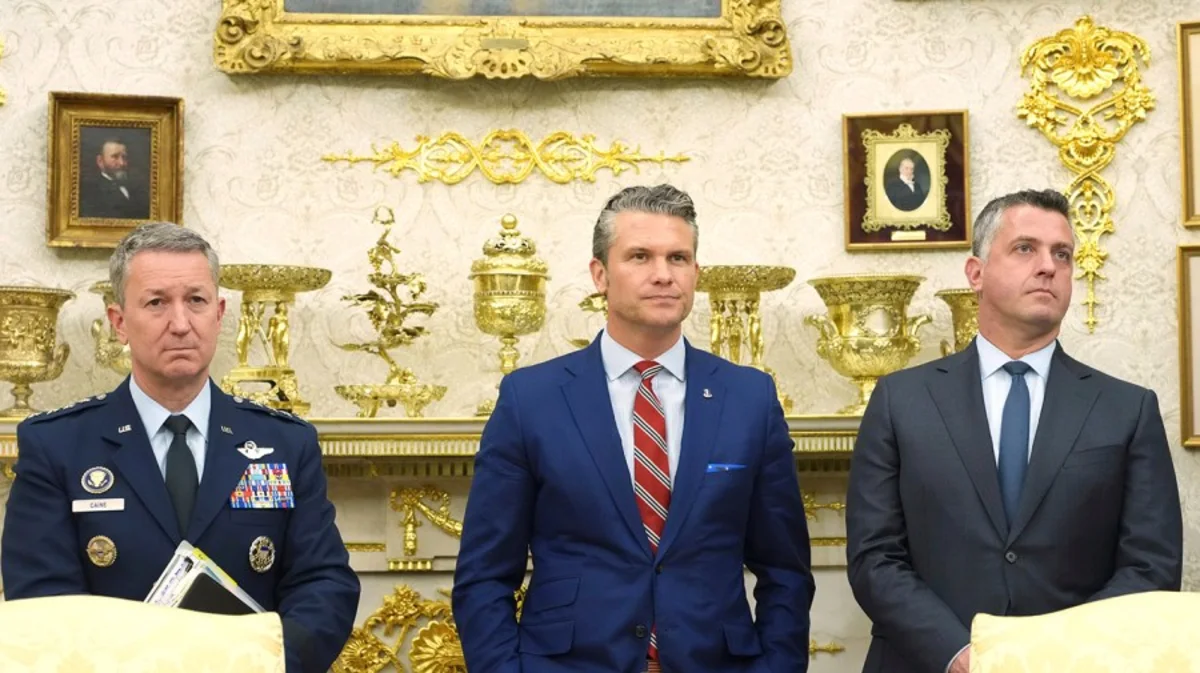
A series of reported secret U.S. military attacks carried out against Iran in the lead-up to Tuesday's midterm elections is raising alarms around public transparency.
The United States's Monday strike on Iranian targets in the Strait of Hormuz — including an antiaircraft facility on the strategic Qeshm Island — marked the latest in a series of American attacks over the past few weeks, The Wall Street Journal first reported. The military operations have not been publicly acknowledged by the U.S. or Iran, and the Pentagon has not disclosed any bombing of Iranian targets since two days of strikes in early September.
President Trump on Tuesday insisted there was no return to fighting, calling the Monday attack "minor" rather than a return to all-out war, a message at odds with his insistence last month that Washington would "not be attacking Iran at any time prior to the Midterm Elections."
That, coupled with the Pentagon's silence around a deeply unpopular war as Americans were set to head to the polls, calls into question exactly how much the government is obligated to disclose to the public about its military operations.
Rachel VanLandingham, a former Air Force judge advocate and now a law professor at Southwestern Law School, said there is no clear statutory requirement for the executive branch to publicly disclose discrete military operations.
During previous wars like those in Iraq and Afghanistan, the Pentagon held regular press briefings to keep the public informed, "a norm that has been greatly deviated from under [Defense Secretary Pete Hegseth's] Pentagon, which has taken concrete steps to squash transparency," she told The Hill.
One former Pentagon spokesperson had a far more blunt assessment, telling The Hill that the administration "bombed Qeshm Island during a news cycle where no one is going to cover this." He pointed to the timing as falling less than a day before the midterms.
"To the extent that this is incredibly unpopular, they probably don't want a lot of people talking about it," the former spokesperson said. "The lack of disclosure raises real transparency concerns."
U.S. Central Command, the military arm that oversees warfighters in the Middle East, did not respond to questions from The Hill on any recent U.S. strikes on Iran.
It's unsurprising the Trump administration would look to tamp down potential coverage around the Iran war, a conflict that has stretched more than eight months, roiled global markets and sent fuel costs soaring with no relief in sight, with fuel prices proving a major consideration as Americans headed to the voting booth Tuesday.
Washington and Tehran have continued to exchange strikes since this summer but have not returned to the intense missile and drone barrages seen in the early stages of the conflict.
"I think it's clear that the White House was trying to keep the conflict part of this Iran war quieter and not allow it at the near zero hour to hurt its electoral chances or become a factor in the domestic election more than it already was," said Jason Campbell, a senior fellow at the Middle East Institute.
On Monday, Trump insisted the conflict in Iran is not a forever war, but a "soft war" that he could end at any time he chooses.
"We're not fighting a war. ... When was the last time we fired anything? This isn't a war, this is a very soft war," Trump told Fox News's Sean Hannity shortly after the U.S. military struck Qeshm Island. "This is not much of a war, Sean, because there hasn't been shooting for months."
But following an astonishing GOP loss in the midterms, with Democrats taking back both the House and the Senate by unforeseen numbers, Vice President Vance on Wednesday broke his silence , saying: "The reason we lost is the war."
Trump, meanwhile, told reporters Wednesday that he knew the war would impact voting, but "whether it impacted it or not, Iran can't have a nuclear weapon, and they will never have a nuclear weapon."
Public information on the war has dropped to all but a trickle, with Defense Secretary Pete Hegseth declining to hold any press briefings on the matter since this spring. The Pentagon chief has been particularly hostile to reporters from legacy outlets — banishing them from the Pentagon's hallways without an escort back in October 2025 — and any negative coverage surrounding the conflict.
The former Pentagon spokesperson said in a typical administration, for every kinetic strike the agency would release a statement shortly after the fact, and the current secretary of Defense generally would offer remarks about it, but there are no laws stipulating that must be the case.
"It's not illegal to not do it," the former spokesperson said of public disclosure. "Nixon bombed Cambodia and didn't tell anybody about it for two days. It wasn't a crime. But it's just a thing that's done."
But they added that there are "no more norms of media engagement from the Pentagon. All that has gone away."
As to what an administration is legally required to disclose, VanLandingham said there are overlapping requirements to inform certain members of Congress of certain operations, but not for general public disclosure.
The War Powers Resolution requires the president to provide periodic updates on the status, scope and duration of a war or deployment to Congress every six months, "but that's about the only real statutory reporting requirement — after the initial report within 48 hours of initiation of hostilities or deployment into an area in which hostilities are imminent — for the war in general," she said.
There are also several congressionally mandated provisions in the annual National Defense Authorization Act that require disclosure of U.S. military fatalities to family members.
"Accountability is impossible without transparency, and that's the administration's goal here — to avoid accountability for their wartime actions," VanLandingham added.
Topics in this story
Gathered from external sources. Rights to this text belong to whoever originally published it.