Exclusive: US says ‘significant deterioration’ in China’s treatment of detained American academic
Chinese authorities are increasing restrictions on a wrongfully detained American academic, prompting U.S. officials to express alarm about a “significant deterioration” in his treatment, according to sources familiar with the matter. Min Zin, an American citizen who runs a think tank focused on politics in Myanmar, was arrested in China in June. The Trump administration…
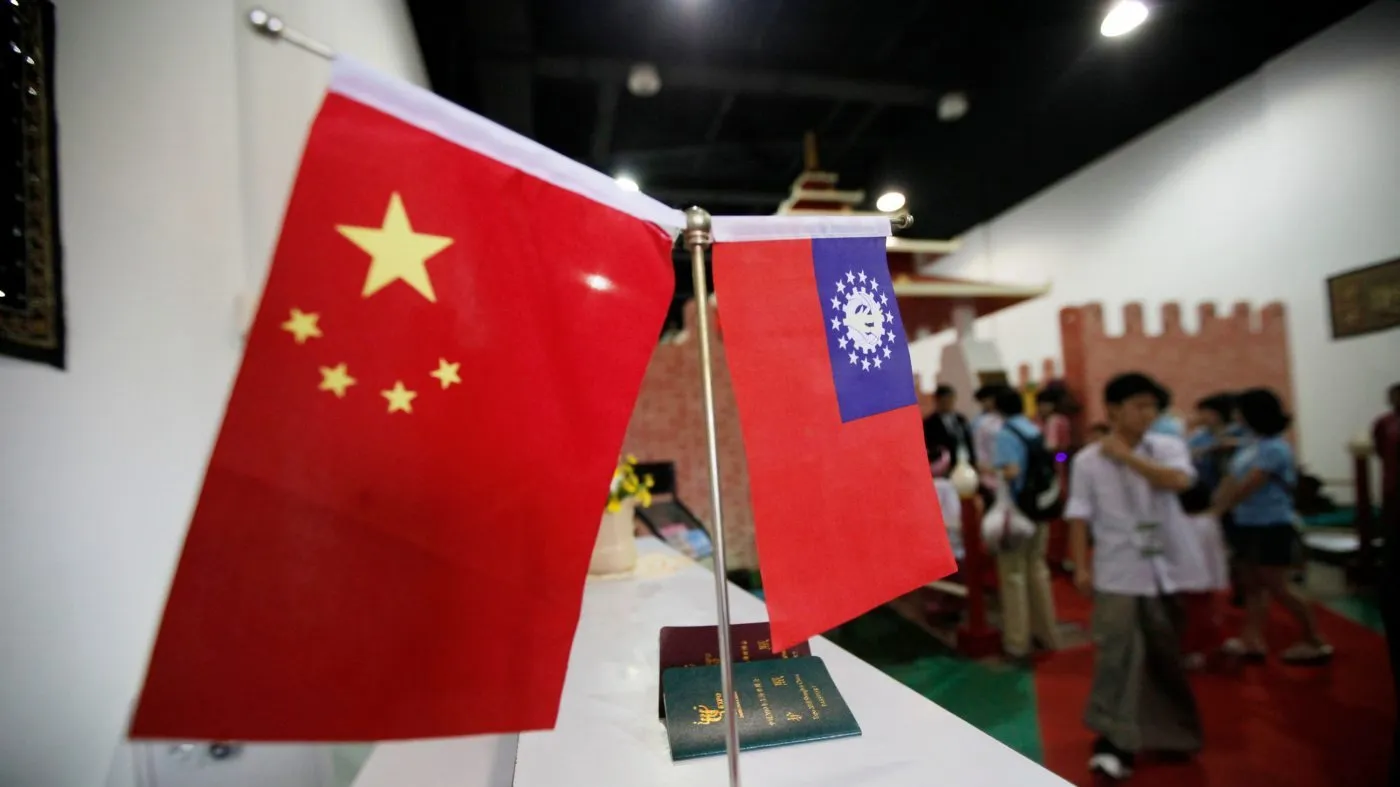
Chinese authorities are increasing restrictions on a wrongfully detained American academic, prompting U.S. officials to express alarm about a “significant deterioration” in his treatment, according to sources familiar with the matter.
Min Zin, an American citizen who runs a think tank focused on politics in Myanmar, was arrested in China in June . The Trump administration on Thursday designated him as “wrongfully detained,” a powerful label that makes advocating for his release a top U.S. priority.
The timing of this action is significant. President Trump is expected to welcome Chinese President Xi Jinping for a state visit on Sept. 24.
Advocates say Trump does have an impressive record of freeing Americans jailed abroad — estimated at more than 100 individuals — and non-Americans, to include political prisoners, individuals kidnapped by terrorist organizations and those persecuted for their religion.
Min Zin’s family and friends hope the designation adds increased urgency for his release, raising concern that his detention is at an unknown location, blocking U.S. consular officials from observing his living conditions. They are only able to meet him at a hotel when he is made available by Chinese authorities. During the last visit, Chinese authorities placed Min Zin at the far end of a conference table, making communication difficult and having a chilling effect on the conversation.
Min Zin’s wife, Sylvia Zin, thanked Trump for formally designating her husband as wrongfully detained, and she described the heartache felt from his absence for more than two months — missing a family vacation, his 14-year-old daughter’s first day of high school and her performing in a school concert. She also said the family will likely be apart for Min Zin’s birthday on Sept. 9.
“This will be the first time in her life that our family is broken apart for a birthday,” she said.
Min Zin, who had a 10-year visa to enter China and was a frequent guest in the country for academic conferences, was traveling to Yunnan province at the invitation of a Chinese academic institution. He was detained upon arrival at the airport on June 3. China has accused Min Zin of spying and endangering China’s national security.
Following a recent meeting with Min Zin, U.S. consular officers described increasingly hostile treatment from Chinese authorities, who employed deliberate tactics to disrupt and frustrate conversations to limit the time in which American officials could talk about substantive issues, according to an account of the visit.
Chinese authorities barred U.S. officials from discussing with Min Zin any questions related to his case, interrogation, treatment, work on Myanmar or colleagues. Officials would receive a warning if they violated any of these terms, and a second violation would end the visit immediately.
A consular officer, who has dealt with Americans detained in China for more than two years, called it one of the most disruptive and restrictive visits he’s ever experienced, according to the account.
U.S. officials are also concerned about Chinese authorities restricting humanitarian requests for Min Zin, including blocking reading materials, refusing to provide outside allergy medication — saying that the authorities would provide their own — and a new account from him of knee pain, raising concern of ill treatment. A person familiar with Min Zin said he never had knee pain before. There’s also concern that he is living with constant light, blocking his ability to sleep.
Despite this, officials described Min Zin as mentally resilient and physically stable, maintaining a meditation practice and eating meals provided by authorities, and they said he was preparing himself for an extended imprisonment, requiring endurance and resilience. The interruptions and delay tactics employed by Chinese authorities limited the 30-minute conversation to about 15 minutes, the account estimated, but Min Zin used the time to relay to his family that they prioritize their health and exercise vigilance at home, based on worries about transnational Chinese repression.
The Hill has reached out to the State Department and Chinese Embassy in Washington, D.C., for comment.
Min Zin is a native of Myanmar and participated as a student in the country’s 1988 democracy movement. He studied political science at the University of California, Berkeley and later established in Myanmar an independent think tank, the Institute for Strategy and Policy. He left the country after the military coup in 2021. China is Myanmar’s most powerful and influential neighbor.
Sylvia Zin said her husband traveled to China “in pursuit of academic exchange and because he deeply values the people to people ties that can be built over the sharing of ideas.”
“Min Zin believed that the PRC understood the importance of academic cooperation, but the arrest of an American academic sends the opposite message,” she said.
A U.S. official told Reuters that Min Zin’s detention “has raised grave concerns among other scholars about whether they could be subject to entrapment and detention by China,” hitting on a pressure point for Beijing as they look to increase people-to-people ties and academic exchange with the U.S.
“The safety and security of U.S. citizens globally is President Trump’s top priority, and the president has been clear that China must treat U.S. citizens with respect — and those wrongfully detained or under exit bans must be released,” the official said.
Min Zin is the second American considered “wrongfully detained,” following the arrest in 2024 of Youlin Chen, a Chinese-born American seismologist. He was designated in March, and his case was made public in July. House lawmakers have cited human rights groups saying an estimated 200 Americans are detained in China, including under exit bans that prevent them from leaving the country.
Trump raised Chen’s case with Xi when the two met in Beijing in May , and the Chinese leader committed to look into it, according to a source familiar with the matter, but the family has received no indication that Chen’s case is being considered.
But in an extraordinary move last month, China released Ezra Jin, a Chinese Christian pastor whose daughter is American, after Trump raised his detention with Xi.
Topics in this story
Gathered from external sources. Rights to this text belong to whoever originally published it.