Latino, Black, Muslim, Native: Voters chose diversity in midterm election
Voters reshaped the Senate and House with candidates from a diverse tapestry of racial, ethnic, religious and cultural backgrounds
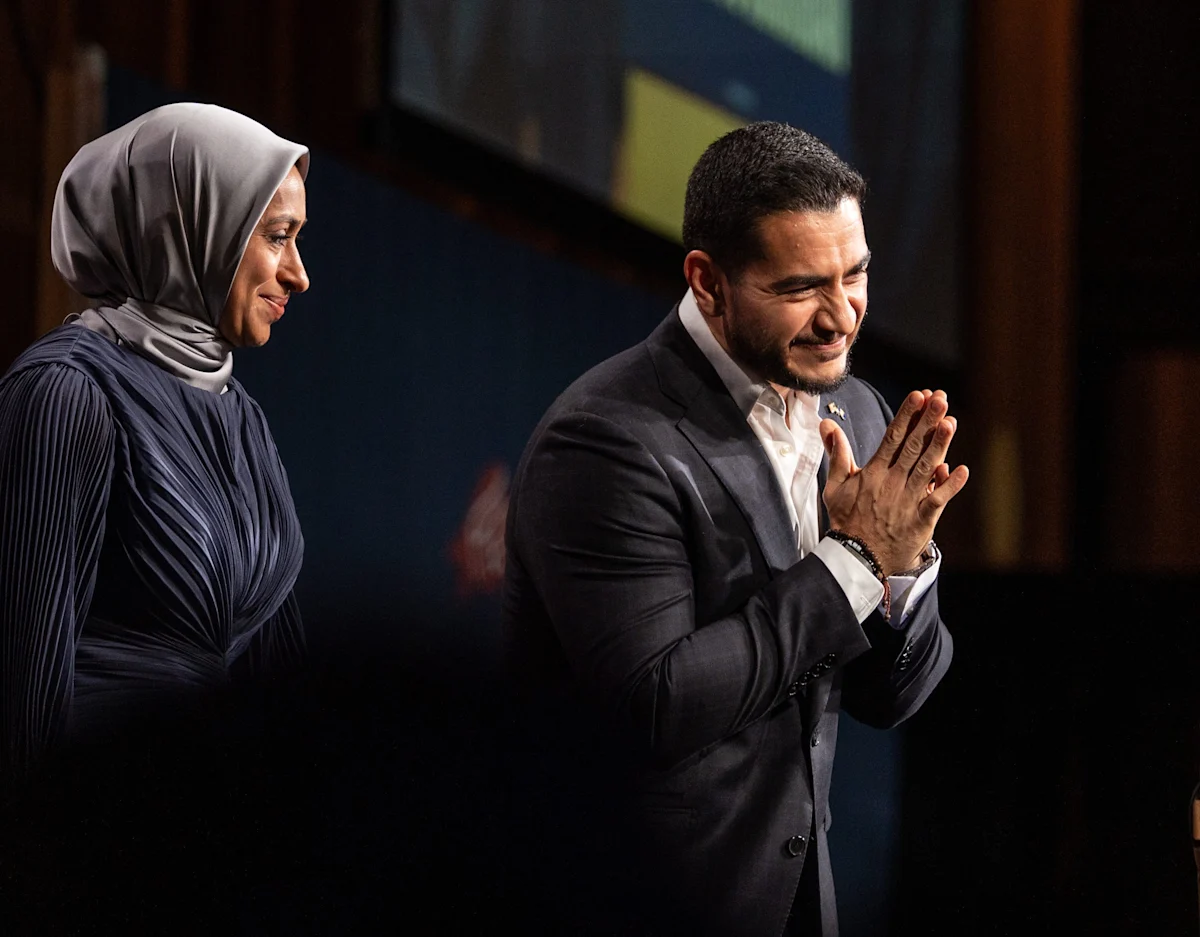
WASHINGTON – On election night, America chose diversity.
The blue tsunami that swept Democrats back into power in Congress in the Nov. 3 midterm elections also carried to victory candidates with a diverse tapestry of racial, ethnic, religious and cultural backgrounds.
Voters reshaped the Senate by electing a Methodist minister from Kansas, a Presbyterian seminarian in Texas, a Muslim physician from Michigan, a Native American in Minnesota, and, for the first time ever, an openly gay man from New Hampshire.
Candidates make history in race, gender and faith in 2026
In the House, Democratic leader Hakeem Jeffries was elected for the eighth time to represent his New York congressional district – a victory that puts him on course to become the first Black speaker in January.
And, in other firsts, voters chose Black governors in Georgia, Florida and Wisconsin , a Latino governor in California , a Latina governor in Texas , and a Native American woman as governor in New Mexico . The winner in Georgia, former Atlanta Mayor Keisha Lance Bottoms, becomes the nation's first Black female governor.
The election of candidates from such varied backgrounds comes after two years of President Donald Trump and his administration erasing diversity, equity and inclusion programs across the federal government and in private and academic institutions.
"Americans spoke loudly and clearly that we still value diversity, even if the Trump administration does not," said Shaun Harper, a University of Southern California professor who has researched and written about diversity, equity and inclusion, or DEI.
The past couple of years have been tough times for people who believe in inclusion.
On the first day of his second term, Trump set out to terminate DEI policies, programs and preferences across the federal government. He shut down DEI offices, put their workers on leave, canceled DEI training programs and took down government web pages focused on diversity.
His administration opened investigations into more than 50 universities and threatened them with funding cuts in a pressure campaign to force them to dismantle DEI programs, drop race-based scholarships and alter admissions and hiring practices.
He revoked federal civil rights and non-discrimination protections for LGBTQ+ people, barred transgender Americans from serving in the military and prohibited transgender women from participating in female sports in public schools, colleges and universities.
He ordered the National Park Service to remove the rainbow-colored Pride flag at the Stonewall National Monument , which commemorates a 1969 clash in New York City between police and LGBTQ+ bar patrons that sparked the modern gay-rights movement. The administration eventually relented and allowed the flag to be returned as part of a settlement with a coalition of nonprofit groups that sued.
While America clearly voted for diversity, "I'm not prepared to say that it's a profound shift in America's racial, ethnic, religious dynamics in some deep way. Because we just don't know," said Jennifer Hochschild, a professor of government and of African and African-American studies at Harvard.
Cultural issues still divided voters in some states.
Voters in Arizona and Nebraska approved measures to ban trans athletes from participating in school sports. Votes on similar measures in Colorado and Washington state are still being counted.
"I am a proponent of democracy, and I respect that people voted with their values – even if their values are misaligned with mine," Harper said.
Virginia voters, on the other hand, stripped a two-decade-old ban on same-sex marriage from the state constitution. Several other states repealed similar constitutional bans in recent years, following the U.S. Supreme Court's decision in 2015 that legalized same-sex marriage nationwide.
Some of the candidates who won in this week's midterms endured a vitriolic assault on their religion or beliefs.
Abdul El-Sayed, a Michigan physician who triumphed to become the first Muslim elected to the Senate, faced Islamophobic and racist attacks during the brutal campaign. Trump called him a jihadist and said Congress would need a special metal detector if he was elected.
From January through August, El-Sayed was named in more than 38,000 anti-Muslim posts on social media, according to the Center for the Study of Organized Hate, a Washington-based nonprofit.
In South Carolina, Dr. Annie Andrews endured harsh criticism from Trump to pull off one of the night's most stunning Senate upsets. Her Republican opponent, Darline Graham, running in place of her late brother Lindsey Graham , ran ads condemning her over her past comments on transgender issues, and Trump mocked her by attaching an anti-transgender slur to her name.
But when the votes were counted, the winners looked a lot like America.
Michael Collins writes about the intersection of politics and culture. A veteran reporter, he has covered the White House and Congress. Follow him on X: @mcollinsNEWS
Gathered from external sources. Rights to this text belong to whoever originally published it.