Hawley invites Flock, Axon, other surveillance tech CEOs to testify
Sen. Josh Hawley (R-Mo.) invited the CEOs of Flock Safety and other prominent AI-powered surveillance camera manufacturers to testify before the upper chamber’s Judiciary Subcommittee on Crime and Counterterrorism next week. Hawley, the subcommittee’s chair, wrote on social media Friday that he “invited the CEOs of Flock Safety, Axon, Motorola and Verkada to testify in…
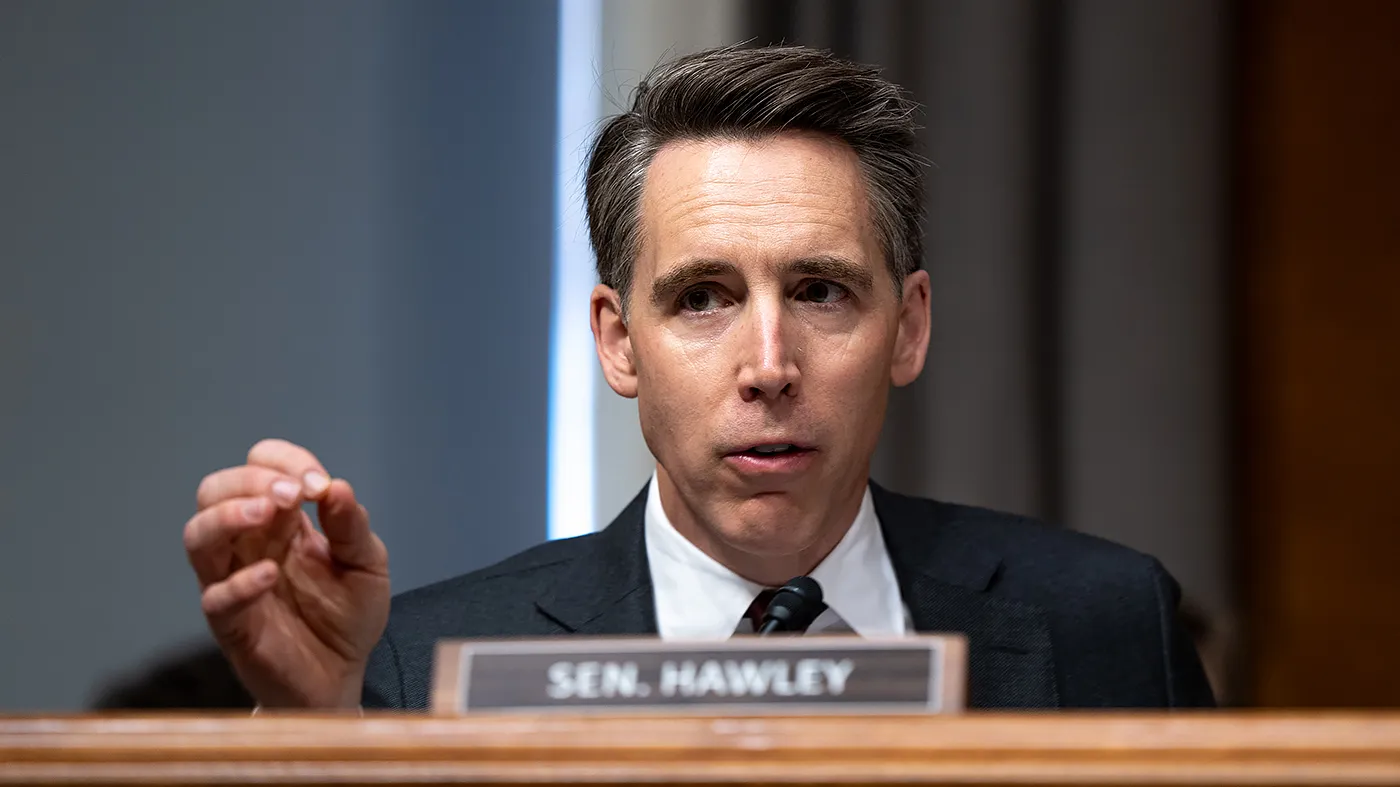
Sen. Josh Hawley (R-Mo.) invited the CEOs of Flock Safety and other prominent AI-powered surveillance camera manufacturers to testify before the upper chamber’s Judiciary Subcommittee on Crime and Counterterrorism next week.
Hawley, the subcommittee’s chair, wrote on social media Friday that he “invited the CEOs of Flock Safety, Axon, Motorola and Verkada to testify in front of my committee NEXT WEEK.” Each of the companies the senator listed produce AI-based automatic license plate recognition (ALPR) cameras — which have been scrutinized on both sides of the aisle.
“Americans deserve answers,” Hawley added.
The Republican’s letters invited Flock’s Garrett Langley, Axon’s Rick Smith, Motorola Solutions’ Greg Brown and Verkada’s Filip Kaliszan to testify on Sept. 23 as part of his investigation into privacy concerns surrounding these ALPRs — which several jurisdictions have removed following reports of data misuse.
The Hill has reached out to the four companies for comment; Flock Axon and Motorola Solutions did not immediately respond to the request.
A Verkada spokesperson told the Hill that Kaliszan is “unable to attend next week’s hearing.”
“We are in communication with the Subcommittee and are providing information to assist Chairman Hawley and Ranking Member Durbin as they prepare for the hearing,” the spokesperson said. “As we’ve explained to the Subcommittee, none of our customers can search a national Verkada network – because none exists. Our customers can only access the data in their own systems.”
The senator has cited concerns with these companies’ citizen data collection and retention policies, as Flock cameras — for example — share information across a national network.
In a previous letter to Langley, announcing his investigation into Flock, Hawley cited St. Charles County Police Department — who terminated its contract with the surveillance camera company after an audit revealing an officer used its database for personal reasons.
Over 170 contracts have been cancelled with Flock alone, according to anti-surveillance group DeFlock .
Hawley’s first letter also referenced a case in Milwaukee, where prosecutors charged a police officer for allegedly using Flock’s database to search his girlfriend’s license plate 124 times and her former boyfriend’s plate 55 times. The officer entered “investigation” as his reasoning behind each search, but the system never flagged these searches.
On Sept. 3, Rep. Thomas Massie (R-Ky.) unveiled the Flock-Off Act in the House , which would block the use of federal funding for ALPRs and biometric surveillance cameras.
Massie said in a press release that cities and police departments have used the technology to turn “their communities into a version of ‘1984,’” George Orwell’s famous dystopian novel.
The issue has divided key figures within the GOP, with President Trump voicing his support for the technology Sunday.
“No, I sort of like [Flock cameras] because of that, because of law enforcement. But some people don’t. They think it’s an infringement,” the president said, adding, “I like them.”
Topics in this story
Gathered from external sources. Rights to this text belong to whoever originally published it.