NAACP sues to block Trump administration from sending armed agents to polls
The NAACP filed a lawsuit Friday alongside other civil rights groups to block the Trump administration from sending armed agents to U.S. polling places ahead of November’s midterm elections. The lawsuit names the Department of Homeland Security (DHS), Immigration and Customs Enforcement (ICE), the Department of Justice (DOJ), the FBI and several Trump officials, seeking…
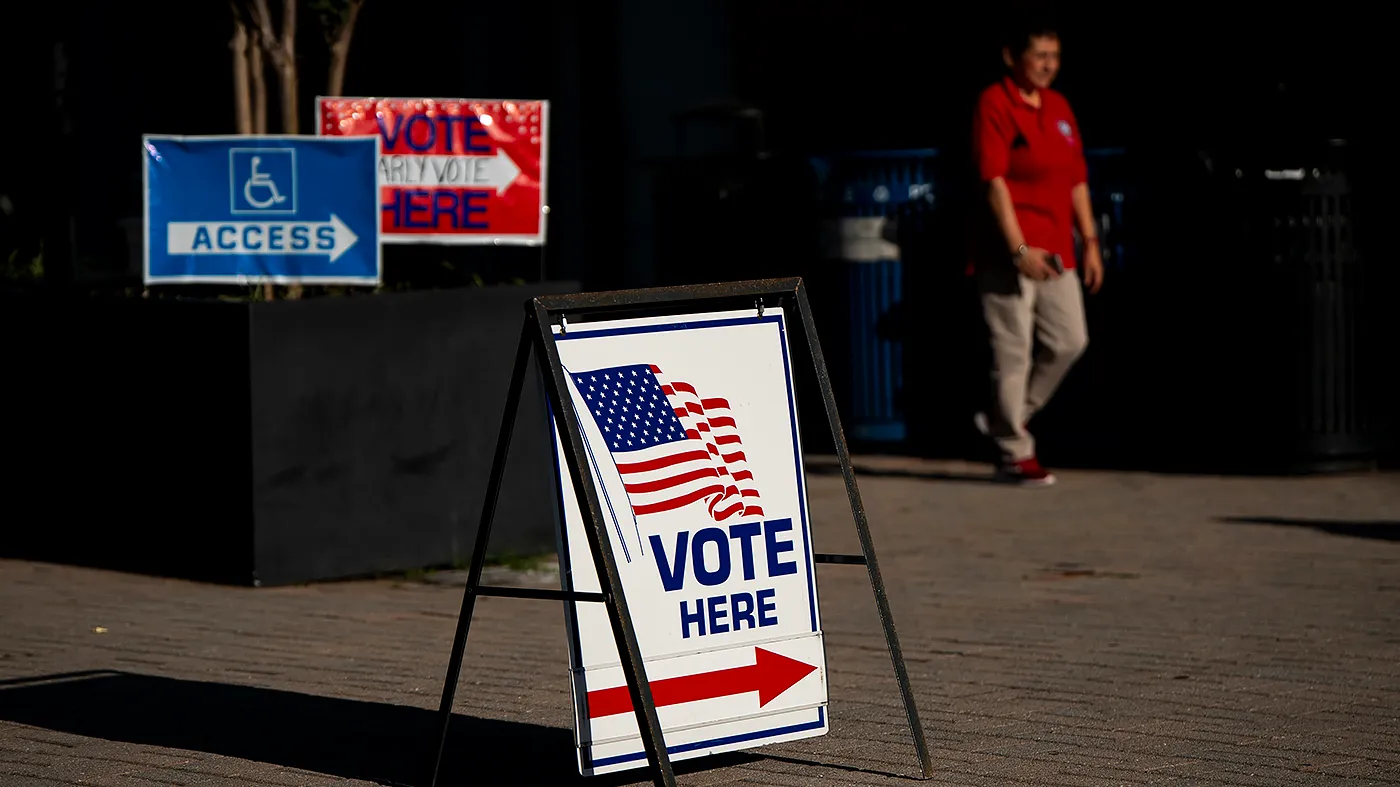
The NAACP filed a lawsuit Friday alongside other civil rights groups to block the Trump administration from sending armed agents to U.S. polling places ahead of November’s midterm elections.
The lawsuit names the Department of Homeland Security (DHS), Immigration and Customs Enforcement (ICE), the Department of Justice (DOJ), the FBI and several Trump officials, seeking to prevent them “from deploying agents in a manner that unlawfully intimidates voters or anyone urging or aiding voters.”
“Defendants’ statements and actions have made voters… afraid of appearing at polling places, helping others vote, serving as election volunteers, and advocating for their political beliefs and preferred candidates,” the NAACP’s lawyers wrote.
Democratic senators pressed FBI Director Kash Patel earlier this week on whether his agency would comply if President Trump asked him to send agents to the polls. While Patel acknowledged he was aware of laws that prohibited armed officers or troops from polling sites, he also said that he may in the case that there was “a violation of the law.”
“The FBI will follow the law. If there’s a reason to go there because there’s been a violation of law, we will,” Patel said.
DHS Secretary Markwayne Mullin made similar arguments during his confirmation hearing earlier this year, saying, “The only reason why my officers would be there is if there was a specific threat for them to be there, not for intimidation.’
The plaintiffs — also including the National Urban League and the American Federation of Teachers, among other groups — said they fear the presence of armed federal law enforcement officers at polling cites may “expose [voters] to physical violence, surveillance, and harassment if they participate in the electoral process.”
The civil rights organizations also allege the presence of federal agents would violate a section of the Voting Rights Act, which “ broadly prohibits intimidation, threats, and coercion—or attempts to do so—throughout every stage of the voting process, including registering to vote, casting a ballot, and counting votes.”
A statement sent to The Hill Friday night, a DOJ spokesperson wrote that the agency “has never said it would send federal law enforcement to polling locations. Any suggestion otherwise is fearmongering.”
They went on to draw connections between threats of federalizing the polls with armed officials to the post-Civil War Reconstruction era, where the government sought to “undermine the civic participation of the formerly enslaved population.”
“Fearmongering about ‘illegal voting’ is the modern version of the racist narratives that were used to justify poll taxes, literacy tests, and arbitrary ‘character’ assessments for generations,” the lawyers continued.
The lawsuit mentioned one case in which officers in Lee County, Florida established an immigration checkpoint on a main access road before a voting precinct that contained a predominantly Black and Latino population.
“Allegations that DHS law enforcement engages in ‘racial profiling’ are disgusting, reckless, and categorically FALSE,” a DHS spokesperson said in a Friday statement to The Hill. “What makes someone a target for immigration enforcement is if they are illegally in the U.S.—NOT their skin color, race, or ethnicity.”
The spokesperson continued, “ICE is not planning operations targeting polling locations. ICE conducts intelligence-driven targeted enforcement, and if an active public safety threat endangered a polling location, they may be arrested as a result of that targeted enforcement action.”
A similar lawsuit filed by the city of Denver earlier this month similarly sought to block ICE agents from patrolling polling sites, though the case cited a different federal law prohibiting the presence of “troops at polls.”
The DOJ deployed election monitors in recent primaries, including during South Carolina’s GOP runoff GOP and in Rhode Island . DOJ election monitors are typically personnel from its Civil Rights Division.
In August, Trump left the door open to declaring a national security emergency and federalizing control of the midterms, saying “that stranger things have happened” when asked about the possibility.
Topics in this story
Gathered from external sources. Rights to this text belong to whoever originally published it.