7 biggest surprises from the 2026 primary cycle
The 2026 primary cycle has served up enough surprises to fill out a bingo card. Tuesday’s primaries in Delaware marked the last contests of the season, as both parties gear up for the battle for control of Congress Over the last six months, the left flank of the Democratic Party cemented its political power, ousting…
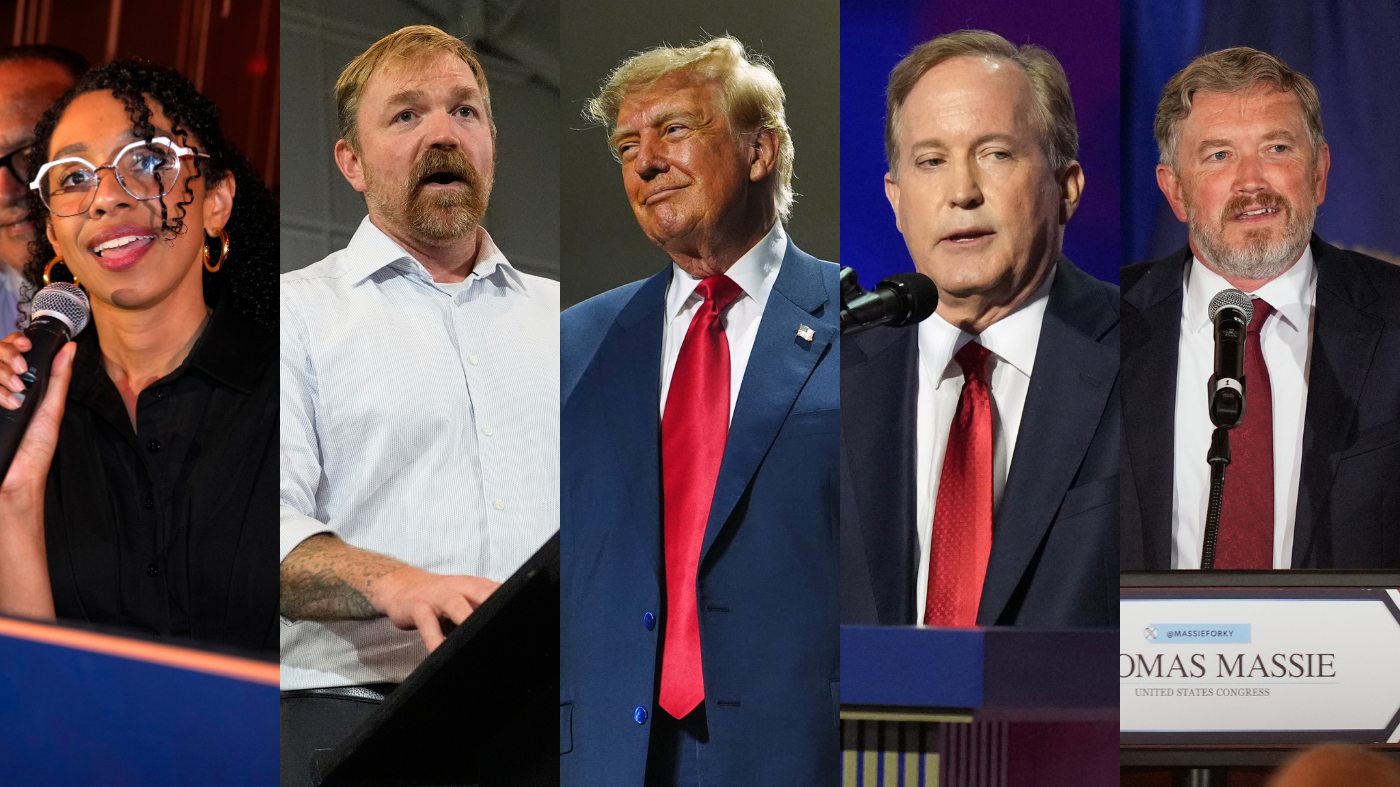
The 2026 primary cycle has served up enough surprises to fill out a bingo card.
Tuesday’s primaries in Delaware marked the last contests of the season, as both parties gear up for the battle for control of Congress
Over the last six months, the left flank of the Democratic Party cemented its political power, ousting a number of incumbents, while President Trump maintained his status as the GOP kingmaker — despite suffering a handful of high-profile losses as Republicans have fought to hold their majorities in the House and Senate this fall.
Meanwhile, the Supreme Court issued a historic decision reshaping the landmark Voting Rights Act and setting off a final redistricting scramble.
With just 48 days until Election Day, here are the key surprises from the 2026 primaries.
Democratic socialists and far-left progressives surprised many this cycle when they ousted sitting House members, including Congressional Progressive Caucus lawmakers — showcasing the antiestablishment and anti-incumbent energy that dominated this year.
Democratic socialists Darializa Avila Chevalier and Melat Kiros defeated Reps. Adriano Espaillat (N.Y.) and Diana DeGette (Colo.), respectively, while democratic socialist Claire Valdez won the primary for retiring Rep. Nydia Velázquez’s (N.Y.) open seat. Donavan McKinney, who was backed by the Democratic Socialists of America (DSA), ousted Rep. Shri Thanedar in Michigan.
Democratic socialists also scored notable wins in Democratic primaries for Senate — state Rep. Angie Nixon, a member of the DSA, defeated Trump whistleblower Alex Vindman in a Florida Democratic House primary, while democratic socialist N’Kiyla Jasmine Thomas won against the establishment favorite Jim Priest in Oklahoma.
DSA candidates even fared well down the ballot, such as when state Rhode Island state Rep. David Morales defeated incumbent Brett Smiley in the Democratic primary for Providence mayor .
Fetterman makes cameo at GOP midterm convention
One of the most unexpected developments away from the ballot box was Sen. John Fetterman’s (D-Pa.) surprise video appearance at the GOP’s midterm convention in Dallas.
Fetterman lauded his Republican colleague, Sen. Dave McCormick (Pa.), and vowed that the pair would work with Trump to protect the state’s steel industry. Democrats were furious with the move as the senior senator increasingly isolates himself from his party.
“I will tell you from the ground from suburban Philadelphia, my constituents are livid,” Rep. Madeleine Dean (D-Pa.) told reporters last week. “Those who went out and knocked doors for him — they are absolutely livid.”
Michigan Senate candidate Abdul El-Sayed and Wisconsin gubernatorial challenger Francesca Hong were set to dominate their primary races, according to polls ahead of the contest.
Yet, El-Sayed barely defeated Rep. Haley Stevens (D-Mich.), while Hong ultimately lost to Milwaukee County Executive David Crowley (D).
Charles Franklin, director of the Marquette Law School Poll, told The Hill that his polling accurately described the amount of support Hong got in the primary — just shy of 40 percent — while explaining that the fast-moving primary, and the suspension of several campaigns, shifted the dynamics.
“I think the polling also correctly showed that there was a reservoir of undecided voters for someone potentially to capture, and as it turned out, I think that reservoir was reluctant to back Hong,” Franklin said, noting that the Wisconsin race exemplified “a very fluid primary campaign” rather than a “classic polling mess.”
Still, the polling industry as a whole has come under scrutiny this cycle after it was revealed that two polls in the Wisconsin gubernatorial and Los Angeles mayor’s race were completely faked.
The possibility of Trump making an endorsement in the Texas Senate GOP primary runoff kept Republicans on pins and needles this spring.
The Atlantic reported in early March that Trump was expected to endorse Cornyn, and the GOP senator notably finished first in the three-way primary between himself, Texas Attorney General Ken Paxton and Rep. Wesley Hunt (R-Texas). Yet, Trump’s decision to eventually back Paxton just a week before the May runoff took many by surprise.
“I think it had more to do with Trump ratcheting up another victory on his belt rather than an endorsement of Paxton,” observed Mark Jones, a political science professor at Rice University.
Veteran Graham Platner sought to capitalize on the antiestablishment sentiment this cycle, pitching his economic populist vision in his quest to take on Sen. Susan Collins (R-Maine). His candidacy disrupted Maine politics to such an extent that Gov. Janet Mills (D) dropped out of the Democratic primary.
But the surprises didn’t stop there: Two women accused the oyster farmer of sexual misconduct, including sexual assault — causing the progressive’s campaign to implode. He had previously come under fire for controversial Reddit posts.
The stunning rise and eventual fall of Platner’s campaign was particularly notable given Democrats largely lined up behind the candidate as their only hope to oust Collins.
Democrats ultimately nominated former Maine Senate President Troy Jackson as their pick to replace Graham on the ballot, roughly 100 days ahead of Election Day .
The Supreme Court’s decision to dismantle part of the Voting Rights Act this summer paved the way for Republicans in the South to quickly redraw their congressional maps in time for the midterms.
Tennessee, Louisiana, Alabama and Florida all changed their maps, but experts only expect a mild net gain for Republicans amid their national redistricting campaign.
“My range is two to six [GOP pickups] right now,” said Kyle Kondik, managing editor of Sabato’s Crystal Ball at the University of Virginia Center for Politics.
“The map is still, on balance, certainly better for Republicans than it was in 2024, but not so much better … that it makes Republicans” the favorite to hold the majority, he added.
Trump easily exacts vengeance on political foes
Trump toppled a series of Republicans on his blacklist this cycle.
Cornyn, Rep. Thomas Massie (R-Ky.) and Sen. Bill Cassidy (R-La.), all of whom have criticized Trump, lost their primary bids by several points after Trump endorsed their opponents. Cassidy notably voted to convict Trump over the Jan. 6, 2021, Capitol attacks.
Trump also boasted a largely successful track record in House and Senate races, though he suffered blows in a series of high-profile gubernatorial primaries.
“With the erosion of his approval ratings, his ability to push the candidates he supported over the top diminished,” Jones said.
Topics in this story
Gathered from external sources. Rights to this text belong to whoever originally published it.