The House races to watch for early signs of a midterm wave
The House battlefield in Tuesday’s midterms comprises dozens of races in largely purple districts where majorities are won and lost. But as GOP leaders scram...
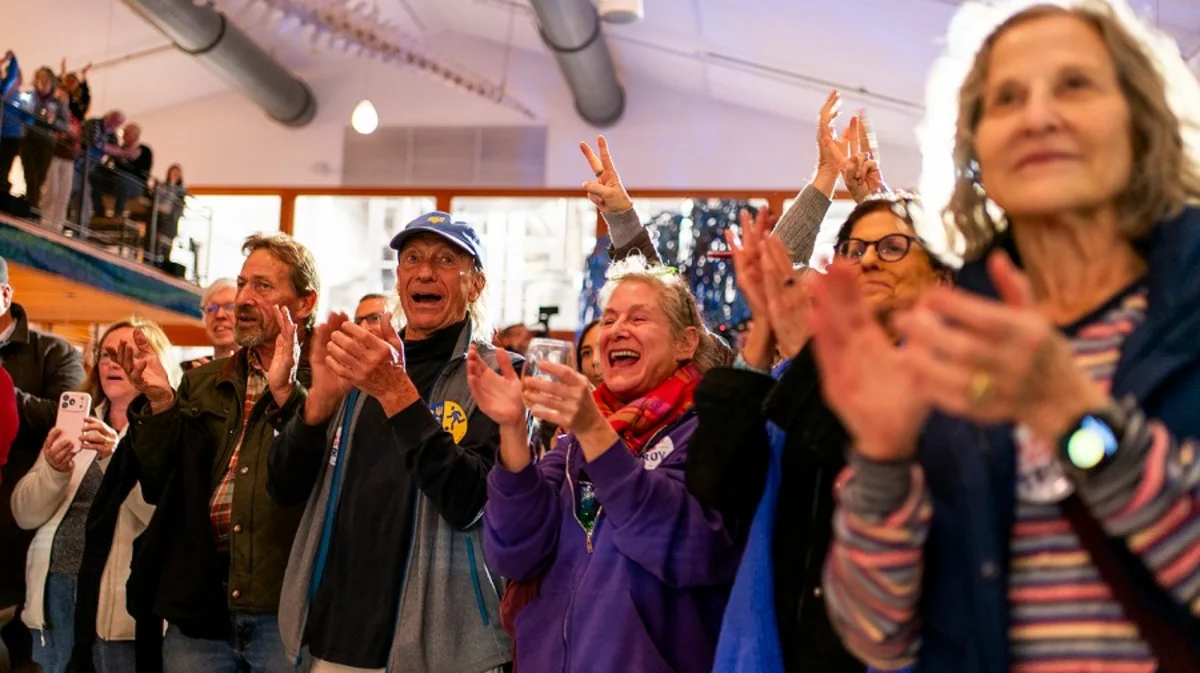
The House battlefield in Tuesday's midterms comprises dozens of races in largely purple districts where majorities are won and lost.
But as GOP leaders scramble against the odds to salvage their fragile majority — and the favored Democrats fight to run up the score — both sides are paying particular attention to a much smaller number of contests that might lend early hints about where the winds are blowing and whether a wave is forming.
Many of those races are on the East Coast, where the polls close first and the results are expected to arrive most quickly. But other districts have unique demographic characteristics that can reveal broader trends about which voters are animated, which are staying home, and how those dynamics might affect the overall results.
Here are the races that outside experts and campaign operatives in both parties will be watching most closely as a gauge of where the momentum is flowing on election night.
There are three races in Virginia that are competitive, to varying degrees, and experts are monitoring all three of them closely for telltale signs of broader trends.
In the 2nd District around Virginia Beach, GOP Rep. Jen Kiggans is facing a tough challenge from former Rep. Elaine Luria (D), who held the seat for two terms before Kiggans picked her off in 2022. Both candidates are Navy veterans, and both are well known among voters. Republicans see the race as an early gauge of how their battleground incumbents will fare.
"That is the bellwether district in my view," said a Republican campaign operative. "You have a well-funded incumbent going against a former member, who also has high name ID and [is] very well funded. So that will be a true test, early in the night, on how our incumbents are holding up."
Virginia's 1st District is also under a microscope. The seat is held by GOP Rep. Rob Wittman, a 20-year House veteran who was initially expected to skate to victory in a district President Trump won by 5 points in 2024. But the contest has tightened considerably in the final stretch, and the analysts at Sabato's Crystal Ball, an independent election handicapper based at the University of Virginia, say the race now leans in favor of the Democratic challenger Shannon Taylor, the top prosecutor for Henrico County.
In an even greater sign of the GOP's struggles this cycle, Republican Rep. John McGuire, a close ally of the president, is also facing stiff headwinds in the 5th District, which Trump won by 12 points just two years ago. The analysts at the Cook Political Report rate the race a toss-up. And on Monday, Sabato shifted the race in favor of the Democratic challenger, former Rep. Tom Perriello, who held the seat from 2009 to 2011.
If Perriello wins, "then the floor has fallen out from underneath Republicans," said a Democratic campaign strategist.
Kyle Kondik, the managing editor of Sabato's Crystal Ball, agreed. He said if Democrats defeat Kiggans, it would suggest they'll win control of the House; if they beat Wittman, it would signal an even greater shift in power around the country; and if McGuire falls, it would suggest a "Dem megawave."
The district comprising Lansing has been a bellwether battleground for years. The seat was held by Sen. Elissa Slotkin, a centrist Democrat, before she jumped to the Senate last year and was replaced by moderate Republican Rep. Tom Barrett, an Army veteran.
Now Democrats are hoping the current political environment will help them make Barrett a one-term lawmaker. Challenging him is William Lawrence, a liberal climate activist who, until recently , was a member of the Democratic Socialists of America (DSA).
That affiliation has sparked plenty of attacks from Republicans, who say Lawrence is simply too liberal for the purple 7th District. But they also say the outcome will be a good gauge of where voters are nationally — and whether Trump is a greater liability, for Republicans, than the socialist label is for Democrats.
"William Lawrence is literally a member of the DSA. And so that's another test of: Do these further-to-the-left candidates — does that candidate-quality thing even matter?" said the GOP campaign strategist. "That's a really good seat to look at to get a sense of how the night goes."
Democrats like their chances, noting that Lawrence was one of the first candidates this cycle to tap into the widespread outrage over data centers, which has transcended region and party. He's proposing a national 12-month moratorium on building them.
"He has made data centers a central part of his pitch. I think he's also somebody who is definitely in tune with the anger that folks have on the ground in Michigan," said the Democratic strategist. "Michigan 7 is just always close, always a toss-up no matter what. And we feel good about our chances there right now."
Texas was the first GOP-led state to redraw its House map this cycle, and Republicans did it with designs to pick up five Democratic seats, largely in the south near the Mexican border. Trump made inroads with Hispanic voters in 2024, and the new lines sought to exploit that shift.
But polls indicate that Hispanic voters have soured on Trump , largely over his deportation surge, and Texas will test just how angry those voters are — and how far a potential backlash might reach.
The shift has already helped several Democratic incumbents, including Reps. Henry Cuellar in the 28th District and Vicente Gonzalez in the 34th, who appear poised to survive a redistricting process that had targeted them directly.
"I'll be honest, [in] South Texas, the bottom has fallen out," the GOP operative said. "Vicente Gonzalez looked like one of the most appetizing pickups for us, and I still do think we can get that race close. But I think with the ICE raids and the economy, especially in South Texas, it really hit us hardest."
The shift has been so pronounced that Democrats are now fighting to pick off at least one Republican incumbent, Rep. Monica De La Cruz, in the 15th District, and they're increasingly optimistic they can keep the 35th District, which was redrawn to eliminate Democratic Rep. Greg Casar. Cook rates both races as toss-ups, while Sabato puts both in the "leans Democrat" column.
"Those are the ones to keep an eye on for how much of a backlash is there to the Trump administration's overstep when it comes to ICE enforcement," said the Democratic operative, using an abbreviation for Immigration and Customs Enforcement.
In redrawing their House map this year at Trump's behest, Republicans in North Carolina's state House had a particular target in mind: Rep. Don Davis, a two-term Democrat who represents the northeastern corner of the state.
But the new map wasn't the knockout blow Republicans had envisioned, and in recent weeks Davis's prospects have improved for the Democrats, who are also hoping to pick up a Senate seat in the Tar Heel State. Cook rates the race a toss-up, while Sabato gives Davis a slight edge.
"He's very moderate, he's very well known around the district, and we always knew that was going to be really tough," the GOP operative acknowledged.
The contest is being viewed as an early bellwether of the Republicans' broader redistricting campaign. But in a district with a large Black population, it's also being watched closely for signs of how Black voters — who shifted toward Trump in 2024 — have responded to the president's subsequent efforts to eliminate Black districts and gut the Voting Rights Act, a seminal law of the Civil Rights Movement.
A Davis victory, the Democratic strategist said, would indicate "there's significant backlash among Black voters in the South, which could help us in other places." That includes Alabama's 2nd District, where Republicans sought to draw Rep. Shomari Figures (D) out of office.
The Keystone State is home to four battleground districts where GOP incumbents are fighting to keep their seats. How those races turn out, the experts say, will reveal much about the mood of American voters more broadly.
"If we lose all four of them, that's the majority right there. And that'll tell you how the margins are going to look," said the Republican strategist. "Pennsylvania will be the gauge of how bad it's going to be in terms of how many districts we actually lose altogether."
Three of those contests are particularly challenging for Republicans this cycle. Reps. Ryan Mackenzie in the 7th District, Rob Bresnahan in the 8th and Scott Perry in the 10th are all predicted to lose to their Democratic opponents, according to the analysts at Cook and Sabato.
In the 1st District, Rep. Brian Fitzpatrick is faring slightly better: Cook rates his race a toss-up. But Sabato analysts gave Democrats the edge in the race in the final hours before voters go to the polls.
Democrats acknowledge that Fitzpatrick, a centrist who has done more than most Republicans to distance himself from Trump, will be tough to beat. But even Republicans aren't guaranteeing victory.
For several cycles straight, Democrats have tried unsuccessfully to pick off several Republican incumbents in Iowa. How they fare this year might lend hints about the size of a blue wave, or if one arrives at all.
Republicans say they're confident that GOP Rep. Zach Nunn will win his right to a third term in the 3rd District, despite analysts predicting that Democrats will steal that seat on Tuesday. And they like their chances of keeping the 2nd District, which was vacated by GOP Rep. Ashley Hinson, who's running for Senate.
But the outcome of those races will hinge on turnout for Hinson in the Senate race, which could make or break the vulnerable House GOP candidates on the ballot below her.
"If she does well on the Senate side of things, I do think Nunn's in good shape — and her open seat, as well in Iowa 2," said the Republican campaign strategist.
Republicans are less confident about another Iowa Republican, Rep. Mariannette Miller-Meeks in the 1st District, who is among the most vulnerable incumbent Republicans of the cycle.
"I wouldn't read too much into Miller-Meeks losing, because I think it's just bound to happen," said the GOP operative. "I think the better gauge is Nunn, where if he holds on, it's going to be a pretty decent night for us."
Another early-results state is Florida, where the GOP-led Legislature redrew its House map with designs to flip four Democratic seats. Kondik, the managing editor of Sabato's Crystal Ball, said the outcome of those races will predict who controls the House next year.
"See how many gerrymandered seats in Florida Dems salvage," he said. "Saving at least one is consistent with winning the House."
The redistricting effort is expected to yield at least some results for the GOP: Democratic Rep. Darren Soto is predicted to lose his seat in the 9th District after a decade on Capitol Hill. And Republicans are optimistic they will pick up the seats held by the other Democrats targeted by the new map, including Reps. Kathy Castor in the 14th District, Jared Moskowitz in the 25th and an open seat left vacant by the retiring Rep. Lois Frankel in the 22nd.
"Hispanic voters care less about the ICE raids and more about the socialism message," said the Republican strategist. "I feel really good about the Florida seats. ... I think we'll come out on top in almost all of them."
But as in the other redistricted states, polls suggest the effort is falling short of initial expectations. Moskowitz, for instance, is now favored in his race, according to both Cook and Sabato. And both handicappers rate Castor's seat and Frankel's open seat up for grabs.
Topics in this story
Gathered from external sources. Rights to this text belong to whoever originally published it.