The GOP struggles to find a message beyond Trump ahead of elections
Republican candidates in the 2026 midterms have struggled to find a compelling message beyond loyalty to Donald Trump as they face challenges regarding corruption, the economy, and low presidential approval ratings ahead of tomorrow’s election.
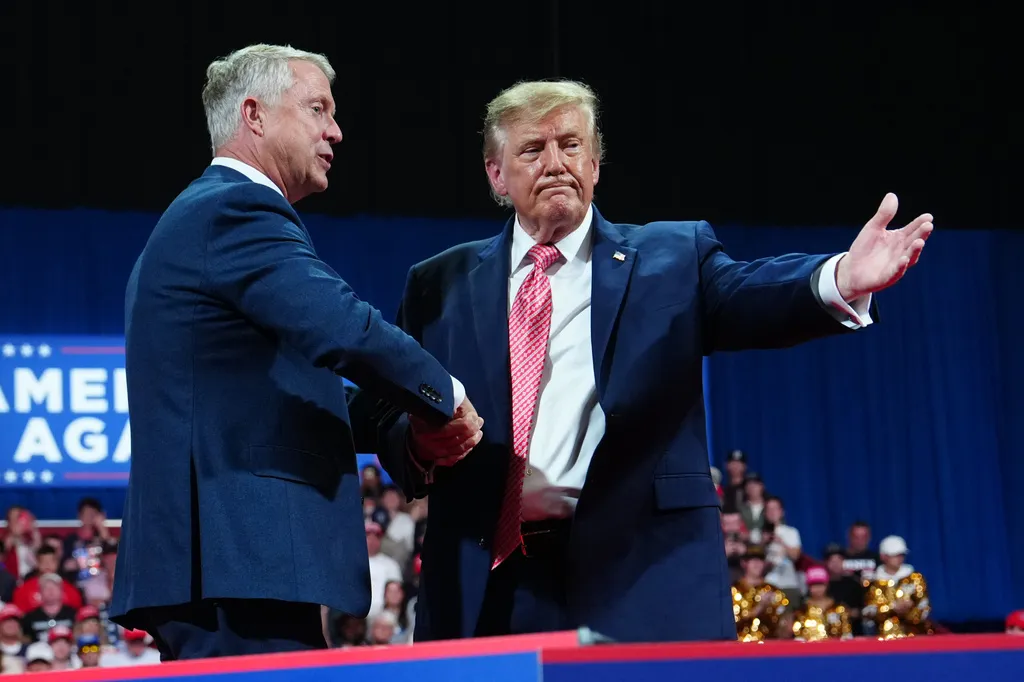
As voters head to the polls tomorrow, let’s stop and look at the best messages to voters coming from Republicans.
“Bankruptcies are up, suicides are up but nonetheless [our hope is that President Trump]…can take us to victory here,” Sen. Roger Marshall (R-Kan.) told Bloomberg TV last week.
To be fair to Marshall, several Republicans in the 2026 midterms have made similar appeals to voters.
Their best message is that any voter who supported Trump for president should close their eyes, hold their noses and remain loyal to Trump and vote for his supporters in Congress despite bad outcomes.
Unfortunately, that GOP message is facing a high bar. An NPR/PBS Marist poll shows 44 percent of registered voters plan to vote out of opposition to Trump. They oppose corruption, high prices for gas and groceries and another “never-ending” war in the Middle East?
Even with a big bankroll for advertising, the GOP candidates have not found a compelling closing argument beyond blind loyalty to Trump.
What can a GOP candidate say about corruption when the president is making billions on crypto currencies? What is there to say when the bill for his son’s wedding reception is picked up by a Russian oligarch?
Republicans currently in Congress conspicuously closed their eyes to that corruption. They also acquiesced to his economic policies and handling of foreign affairs.
Given Trump’s grip on their party they feared losing a GOP primary to a rival endorsed by Trump if dared to defy Trump’s policies.
But in a general election every Republican congressional candidate bears the weight of a president with low approval ratings. He is in negative territory with voters on corruption, on the economy, on inflation, and the war.
That’s why the best message to midterm voters from Republicans has been to try to get voters to look away from Trump. They prefer to lash Democrats as radicals, extremists, and elitists who lack Christian faith, patriotism and family values.
That kind of Republican messaging got a boost from riots in France . The candidates stirred fear of unrest in the U.S. if Democrats win control of Congress.
And then there is a culture war message.
In Iowa, one Republican’s ad featured a narrator who accused his Democratic opponent of being “just plain dangerous to kids” by “voting to let grown men in girl’s lockers rooms,” to accommodate transgender student athletes.
That one backfired when the narrator was found to have a rap sheet that included a 2017 incident where she pled guilty to a count of child endangerment while she was driving intoxicated.
As for concern over the negative impact of Trump’s economic policies, the best they can do is issue repeated statements of “strong concern.”
This is Sen. Susan Collins’ (R-Maine) message in her bid for reelection.
In a recent debate, she boasted about securing limits on Trump’s tariffs on Canadian road salt for Mainers.
That left her open to a strong comeback from her Democrat opponent, Troy Jackson. Noting the high price of food, Jackson won applause on social media for saying Mainers “can’t eat road salt.”
The last resort for Republicans in the 2026 midterms has been to advertise that Trump will appear at a rally for them. They hope the sight of the president will excite voters and increase GOP turnout.
Trump has tried several messages at those rallies including a promise to send $5,000 to each voter if the GOP retains control of the House and Senate.
But that appeal, apart from looking like an attempt to buy votes and being a likely violation of federal bribery laws, never gained traction.
Last week, Trump jokingly invited his supporters to his private club in Palm Beach, Mar-a-Lago.
“The problem is that for $5,000, the most you’ll be able to buy is a hamburger and maybe a small dessert,” he said. “I’m not even sure you could buy that. No, don’t go there. That’s not a good place if you’re price conscious.”
I’m sure that joke is of great comfort to Marshall’s constituents in rural Kansas who are facing farm bankruptcy amid rising rates of suicide.
Trump’s pitch of dollars for votes led to a return volley from former President Obama.
Stumping for Michigan Senate candidate Abdul El Sayed, Obama said Trump’s gold-plated decor of the White House looked like “Saddam Hussein opened a Cheesecake Factory.”
MAGA spinmeisters tried to cast this as a culture war attack on working-class Cheesecake Factory patrons. Obama later noted that Trump did not protest being likened to an Iraqi dictator.
Trump’s messaging notably failed to revive GOP support on social media.
“What Trump stood for, some of it turned out to not be real,” said Joe Rogan, a top podcaster who previously spoke favorably of Trump. “Like one of [Trump’s 2024 promises] was the no wars. Well, look, we’re at war with Iran. So that wasn’t real.”
Political prognosticator Charlie Cook recently said this election looks less like a “blue wave” than the result of a “red undertow.”
In other words, the Republicans never surfaced an effective message, leaving Democrats sailing toward victory.
Juan Williams is senior political analyst for Fox News Channel and a prize-winning civil rights historian. He is the author of the new book “ New Prize for These Eyes: The Rise of America’s Second Civil Rights Movement . “
Topics in this story
Gathered from external sources. Rights to this text belong to whoever originally published it.