How much can we believe the polls?
In today’s issue: ▪ What to make of the polls ▪ Hegseth under rising scrutiny ▪ Google catches a break ▪ Schwartz’s first test as CDC director Most election observers seem to agree that about eight states are in play to decide control of the Senate this November. But looking at some recent polls, one might think solidly red…
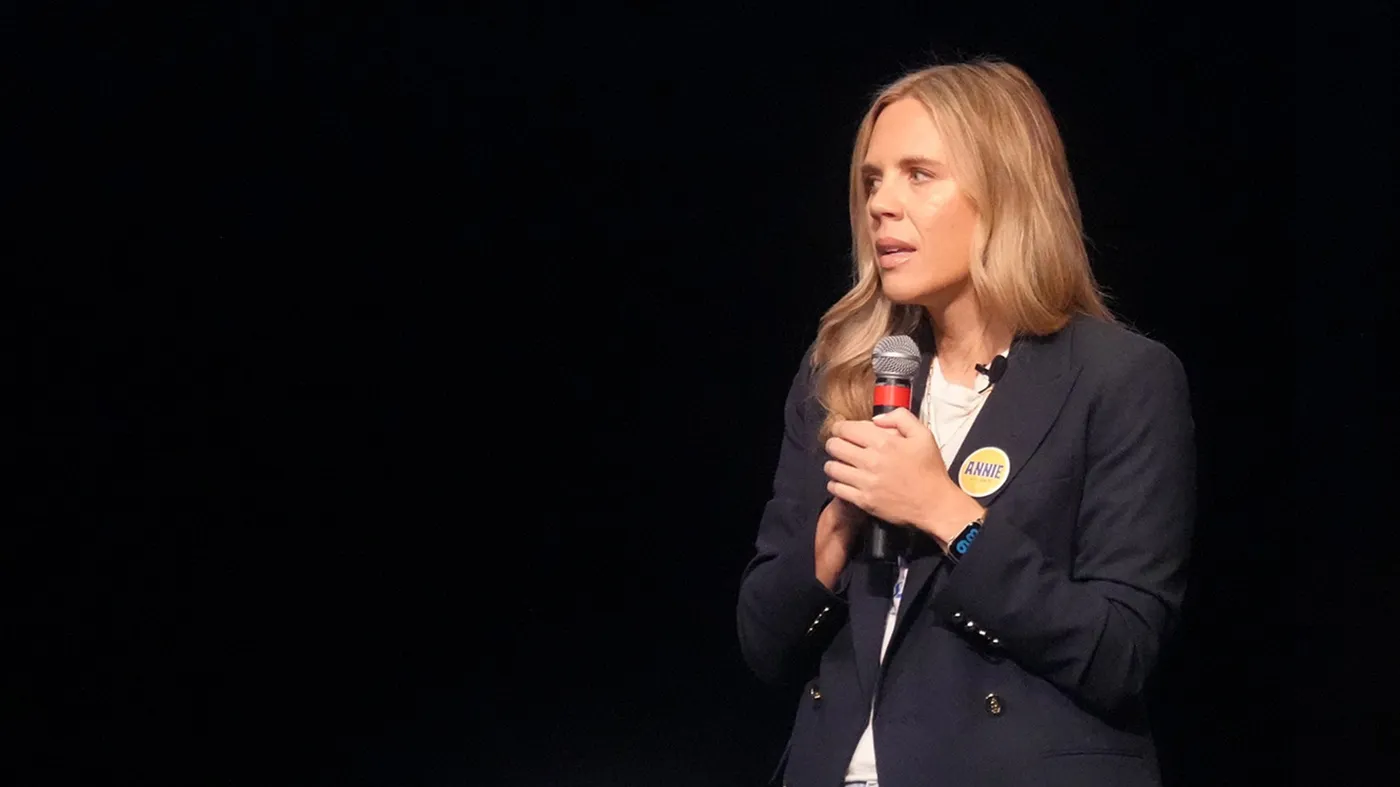
Most election observers seem to agree that about eight states are in play to decide control of the Senate this November. But looking at some recent polls, one might think solidly red states like South Carolina and Arkansas are gettable for Democrats too.
Democrats have been riding high in recent weeks as they’ve developed a steady lead in the generic congressional ballot and are increasingly hopeful about flipping both the House and Senate on Election Day. They’ve also been boosted by President Trump ’s falling approval rating, reaching some of the lowest numbers he’s ever seen.
His approval rating currently stands at 39.4 percent in the Decision Desk HQ (DDHQ) polling average , and some recent surveys have placed the number as low as the low 30s.
“I think anytime you see numbers this bad for an incumbent president ahead of a midterm election, it just bodes poorly for the president’s party,” said Geoffrey Skelley , the chief elections analyst for DDHQ.
The big question, though, is just how poorly it will bode this November. History is strongly on Democrats’ side in their battle to win control of the House, but the party is still fighting an uphill battle to win back the Senate. Or is it?
Polling has consistently shown a few states that Trump comfortably carried in 2024 have become key battlegrounds this year, including Texas, Ohio and Alaska.
If Democrats have a legitimate chance to flip those seats, that would suggest a much bluer national picture than 2024, one that most analysts agree is likely given the backlash the sitting president’s party often faces during midterm cycles.
But along with the polls showing Texas state Rep. James Talarico (D) a few points ahead in the Lone Star State and Iowa state Rep. Josh Turek (D) a few points behind in the Hawkeye State have been surveys suggesting Democratic candidates in ruby red areas are in striking distance, too.
In the aftermath of South Carolina’s GOP runoff last month, a pair of polls sponsored by Democratic nominee Annie Andrews ’s campaign showed her tied and leading by 3 points , respectively, against Sen. Darline Graham (R-S.C.). A poll from July sponsored by Democrat Hallie Shoffner ’s campaign showed her behind Arkansas Sen. Tom Cotton (R) by just 3 points , while another poll not associated with any campaign found her leading by 3 points.
Similar results have been seen in certain House races. One released Tuesday sponsored by House Majority PAC, which works to elect Democrats to the House, showed Democrat Leela Gray leading Rep. Anna Paulina Luna (R-Fla.) by 5 points in a district that Cook Political Report rates as “likely Republican.”
As Trump carried South Carolina by nearly 20 points and Arkansas by more than 30 points, these results create a somewhat hazier picture of what the electoral map actually looks like.
General distrust in polling has only increased following the revelation of a couple fake polls that were released this cycle and big primary polling misses in the Michigan Senate race and Wisconsin governor’s race.
Experts said the key is knowing how to read the polls and not making too much of any single result.
Generally, polls released by a campaign or sponsored by a partisan group are viewed with additional skepticism beyond independent public polling.
Charles Franklin , the director of the Marquette Law School Poll, said polls released by campaigns can provide useful data, but added that the public must keep in mind the motivations behind a poll’s release.
“A campaign only releases a poll if it serves their interest, if it advances their narrative, makes them look in better shape,” he said.
Franklin noted that past analyses have found campaign-sponsored polls tend to overestimate a result by about 5 points in their candidate’s favor. Even if that shift is implemented in some of the aforementioned polls, all of them would still be considered competitive.
Franklin advised against focusing too intently on a single poll, instead taking all polls on a race together to get an idea of where a race stands. If a poll, partisan or not, yields results significantly different from the rest of the surveys, that poll may be an outlier.
That may be the case in the Hendrix College poll that showed Cotton down by 3 points. (It was famously true of a poll showing then-Vice President Kamala Harris up 3 points in Iowa on Trump days before the 2024 election; she lost by 13 points.)
Roby Brock , the editor-in-chief of Talk Business & Politics, which sponsored the Arkansas poll, said in his analysis that although Trump’s approval rating appears to be affecting Republicans across the country, much can change ahead of Election Day, especially given Cotton’s sizeable financial advantage.
Franklin emphasized that despite the public’s eagerness to quickly react to a change, time is needed to confirm if it might be real.
“That’s frustrating for people who want to jump on the first hint of a movement, and say, ‘Aha! There’s suddenly been a change in the race,'” he said. “Now my advice is, wait a little while until you get more that convinces you that change is real. On the other hand, if you see something that’s unusual, pay attention to see if there’s other evidence that backs that up.”
▪ The Hill : Pro-Trump group releases first general election midterm ad.
▪ The Hill : Senate Majority Leader John Thune (R-S.D.) worried about losing majority.
Trump signed the short-term funding measure to keep the government open through Dec. 11 into law, officially preventing a possible shutdown before the midterms. The measure passed with overwhelming support in both houses of Congress.
Vice President Vance will take the podium today at 1 p.m. for the first White House press briefing in more than 40 days . It will also be the first press briefing since Karoline Leavitt left her post as press secretary one week ago.
Homeland Security Secretary Markwayne Mullin’s plane made an emergency landing at Reagan National Airport after the Coast Guard aircraft lost its right engine. All 14 people on board landed safely, and Mullin said the pilots “made the single engine landing feel routine.”
Defense Secretary Pete Hegseth sits during a meeting with Australia’s Deputy Prime Minister and Minister of Defence Richard Marles at the Pentagon, Sept. 2, 2026, in Washington. (Mark Schiefelbein, Associated Press)
DIRECT FIRE : Defense Secretary Pete Hegseth is coming under heightened scrutiny amid the continued fallout from Army Secretary Dan Driscoll’ s resignation, which took effect at the end of the day on Wednesday.
Sen. Thom Tillis (R-N.C.), a lame-duck moderate who often bucks his party, stepped up his criticism of Hegseth’s leadership of the Pentagon on Wednesday and called on Trump to replace him as secretary.
Tillis noted he served for eight years on the Senate Armed Services Committee — including as the top Republican on the Personnel and Readiness subcommittee — and said he has “never witnessed more inept management” of the military.
“I urge the President to find a new leader at the Pentagon who will retain and empower our military talent rather than diminish it,” Tillis wrote in a post on the social platform X.
Hegseth has ousted numerous key senior officials in recent months, including Gen. Randy George , who served as the Army’s chief of staff, and Christopher Donahue , the top U.S. Army commander in Europe.
Driscoll broke his silence late Tuesday, announcing that his resignation would take effect on Wednesday, but he did not provide a reason for his departure, instead saying, “i t has been the honor of a lifetime to serve.”
Other Republicans were critical of the shake-ups at the Pentagon, including Sen. Mike Rounds (S.D.), a senior member on the Senate Armed Services Committee, who said he was “disappointed” to learn of Driscoll’s resignation and expects his fellow senators to have questions for the Pentagon when they return from recess.
▪ The Hill : Hegseth headed for clash with GOP senators.
▪ CBS News : Military, civilian leaders who have fired or left under Hegseth.
LAND AHOY : The USS Abraham Lincoln docked at a port in Thailand on Wednesday after spending over 280 days at sea in the Middle East, a record-setting deployment.
The aircraft carrier’s arrival comes after reports emerged of a lack of food and hygiene products on board and worsening mental health among the sailors. Hegseth pushed back on those reports as misrepresenting the situation.
Pattaya, the seaside resort that has long been a landing spot for U.S. military, is trying to shake it’s reputation as a sex tourism hub.
Meanwhile, the recent military strikes exchanged between the U.S. and Iran are escalating as Tehran targeted U.S. allies and military bases around the Middle East early Wednesday.
Iran fired at U.S. assets in Kuwait, Bahrain, Jordan and Iraq in the hours after the U.S. struck multiple Iranian Revolutionary Guard Corps sites.
Meanwhile, Trump floated renaming the Strait of Hormuz after himself on Wednesday, but later told reporters “that was just thrown out” when asked how seriously he was taking it. He previously suggested he would make the waterway a U.S. territory.
▪ Reuters : Trump aides seek ‘quiet’ in war.
▪ Politico : Iranian regime’s dynamics are fooling Trump.
KEEPING IT TOGETHER : A federal judge on Wednesday rejected the Department of Justice’s request to force Google to break up its advertising technology business after finding last year that the company had “willfully engaged in a series of anticompetitive acts” to gain “monopoly power” over the publisher and ad exchange markets.
U.S. District Judge Leonie Brinkema said Google does not have to sell off its AdX exchange business, which connects publishers selling ad space to online advertisers, nor does it have to open-source the technology behind its DoubleClick for Publishers platform or divest the business.
Brinkema still accepted “most of the parties’ proposed behavioral remedies, as modified by this Court,” though the details remain under seal. The Department of Justice’s antitrust division said it was “pleased that the court ordered substantial relief” and is “evaluating appropriate next steps.”
The case was the second major antitrust loss for Google after a separate judge ruled in August 2024 that the company had an illegal monopoly over online search.
▪ The Hill : New Jersey asks Supreme Court to review prediction market dispute.
▪ The Hill : Commerce secretary claims data centers ‘don’t use water.’
NARROWING MARGINS : The GOP’s majority in the House shrunk two days in a row as two Democratic House members were sworn in to fill seats vacated by one Democrat who died in office and another who resigned.
Rep. Everton Blair (D-Ga.) was sworn in on Tuesday after he won a special election to replace the late Rep. David Scott (D-Ga.), who died earlier this year. And Rep. Aisha Wahab (D-Calif.) was sworn in Wednesday following her special election win to replace former Rep. Eric Swalwell (D-Calif.), who stepped down in April amid sexual misconduct allegations.
Their additions narrow the Republican House majority to 218 Republicans to 214 Democrats, along with one independent who caucuses with the GOP. That allows Republicans to lose just two members on party-line votes presuming full attendance.
Both Blair and Wahab made history, as Blair is the first openly gay Black person to be elected to Congress from a southern state, while Wahab is the first Afghan American to serve in Congress.
The president will receive an intelligence briefing at 11 a.m. He will participate in signing time at 5 p.m.
Erica Schwartz testifies during a Senate Health Education Labor and Pensions committee confirmation hearing to be the director of the Centers for Disease Control and Prevention on Capitol Hill, July 15, 2026, in Washington. (Mariam Zuhaib, Associated Press)
MEASLES DISCORD: Erica Schwartz is facing her first major test at the helm of the Centers for Disease Control and Prevention (CDC), as the federal agency finds itself in a highly unusual political disagreement with Pennsylvania after challenging two measles deaths reported by the state’s health department.
Schwartz was sworn in last month following a confirmation process in which senators grilled her about her willingness to push back against Health and Human Services Secretary Robert F. Kennedy Jr. Schwartz has expressed strong support for childhood vaccines and pledged to “follow the science” in the new position.
But she has raised eyebrows in recent days after The New York Times reported that she personally ordered agency officials to challenge the two measles deaths in Pennsylvania, in a departure from the agency’s standard practice of accepting data provided by states.
“This week’s measles outbreaks update will not include the two measles-associated deaths reported by the Pennsylvania Department of Health on August 25,” the CDC wrote on its site, after Kennedy accused Pennsylvania Gov. Josh Shapiro (D) of “manipulating” information.
The CDC does not list the number of measles deaths for 2026 in its tally, instead including an asterisk and attached statement about the Pennsylvania deaths, saying, “available information does not establish whether measles caused or contributed to the deaths or whether the individuals died from other causes while infected with measles.”
The Times reported that Schwartz ordered that statement be added to the site on Sunday.
Shapiro, during a press conference, said he spoke with Kennedy and “made very clear that his actions and the rhetoric coming from this administration are having a negative impact on communities across America, particularly right here in Pennsylvania.”
Amesh Adalja, an infectious disease physician at Johns Hopkins University Center for Health Security, told The Hill Insider that Shapiro has also gave a masterclass in how not to communicate during a public health crisis.
“Since the very announcement of these deaths, this has been run like a political operation rather than a public health operation, and these are the results you get,” Adalja told Nathaniel Weixel .
The heart of the controversy questions whether the deaths were caused by measles or whether the deaths coincided with the illness. One death was reported in a newborn and involved a ruptured spleen, while the second death’s details have not been publicly disclosed.
The Pennsylvania Health Department said both individuals were unvaccinated and tested positive for the measles virus.
▪ The Hill : Ebola death tolls tops 3,000 in Congo outbreak.
A sign blaming Sacramento policies for high gas prices is displayed at a Chevron gas station in Alameda, Calif., on May 21, 2026. (Terry Chea, Associated Press)
DOUBLING UP : Chevron announced a deal Wednesday that would more than double its oil production in Venezuela — increasing it to more than 600,000 barrels a day.
The agreement is expected to be separate from the Trump administration’s announcement that it would partner with the Venezuelan oil company North American Blue Energy Partners, allowing it to gain access to more than 20 percent of the country’s oil reserves.
The Hill’s Rachel Frazin notes that it comes after the administration encouraged U.S. oil companies to operate in Venezuela. Chevron is the only major U.S. oil company that currently operates there, as ExxonMobil and ConocoPhillips left in 2007.
Chevron said the increase will be done through a joint venture in which its subsidiary holds 49 percent interest. The venture plans to spend more than $7 billion over the next five years.
Chevron was assigned additional acres in Venezuela’s Orinoco Belt, where much of the country’s crude oil is found.
“Chevron’s history in Venezuela spans more than a century, and our expanded position reflects our confidence in the country’s deep resource potential and its ability to compete for investment within our portfolio for decades,” CEO Mike Wirth said in a statement.
Interim Venezuelan President Delcy Rodríguez said over the weekend that deals were also in the works with BP, Shell, Repsol and Eni.
▪ The Hill : Scott Bessent partly blames Ukraine for ‘energy shock.’
▪ The Associated Press : Global warming will exceed limit, U.N. says.
America must focus on its strategic military priorities , Rep. Keith Self (R-Texas) writes in The Hill.
Flock cameras expand police power — citizens must ask at what cost , Howard Henderson writes in The Hill.
The U.S. Mint has started producing a new $1 coin featuring President Trump’s image. (Treasury Department, Associated Press)
And finally … It’s Thursday, which means it’s time for the weekly news quiz!
The U.S. Mint controversially released 250,000 $1 coins featuring Trump’s likeness on Wednesday to commemorate the country’s 250th birthday, so this week’s quiz will cover some other familiar faces that have appeared on U.S. currency.
Be sure to email your responses to jgans@thehill.com — please add “Quiz” to your subject line.
Who is the only sitting president to have a coin released with their likeness while in office?
Which civil rights leader was set to appear on currency before the plan was recently scrapped?
Who is the only woman to have so far appeared as the primary portrait on U.S. paper currency?
Which of these presidents’ likeness has never appeared on a bill?
Topics in this story
Gathered from external sources. Rights to this text belong to whoever originally published it.