How did being a good teammate become so controversial?
Athletes cannot be celebrated for speaking out when their views fit comfortably within worldviews compatible with the establishment, but then become professionally expendable when they say something that makes others uncomfortable.
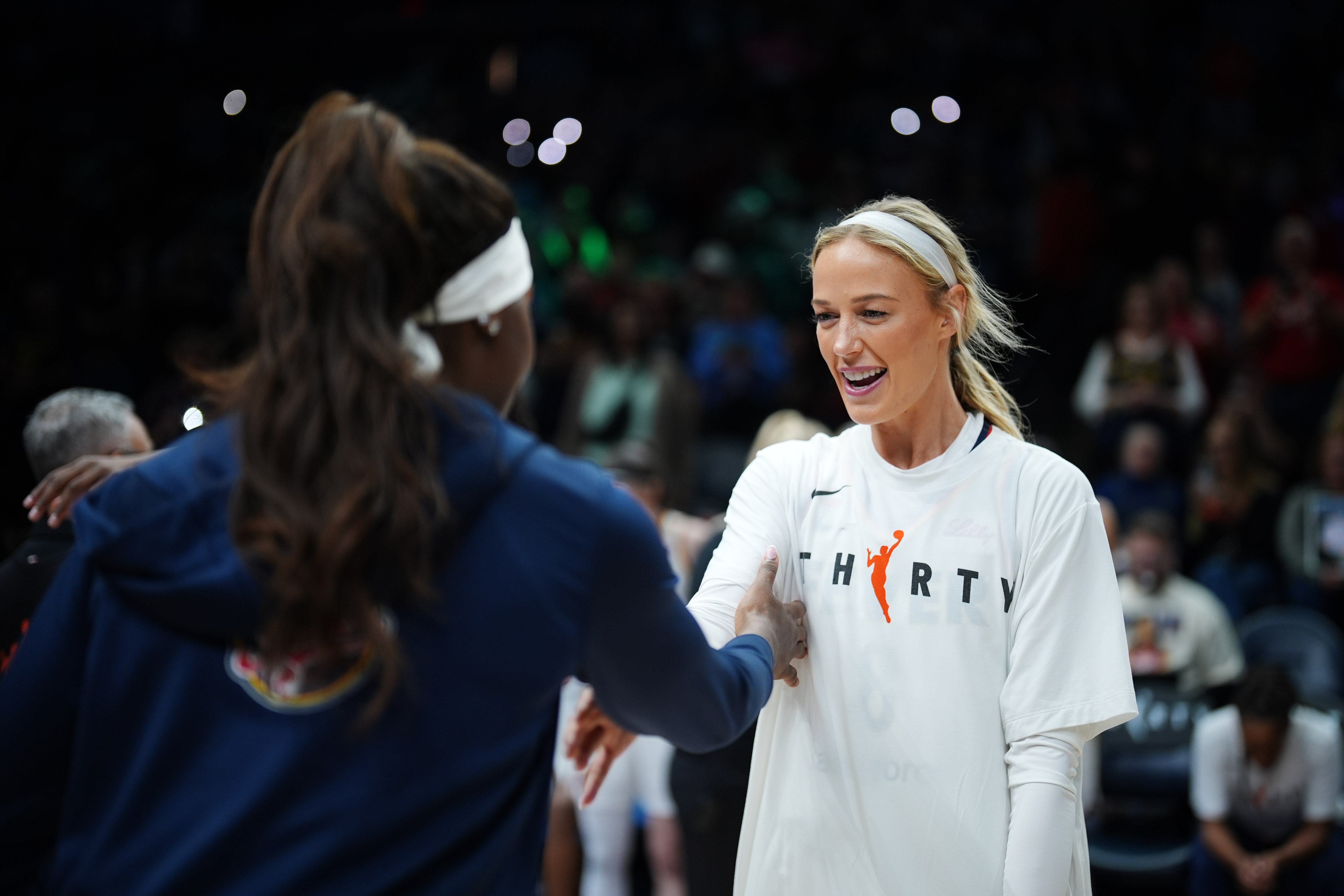
How did Sophie Cunningham simply living her life and being a good teammate turn into a reason for somebody to say she should lose her job? That is really what we are talking about here. Candace Buckner of The Athletic says the Indiana Fever should move on from Cunningham because she has become “too combustible” and her opinions are “too turbulent” to be paired with Caitlin Clark.
And once again, Cunningham is back in the headlines not because of something she did, but because of what someone else is saying about her. The reaction to Buckner’s column then became its own story .
But what does “too combustible” really mean? It is hard to square with what Cunningham has actually done. She stood up for a teammate, became popular because fans appreciated it, and later answered questions about what she believes. Other people took those answers and turned them into weapons in a culture war basketball is now deeply embroiled in.
Go back to where this started. Cunningham did not become famous because she went looking for a political fight. She became famous after Caitlin Clark was poked in the eye and knocked to the floor during a physical game against Connecticut, and Cunningham made it clear she had her teammate’s back. Fans noticed, and her Instagram following jumped by nearly 300,000, her TikTok following climbed from about 300,000 to more than 1.2 million. Her Fever jersey also sold out.
That is the irony here. Buckner says Indiana needs to get back to basketball, but Cunningham’s rise into the spotlight started with basketball. She was being a good teammate on the court.
Then came a wide-ranging ESPN profile . Cunningham discussed the political assumptions people make about her and gave her view on protecting girls’ and women’s sports from male competition and intrusion into female spaces. She also said she wanted to “extend love” and rejected the idea that she hated transgender people.
That helped light the cultural fuse. Protests and counterprotests began surrounding Fever games , while the Trump White House publicly praised Cunningham’s position .
Before long, Cunningham stopped being just a basketball player in the public imagination. Some critics used her as a sword in the culture war, casting her as a new face of transphobia in women’s sports . Others used her as a shield for their worldview, holding her up as someone willing to defend girls’ and women’s sports. Both sides projected something onto her, and now Buckner looks at all of that reaction and treats Cunningham herself as the problem.
That is where I lose the argument. Cunningham did not organize the protests, summon the politicians or create the national debate over women’s sports. She answered questions and people reacted. Then they took all that noise and put it back on her. It’s a form of circular reasoning: External actors created the controversy around Cunningham, then they blamed Cunningham for being controversial.
If she is hurting the Indiana Fever, show me the damage. Buckner does not point to teammates rejecting Cunningham, coaches saying she is unmanageable or Clark saying she wants her gone. Instead, the case is built around the reaction Cunningham generates outside the locker room.
There is also a double standard here that some people in sports media need to examine. For years we have heard that athletes should use their platforms, speak their truth and refuse to “stick to sports.” I am fine with that. Megan Rapinoe can give her opinion, and I may disagree with her or debate her all day long, but I would never argue that she should lose her livelihood simply because I do not like what she believes.
But that principle has to go both ways in a society that says it values free speech and the exchange of ideas. Athletes cannot be celebrated for speaking out when their views fit comfortably within worldviews compatible with the establishment, but then become professionally expendable when they say something that makes others uncomfortable.
That is why Buckner’s argument deserves more scrutiny. She has previously argued that “sticking to sports never made sense” and that athletes inevitably exist inside the larger culture. But when Cunningham’s place in that culture becomes uncomfortable, the answer is effectively to remove the player from the equation.
If Cunningham’s baggage outweighs her value, make that case. Teams make those decisions every day, but public reaction alone should not be proof that a player has become a problem.
Maybe the bigger story is not Cunningham at all — maybe it is us. Cunningham is playing basketball, supporting teammates and enjoying the fans who embraced her, while the rest of us fight over what she supposedly represents.
When a basketball player cannot be a good teammate, answer a question honestly and go about her life without everyone reaching for the cultural knives, that says more about our culture than it does about her. Sophie Cunningham did not create all this noise. We did, and maybe we should stop blaming her for it.
Rich Herrera is host of “Richmond’s Morning News” on NewsRadio WRVA, a cable news contributor and a veteran of national sports radio and professional sports broadcasting.
Topics in this story
Gathered from external sources. Rights to this text belong to whoever originally published it.