Your hour-by-hour guide to 2026 midterm elections
Election Day is here, and observers waiting with bated breath for results can expect a late night. Results will begin to trickle in at 6 p.m. EST, with control of Congress on the line. Although the final tabulation of votes could take days or even weeks, race projections Tuesday night will begin to paint a…
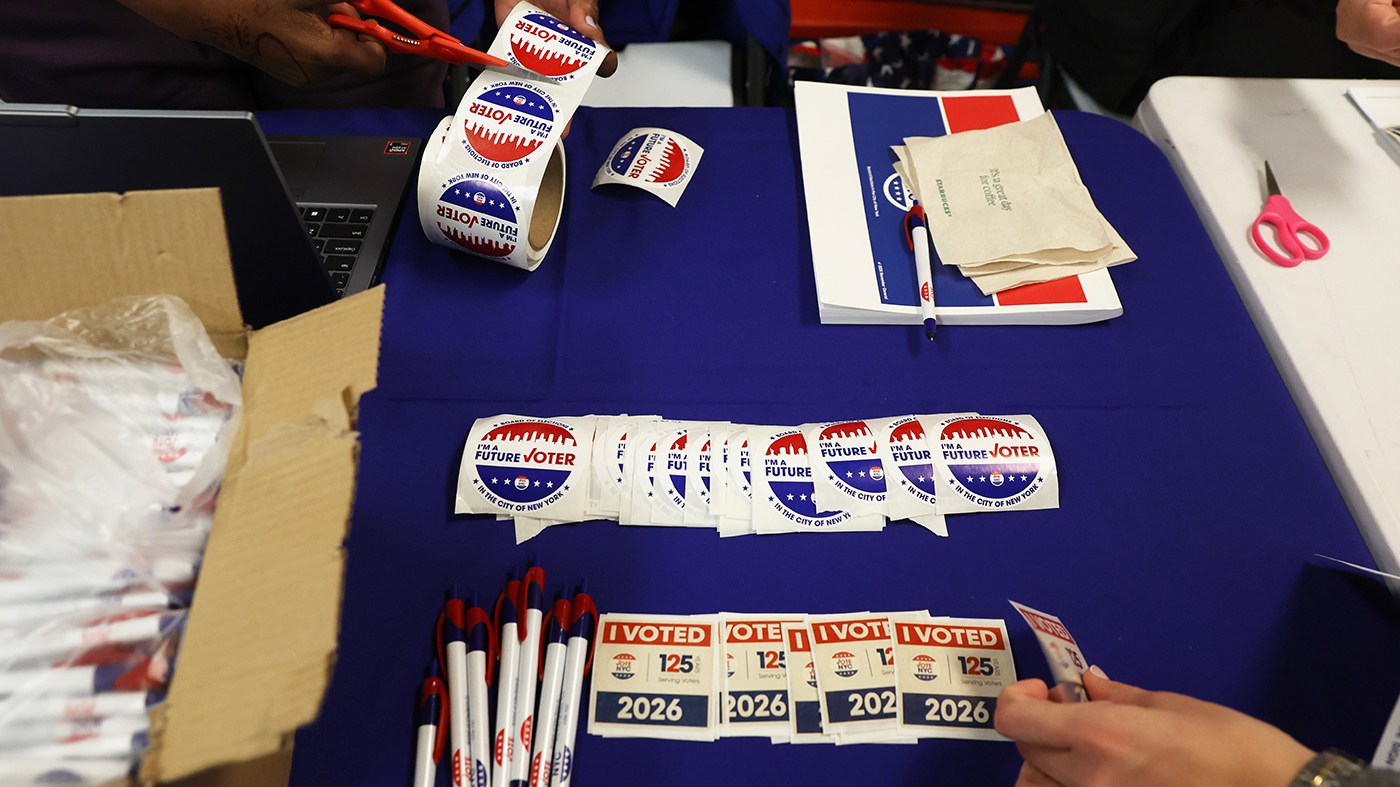
Election Day is here, and observers waiting with bated breath for results can expect a late night.
Results will begin to trickle in at 6 p.m. EST, with control of Congress on the line. Although the final tabulation of votes could take days or even weeks, race projections Tuesday night will begin to paint a picture of which party will clinch power on Capitol Hill.
Democrats need to win four GOP-held Senate seats and net three Republican House seats to flip either chamber. A later night would bode well for Republicans, particularly if key races are too close to call.
“If the polls are right, the generic ballot is relatively right, we’re going to be able to project pretty early in the night,” Decision Desk HQ’s (DDHQ) chief election analyst Geoffrey Skelley told The Hill.
Here’s what to expect every hour as the polls close Tuesday:
Kentucky and Indiana will be the first states to have some of their polls close at 6 p.m., with their remaining polls closing at 7 p.m.
Skelley wrote in an October blog post that within the first two or so hours, results reported from the eastern part of the U.S. “will drive our initial understanding of what’s happening in the midterms.”
A flip in Kentucky’s 6th District could be indicative of a “big blue wave,” Skelley said. DDHQ rates the race between Republican Ralph Alvarado and Democrat Zach Dembo for outgoing Rep. Andy Barr’s (R) seat as a toss-up.
Polls close at 7 p.m. in Georgia, South Carolina, Vermont, Virginia and most of Florida and New Hampshire, though remaining polls in those last two states close at 8 p.m. West Virginia, Ohio and North Carolina’s polls close at 7:30 p.m.
Skelley noted that the elections in eight of these states — Florida, Georgia, Indiana, Kentucky, North Carolina, Ohio, South Carolina and Virginia — will be “especially revealing” once polls close. Nearly 50 House races in these states are “at least mildly competitive — that is, not ‘safe’ for one party.”
The state with the quickest reporting in the country is Florida, with early data points expected to be available after closing. The Panhandle closes at 8 p.m.
Poll closings by 7:30 p.m. could show signs that a “blue wave” is coming, particularly if Democrats claim victories in Florida, Indiana, Georgia, Ohio, South Carolina, North Carolina and Virginia.
“An actual Democratic win in any of these seats would be an electoral earthquake that all but guarantees a Democratic majority,” Skelley estimated. “Republican holds, meanwhile, would only mildly improve the GOP’s majority chances.”
Skelley told The Hill that after the fallout from Florida’s election results in 2000, its voting system became “the best in the country” and could map out what shakes out between 7:20 p.m. and 7:30 p.m.
“We’ll be able to make projections because we’ll be like, ‘Well, there’s no way someone’s ever coming that lead, or what have you,'” he said. “A lot of key districts, and a lot of Republican leading districts on paper, because of the Florida redraw –– Democrats are winning in those places. That will be like, well, it’s going to be real hard for Republicans to win if they’re losing in Florida like this.”
He emphasized that Florida is a “mixed bag” for both parties, so results between this and other states’ races could make the overall outcome of the midterms “a little less clear.”
The outcome with Ohio’s four House races could also “tell us much about the majority situation,” Skelley added. The race for Ohio’s 7th District, where Rep. Max Miller (R) has faced allegations of domestic abuse toward his ex-wife and daughter, is a 50-50 split in a state President Trump won in 2024.
“A Democratic win would push the party’s majority chances north of 90 percent, while a GOP hold would lower them below 65 percent,” Skelley said.
Several states will have their polls completely close at 8 p.m. Tuesday. These are: Alabama, Connecticut, Delaware, Illinois, Maine, Maryland, Massachusetts, Mississippi, Missouri, New Jersey, Oklahoma, Pennsylvania, Rhode Island, and Tennessee, in addition to Washington, D.C.
Polls across Arkansas will close at 8:30 p.m.
Most polling closes at 8 p.m. in Kansas, Michigan, North Dakota, South Dakota and Texas, with each state being split between time zones. The rest of the polls in these states will close at 9 p.m. The 8 p.m. hour is expected to be the busiest hour of the night.
The results from the battleground Senate races between former Rep. Mike Rogers (R-Mich.) and Abdul El-Sayed (D) in Michigan, Sen. Susan Collins (R) and Democrat Troy Jackson in Maine, and Ken Paxton (R) and James Talarico (D) in Texas will begin to trickle in and will provide insights into which party has the momentum.
A Rogers victory in Michigan would mark a “massive win” for the GOP, Skelley noted, as the party seeks to defend its majority. But clear Democratic victories in any of these three states could prompt calls that the party is inching closer to reclaiming the Senate.
States that will see all polls close at 9 p.m. include Arizona, Colorado, Iowa, Louisiana, Minnesota, Nebraska, New Mexico, New York, Wisconsin and Wyoming.
Democrats in Iowa and Republicans in Minnesota are seeking to flip open Senate seats. Iowa is one of the key battlegrounds that could decide control of Congress, with toss-up House and Senate contests.
Nebraska, meanwhile, is also a state to keep a close eye on in the 9 p.m. hour. Independent Dan Osborn is mounting a Senate comeback bid after losing to Republican Sen. Deb Fischer by single digits in the red stronghold two years ago.
Montana, Nevada and Utah will see polls close at 10 p.m., along with most of Idaho, which will also see some of its polls close at 11 p.m. Oregon will also see polls close as early as 10 p.m. for communities in the Mountain time zone, though the rest of the state’s polls close at 11 p.m.
Another independent candidate making waves is Montana’s Seth Bodnar. He faces an uphill battle against Republican Kurt Alme, who DDHQ estimates has a 77 percent chance of winning Sen. Steve Daines’s (R) open seat, as of Monday.
With the bulk of polls closed by 10 p.m., the balance of power on Capitol Hill is likely to begin to come into focus.
Two West Coast states — California and Washington — will see polls close at 11 p.m.
Western states, with some almost entirely conducting elections by mail, allow longer windows of time for ballots to arrive for counting after Election Day, notably California.
The Golden State’s votes for House candidates have proven decisive in who controls the lower chamber, including in 2022 and 2024, years in which the party in control held a narrow majority.
But its redrawn congressional map ushered in with the passage of Proposition 50 last year gives Democrats a chance of winning at least five seats, effectively shrinking the odds for competition and potentially leaving out any chances for close races that could be determined in the days that follow.
Both states could see at least one district flip. California’s 22nd District battle between incumbent Rep. David Valadao (R) and Randy Villegas (D) could shift blue, while Rep. Marie Gluesenkamp Perez (D-Wash.) faces a tight race against state Senate Minority Leader John Braun (R) in the battleground 3rd District.
The last two states to join the union, Hawaii and Alaska, will see polls close at 12 a.m., with some of Alaska’s polls closing at 1 a.m.
Alaska’s size could leave its polls results open-ended in the hours after Election Day ends, with ballots from rural areas sometimes taking days to be counted as they are transported.
Early vote ballots in regional elections offices through the Thursday before Election Day are counted the night of the election, while ballots cast on Friday through Election Day are counted seven days after the election, according to Alaska’s Division of Elections .
Skelley told The Hill that there could be no projections for Alaska by the end of the night. A full count of who holds control of the Senate will be later than the House and “it’s just a question of how much later.”
It was around this time frame, specifically at 12:06 a.m., that The Associated Press called the Senate for Republicans in 2024. The previous two elections saw the outlet call the Senate several days later, including four days in 2022 and 64 days in 2020 because of the Georgia Senate runoff election held in December, which determined Democratic control in the upper chamber along with the incoming Biden administration.
The last midterm election cycle when the AP called the House for Democrats was at 3 a.m. the following Wednesday in 2018. However, every election since then has seen the House called for the winning party days after Election Day, according to the AP. It took one week for the House to be called in 2020 and eight days each for the 2022 and 2024 elections.
Topics in this story
Gathered from external sources. Rights to this text belong to whoever originally published it.