Thune says he worries about losing Senate majority: ‘I’m a realist’
Senate Majority Leader John Thune (R-S.D.) admitted in a recent interview that he’s worried about Republicans losing their Senate majority, acknowledging the strong political headwinds they face this fall because of high prices and President Trump’s slumping approval rating. Thune described himself as “a realist” during a wide-ranging interview with Keloland News in South Dakota.…
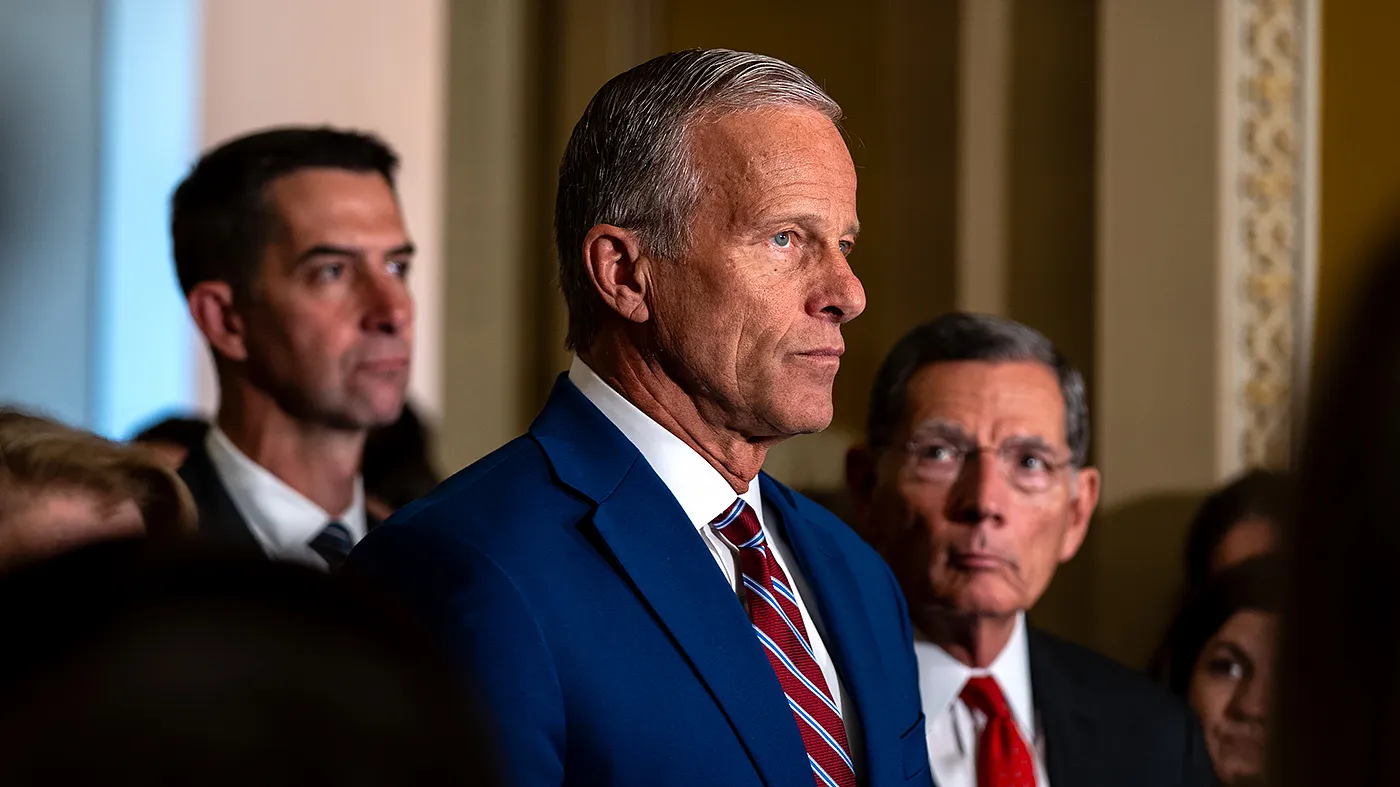
Senate Majority Leader John Thune (R-S.D.) admitted in a recent interview that he’s worried about Republicans losing their Senate majority, acknowledging the strong political headwinds they face this fall because of high prices and President Trump’s slumping approval rating.
Thune described himself as “a realist” during a wide-ranging interview with Keloland News in South Dakota.
Asked if he’s concerned about losing the Republican majority, Thune replied it’s a possibility.
“I worry about that, for sure,” he said. “I’m a realist, and I just think you — I don’t ever try and sugarcoat things. I think it’s a competitive environment right now.”
But Thune praised the quality of GOP candidates running in Senate battlegrounds, such as Sen. Susan Collins in Maine and former Rep. Mike Rogers in Michigan.
“I think we got the highest-quality candidates,” he said.
Thune has cautioned colleagues for months that the president’s party usually faces political headwinds in midterm elections.
He observed in December that it’s “not uncommon” in midterm elections for the party in power to face challenges.
“The opposition party tends to be more motivated, their voters are motivated. So in a special election or off-year elections the turnout models are significantly different than they would be in an even-numbered year. You probably saw that in Tennessee,” Thune told reporters after a Democratic candidate outperformed expectations in the Volunteer State’s special election at the time.
Democrats would have to pick up four seats to win the Senate majority, but the battle has gotten more intense as the midterms approach.
Decision Desk HQ last week said Republicans have a 52 percent chance of winning the Senate majority, while Democrats have a 48 percent chance — essentially a toss-up, and the closest the two parties have been since June.
The nonpartisan election handicapper Cook Political Report last month shifted two red seats — Iowa and Texas — into its “toss-up” category.
Thune in the interview acknowledged that high gas prices caused by the war with Iran could weigh on voters this fall.
“The military objectives have been very successful in my view,” Thune said, but he also voiced concerns about the lasting impact on prices.
“The challenge we have right now is Strait of Hormuz and the economic impact that’s having on gas prices in this country, and that’s where keeping it open and making sure that the Iranians can’t restrict or tax or toll in international waterway is really important,” he said.
Thune in July called the reopening of the Strait of Hormuz a “key” issue related the future strength of the American economy.
“That to me is the key consideration in all this,” Thune said.
Thune has hinted at his displeasure over Trump’s trade war with Canada, which is a major trading partner for South Dakota.
He often tells reporters that he’s “not a huge fan of tariffs,” but he’s stayed mostly quiet on the issue in deference to Trump.
Trump recently threatened 50 percent tariffs on $20 billion in Canadian goods.
South Dakota exports $846 million in goods to Canada and imports $554 million in Canadian goods each year, according to the Canadian government.
Thune and other Senate Republicans are also pushing back on Trump’s plan to import 300,000 metric tons of foreign beef in the United States to lower beef prices — something they fear will undercut domestic ranchers.
“He’s trying to lower beef prices, which I think we’re all supportive of. I just don’t think this is the way to do it,” Thune told Keloland News.
“We have a lot of beef producers here in South Dakota; they produce the highest-quality beef in the world, and we’re trying to build our herds back up.”
Topics in this story
Gathered from external sources. Rights to this text belong to whoever originally published it.