DC’s attorney general wants to be the new national speech czar
Consumer protection laws are supposed to make sure products work as advertised, not that companies toe the D.C. government’s line on climate change.
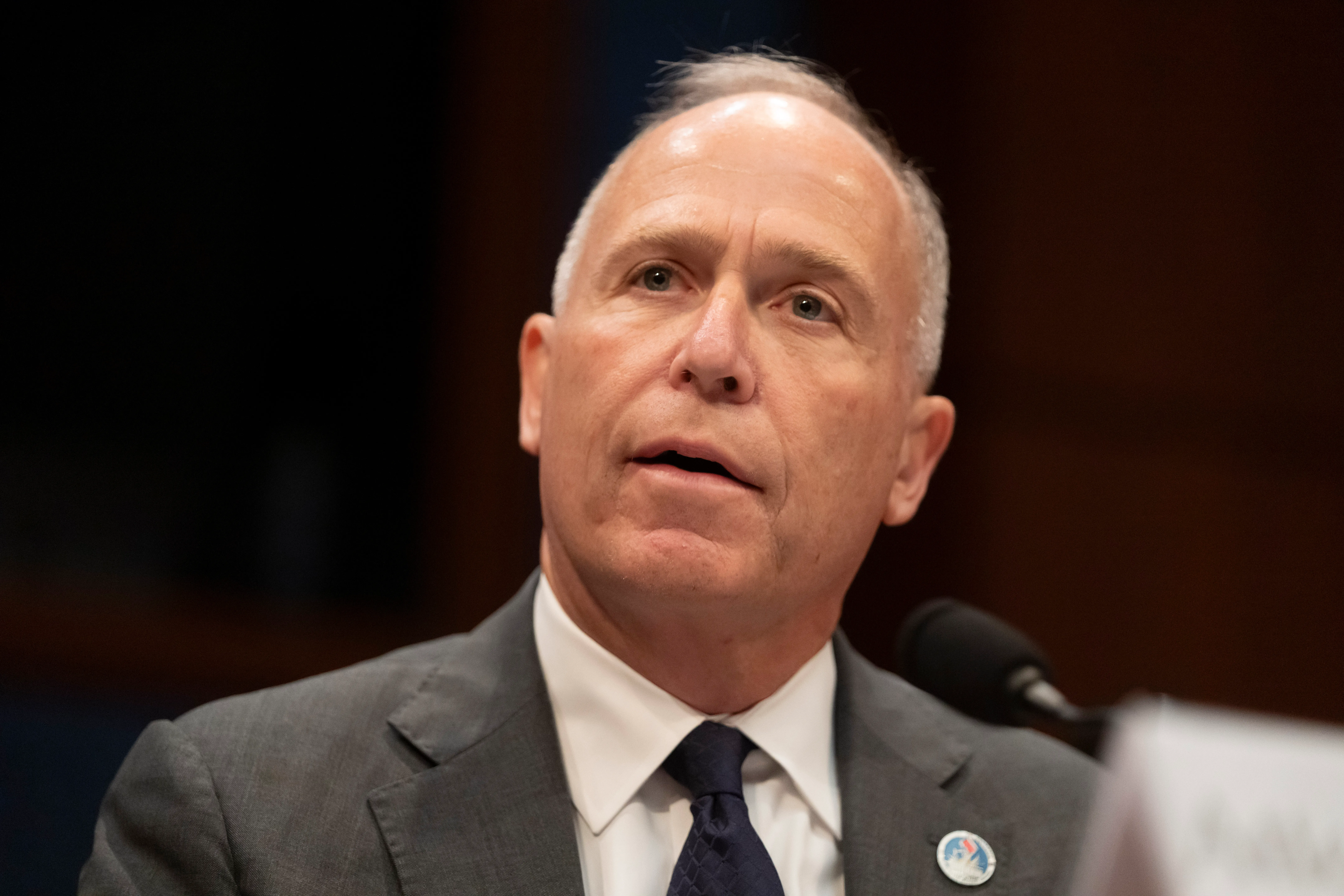
The attorney general of Washington, D.C., a person few Americans have ever heard of, wants to be the nation’s top speech cop. Progressive municipalities across the country are suing energy companies over their speech about climate change.
The District’s attorney general, Brian Schwalb, has brought a climate speech lawsuit with scary knock-on effects for the entire country.
Schwalb holds a high leverage position, with disproportionate power to rig political debates for the left. Foundations, think tanks, advocacy groups, and trade associations line every block of the nation’s capital. They brief reporters, organize events, lobby decisionmakers, and incubate new policy ideas.
Schwalb is threatening all of that First Amendment activity by weaponizing consumer protection laws against targets he dislikes. And given Washington’s far-left political character, the threat falls only one way.
Climate lawsuits accuse energy producers of duping consumers by concealing ties between energy products and global warming. The evidence? Newspaper ads and policy statements from industry trade groups — their ordinary political advocacy, as a federal judge recently admitted from the bench.
Consider the breathtaking reach of Schwalb’s theory. Any statement posted on any website, anywhere in the world, at any time, can expose the speaker to consumer protection liability in the District of Columbia — even without proof that a single consumer within its borders ever saw the statement, much less relied on it when pumping gas.
On this theory, merely posting a statement online supplies the jurisdictional hook to haul a defendant into D.C. Superior Court. Every company, think tank, advocacy group and individual with a website that crosses green orthodoxy could face years of litigation in Schwalb’s home court.
The District’s “front group” theory sweeps even wider. Schwalb alleges the companies laundered deceptive messages through third parties, such as the American Petroleum Institute. Where does that end? If a retired energy executive who owns company stock donates to a think tank skeptical of climate alarmism, is he running a front group? What about the newspaper that accepts the industry’s advertisement or publishes its op-ed? On Schwalb’s logic, they are all in on the scheme.
And climate is only the opening act. California’s attorney general has already sued ExxonMobil over its statements about plastics recycling. In fact, any Washington think tank that takes the industry’s side in a fight over plastics, gas stoves, or processed food could find its policy papers recast as a form of consumer fraud.
Remember, consumer protection law requires no intent to deceive. In 1994, Al Gore cast the tie-breaking Senate vote for the ethanol mandate , when ethanol was hailed as an environmental winner. By 2010, he was admitting his mistake and confessing he backed it partly out of fondness for Tennessee corn farmers. So, under Schwalb’s theory, was the Gore campaign a front group for corn growers committing consumer fraud?
Apart from its menacing implications for the First Amendment, the District’s legal claims are weak on their own terms. Some the contested claims are true statements. Many energy companies produce low-emission fuels and lubricants. Exxon produces motor oil which lowers emissions by improving engine performance. Shell sells gas products that cut emissions by stopping buildup of engine gunk.
Schwalb does not claim that these statements are false. He cannot, because they aren’t. Instead, he says marketing those products without mentioning climate change amounts to tricking the customer.
I am not aware of any other consumer protection case in which a company got in trouble for telling the truth about its products.
Many of the supposedly actionable statements Schwalb cites are mere corporate platitudes. The complaint faults Shell, for example, for its stated commitment to balancing “economic progress with environmental care and social responsibility.” BP is faulted for an advertisement professing a commitment “to make our energy cleaner and better.” But those statements aren’t deceptive — they are just banal.
Perhaps most importantly, Schwalb will attack energy companies no matter what they do about climate change. Say too little, and the company is staging a corporate coverup (this is the “Exxon Knew” campaign). Say too much, and the company is accused of “greenwashing” its products. There is no satisfying the climate plaintiffs. Their satisfaction is in destroying energy companies, not in serious enforcement of consumer protection statutes.
The consumer protection laws police hidden fees, defective products and false advertisements that manipulate purchases. The nub of the law in this area is the question, “Does the product work as advertised to the customer?” No one disputes that energy products work as advertised. In fact, the District government itself still burns fossil fuels to heat its buildings, power its police cars and school buses, and fly its officials to various locations on city business. Does that sound like a defective product?
Ultimately the climate-consumer protection claims rest on the false premise that consumers are stupid or have been deluded about climate change all along. But climate policy has been a fixture of political debate for decades. Businesses, advocacy groups, and voters can reasonably debate how to protect our communities without destroying them. Those disagreements are not deceptive or unlawful.
Washington D.C.’s climate lawsuit is menacing to the future of free speech in our country. Extremists are emerging from Democratic primaries lately. It is easy to imagine the Democratic Socialists of America electing their first attorney general in Washington, D.C. Schwalb has left a very dangerous precedent for that person to exploit in silencing all political opposition.
Todd J. Zywicki is George Mason University Foundation Professor of Law at George Mason University Antonin Scalia Law School and Co-Director of Institute for Consumer Financial Choice.
Topics in this story
Gathered from external sources. Rights to this text belong to whoever originally published it.