Religious accommodations are a right, not a favor
Every morning, like so many other Americans, I kiss my son and husband goodbye and leave for work. But unlike many Americans, that ordinary routine depends on accommodations. My ability to practice law was contingent on the bar exam being presented to me in a format a blind applicant could use. Without accommodations, I would…
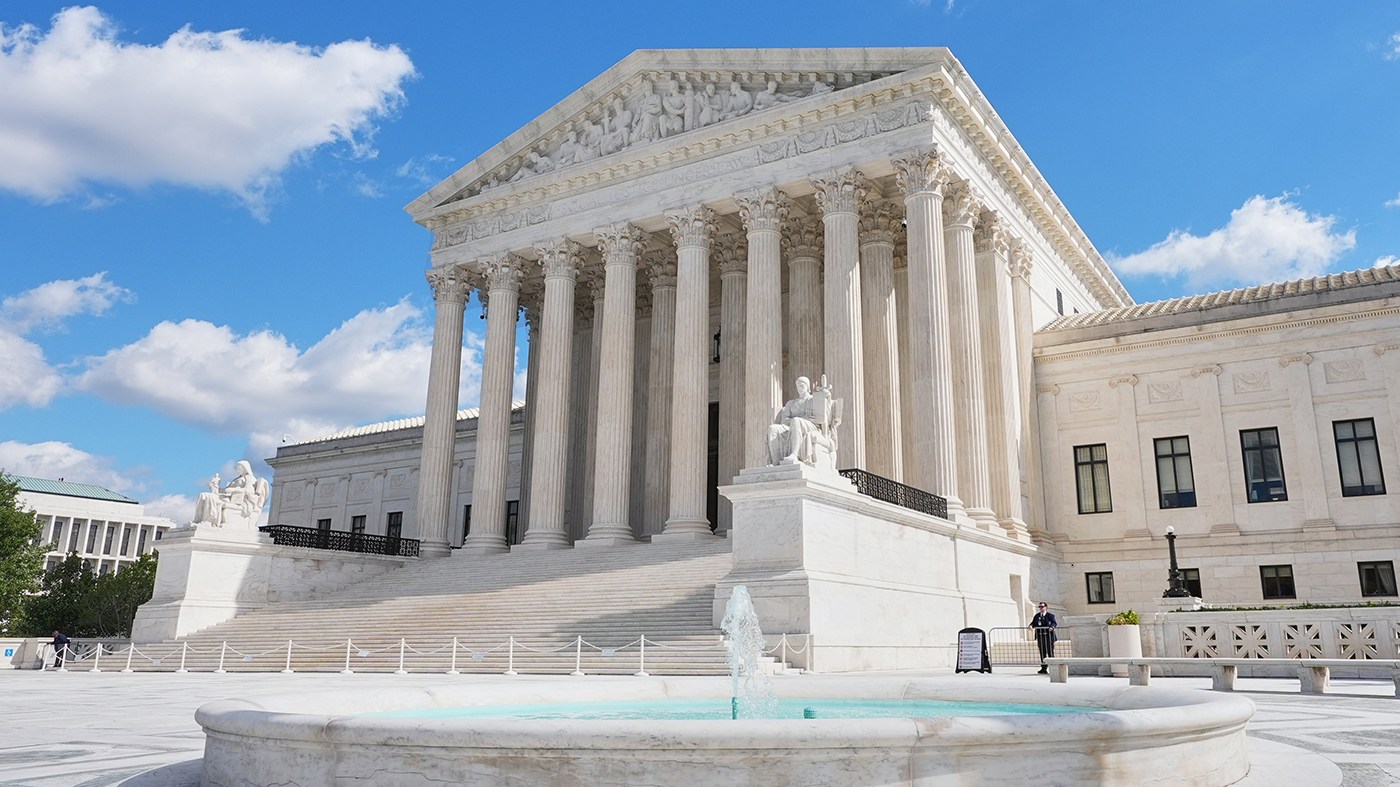
Every morning, like so many other Americans, I kiss my son and husband goodbye and leave for work. But unlike many Americans, that ordinary routine depends on accommodations.
My ability to practice law was contingent on the bar exam being presented to me in a format a blind applicant could use. Without accommodations, I would not have my job as an appellate lawyer. I would not have clerked at the U.S. Supreme Court and might not even be raising a family.
The accommodations that have allowed me to fully pursue my education and to participate in civic life have made all the difference.
The Supreme Court is now facing a similar issue in a case that will be argued this morning, St. Mary Catholic Parish v. Roy. The case, brought by my law firm, the Becket Fund for Religious Liberty, is about whether Colorado may legally exclude Catholic preschools from a tuition assistance program worth around $6,300 per year for children in pre-K.
Although the case is about religious-freedom protections, there is a connection to the law of disability accommodations. Colorado allows schools to participate in its preschool funding program if they prioritize and accommodate children with particular disabilities (like blindness or deafness). But schools that similarly prioritize and accommodate children with certain religious beliefs — like Catholic or Evangelical preschools — are excluded. Disability, Colorado says, merits special solicitude, but religious beliefs merit a flat denial.
Disability, Colorado says, merits special solicitude, but religious beliefs merit a flat denial.
The government draws an artificial line between the limits of the body and the limits of the soul. As a blind Catholic, the boundaries of my conscience are just as unchangeable as the limitations of my vision. I am just as incapable of counseling a client to end a human life as I am of reading a printed page.
Americans have long recognized that society ought to meet both those with disabilities and those with religious beliefs where they are. The Declaration of Independence promised Americans an “equal station” because “the Laws of Nature and of Nature’s God entitle them” to those rights. All men and women are created equal, even if we don’t always do the best job recognizing that principle in practice.
As preeminent legal scholar Michael McConnell has explained , accommodations are sometimes required to ensure that all are treated fairly. This is one area where disability and religion have principles in common. Examples of disability accommodations include ramps, closed-captioning, and Braille signage. Examples of similar religious accommodations might include providing kosher food for observant Jewish servicemembers, not scheduling Seventh-day Adventists to work on their Saturday Sabbath, or allowing Muslim or Sikh firefighters to wear beards. During wartime, including during the American Revolution itself, Quakers and other pacifists were allowed to serve their country in alternative ways instead of bearing arms. During Prohibition, there was an exception for sacramental wine.
These accommodations are not indulgences. They are not favors. They are something we have always done to ensure that we as a nation honor everyone’s human dignity. We recognize the constraints imposed on our fellow Americans and work together to ameliorate, overcome, or accommodate them — even when it costs us something in the process.
In St. Mary, Colorado wants to give dignity to some Coloradans but not others. Although the state rightfully supports accommodations for deaf or blind children, it refuses to do so for children and families whose Catholic faith limits their preschool options to institutions committed to honoring their values. In fact, the state refuses to do so, even while acknowledging that Catholic preschools are shutting down — thus eliminating preschool options for many Catholic families.
But human dignity is not a favor that Colorado may bestow on those it likes and deny to those it does not. Rather, it is fundamental to what it means to be a full member of society.
Religious accommodations, like disability accommodations, are rights, not favors. That means Colorado has to recognize and honor the human dignity of all its citizens, including those whose religious beliefs it rejects.
Laura Wolk Slavis is counsel at the Becket Fund for Religious Liberty .
Topics in this story
Gathered from external sources. Rights to this text belong to whoever originally published it.