A diesel export ban would guarantee higher prices
While some Republican lawmakers have considered a diesel export ban to combat high fuel prices, critics argue such a move would ultimately decrease domestic supply and raise costs by disincentivizing refining capacity.
Imagine you own a store that sells to a wide variety of customers, many of whom live outside your city. During a period of difficult economic conditions, the city council votes to allow sales only to city residents. Not to worry, they say, because with outsiders no longer competing for your products, a larger supply will be available for residents.
As a business owner, your costs stay the same, but your shelves remain stubbornly stocked as you can no longer sell products to your usual customer base. How long before you stop ordering products for sale, cut operating hours, lay off staff, and reduce investment in the business?
Yet these are the same sort of restrictions on the customer base of America’s refiners that Senate Majority Leader John Thune (R-S.D.) now says he is “open to considering.”
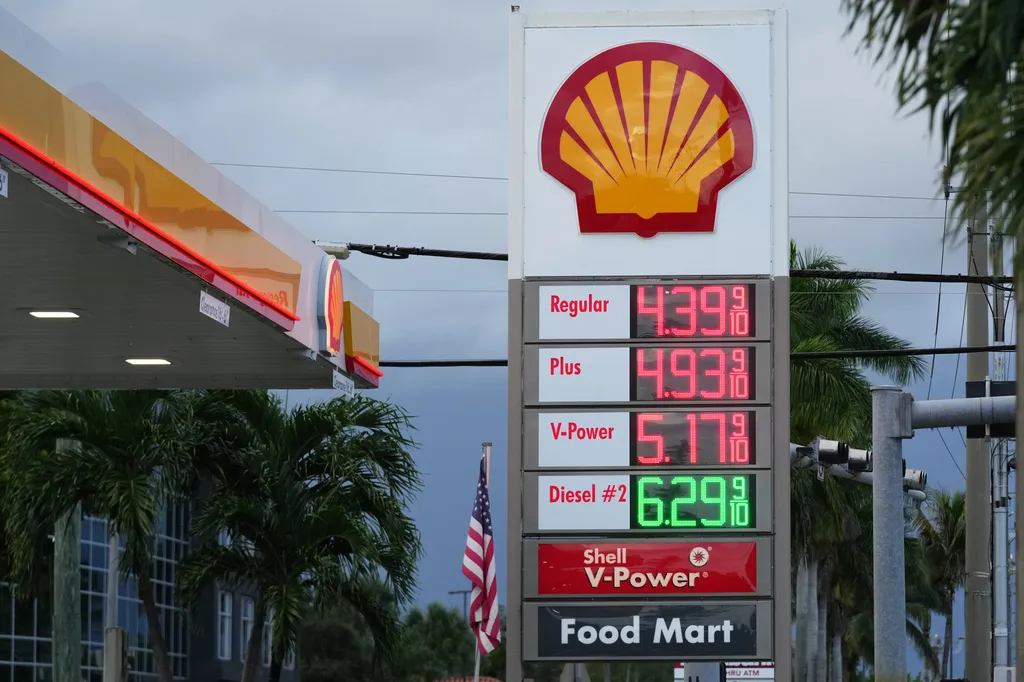
He is not alone. Retail diesel is sitting at a record $6.30 a gallon, and a diesel export ban is getting a serious hearing from people who should know better.
According to Sen. John Hoeven (R-N.D.), who has previously (and correctly) argued that lifting export bans would increase supply and lower prices, “Any ban would have to be done on a short-term basis, but it could ‘send a signal to the market’.”
Rep. Tim Burchett (R-Tenn.) went further, openly blaming “ price gouging by greedy oil companies” for rising prices and urging Congress to “keep American diesel in America.”
The political impulse is understandable as American families are feeling the pinch of higher fuel prices. But the economics of an export ban remain hard to justify. Any ban might lower prices for a few weeks, but it would raise them for years because it’s based on flawed economic principles.
The nation does not have extra barrels of diesel waiting for prescient government regulators to direct to the right customers. Customers set diesel prices in a global market by indicating their need through how much they are willing to pay.
A gallon refined on the Gulf Coast competes with gallons from Ruwais, Jamnagar and Yeosu. The price an Ohio trucker, an Oregon logger, or South Dakota farmer pays reflects worldwide supply and demand, not the distance to the nearest refinery.
Cutting off exports won’t push American refineries to produce more gallons (or barrels); it just restricts where existing barrels can go. Worse, it does this as inefficiently as possible, by trusting that government regulators somehow know where to send fuel better than the companies selling it or the people using it.
Refining capacity is the key, and American refiners are already running out . In the week ending Sept. 4, they processed 17.6 million barrels a day of crude at 97.8 percent of operable capacity. EIA data indicate that American refineries produced 5.2 million barrels a day of distillate fuels in June this year. Adding American distillate fuels into the world markets helps push global prices down, not up. But banning those barrels will raise global prices.
To clarify, a sudden isolation from world markets would drop domestic prices in the very short term and therein lies the political appeal of an export ban. But as prices fall and unsold inventory piles up on the Gulf Coast, refiners will do what any business does when margins disappear: reduce production. Less crude through the system means less diesel, less gasoline, and less jet fuel in the U.S. encouraging more investment in Chinese and Indian refineries, which already passed the U.S. in overall capacity in 2024.
Legislators should remember that refiners do not set prices; markets do. And while it may result in a catchy headline, high prices are not “gouging.” Instead, high prices signal that global markets lack much-needed diesel. A ban sends the opposite signal.
What makes the proposed ban even more confusing is that we’ve been here before. For four decades, the United States banned most crude oil exports. The result was an artificially discounted American barrel and capital that went looking for better places to work.
But when Congress repealed the export ban in 2015, American oil and gas producers proved they were ready. Domestic production grew from just over 9 million barrels a day in 2015 to nearly 14 million in 2026. That growth allowed the United States to become the world’s largest petroleum producer . Lifting the ban raised production and strengthened American energy security. A diesel export ban would reverse that hard-won knowledge.
If Congress wants lower diesel prices, they should first strongly resist any pre-election urges to tell American companies who they can and can’t sell their products to. Then, they should pass permitting reform measures to speed permitting to allow more drilling and the construction of new refineries and pipelines.
They should repeal the Renewable Fuel Standard’ s biomass-based diesel and high ethanol mandates, which force more expensive gallons into the fuel pool. They should continue to press to protect global energy infrastructure that war in Ukraine and the Middle East has put at risk.
Each of these options adds supply, while an export ban would remove it.
Republicans have spent decades arguing against government intrusions into markets, rightly pointing out that they lead to scarcity and higher prices. Both Congress and the White House should heed those warnings and discourage any further talk of export bans.
Derrick Morgan is executive vice president at The Heritage Foundation. Jason Hayes is Heritage’s senior research fellow in energy policy.
Topics in this story
Gathered from external sources. Rights to this text belong to whoever originally published it.