Trump administration expands mass deportations with noncriminals
A surge in immigration arrests is sweeping up immigrants with no criminal record whatsoever, including many who were already known by the government, as officers push to meet quotas set by the Trump administration. U.S. Immigration and Customs Enforcement (ICE) officers broke records for the second Trump administration with back-to-back months of arrests topping 50,000…
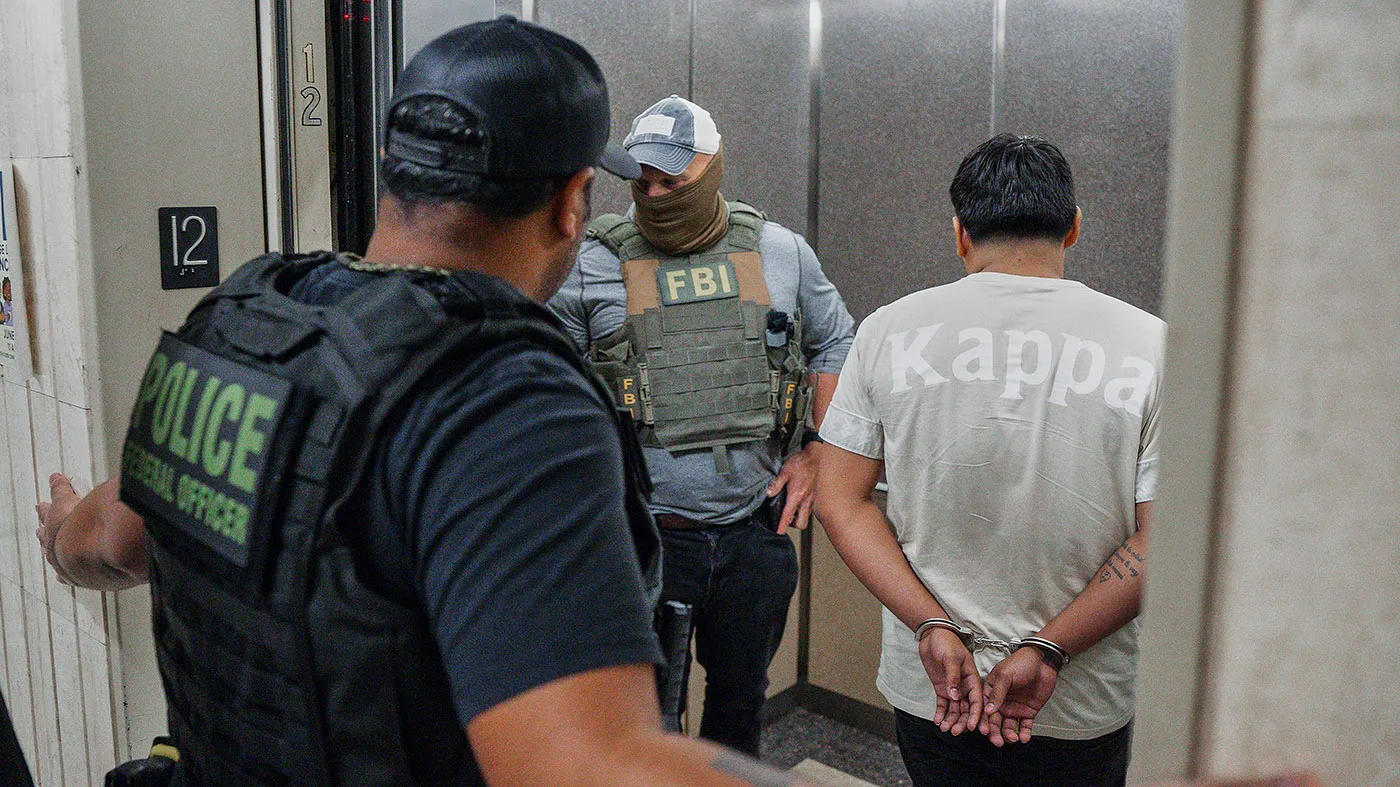
A surge in immigration arrests is sweeping up immigrants with no criminal record whatsoever, including many who were already known by the government, as officers push to meet quotas set by the Trump administration.
U.S. Immigration and Customs Enforcement (ICE) officers broke records for the second Trump administration with back-to-back months of arrests topping 50,000 in July and August.
But the data undercut a long-running claim by the Trump administration that it is targeting the “worst of the worst” by removing those with criminal records.
In fact, more than half of those arrested — 55 percent — had no interaction with law enforcement whatsoever, while another 24 percent have faced charges but were never convicted, according to data obtained by the Deportation Data Project.
These statistics have raised reservations among some Republicans in Congress.
“I’ve been telling the administration that do not conflate the gangster with the gardener, the nanny with the narco,” said Rep. Maria Elvira Salazar (R-Fla.), who represents a district where more than half the population is foreign born.
It’s a figure that reflects a growing dynamic in immigration enforcement under the Trump administration — going after those with pending asylum claims or are otherwise seeking to adjust their status who are already known to authorities.
“What this shows is that the Trump administration is expanding its mass deportation operations away from people who are public safety threats or who have had some interaction with the criminal justice system and towards everybody else in an effort to hit the quotas put on them by the White House,” Aaron Reichlin-Melnick, a senior fellow with the American Immigration Council, told The Hill.
The Department of Homeland Security (DHS) has offered mixed messaging on the extent it is still prioritizing criminals for removal.
On social platform X, the department maintains that 70 percent of those arrested by ICE have criminal records — a statement that is demonstrably false based on its own data.
“I mean the 70 percent figure has not been true since May of 2025,” Reichlin-Melnick said.
“DHS has been giving the 70 percent figure for at least a year now. It’s not true. It hasn’t been true. The agency has released extensive data confirming that it’s not true.”
But in media appearances, leaders have also distanced themselves from stressing the importance of arresting criminals, even as media releases from the agency continue to tout deportations of “the worst of the worst.”
“These individuals that we’re going after — I don’t care if you have a criminal background or don’t have a criminal background, you chose to break the law when you came across our border illegally. It’s our position and our job to hunt you down and send you back to where you came from,” Homeland Security Secretary Markwayne Mullin said this past week during an appearance on “The Ingraham Angle.”
Border czar Tom Homan also contradicted the DHS’s claims during an appearance on the same show in July.
“Just over half of everybody we’re arresting is a criminal. So about half are noncriminals,” he said.
“But bottom line is, everybody’s on the table. The numbers show it’s about half and half now. … And with the additional resources we got from the reconciliation bill, you wait to see what the numbers are this year.”
There have been several factors behind the uptick in arrests, from a stealthier approach to enforcement under Mullin that departed from the widely publicized raids used previously to more recent tactics like arrests of immigrants at airports.
“This is from all the different tactics coming together really for the first time. The street arrests happening at the same time you have all the check-ins for people, immigration court interactions. All that stuff’s coming together — the airport arrests,” said David Bier, director of immigration studies at the libertarian Cato Institute.
Bier noted that Mullin got to the department as “all these resources [were] coming online at the same time.”
“They’re paying people a huge amount of overtime. They have no worries about money, so you know that’s a big part of it too is they just have people working like crazy to get these through,” he said.
Rep. Pramila Jayapal (Wash.), the top Democrat on the House Judiciary subcommittee on immigration, said the less overt operations carried out by Mullin are in part due to the backlash to the much publicized raids carried out under former Homeland Security Secretary Kristi Noem.
“They are continuing this strategy quietly now because it was unpopular when it was loud. But they’re going to find out in November that it’s unpopular when it’s quiet as well,” she told The Hill.
“They’re just arresting anyone. It’s just all about their ultimate number.”
Reichlin-Melnick noted that many of those being arrested, beyond having no criminal record, are also people who are already in immigration processing.
“We’re seeing this expanded to people at airports, people who overstayed their visa solely because the U.S. government didn’t get around to adjudicating their case in time, and these are people who really have done nothing wrong. They took the path that the Trump administration itself used to say was the right way,” he said.
“More and more of those people are now being swept into the mass deportation machine, despite the fact that they have pending applications with the U.S. government and have been complying with every obligation put on them. So why is the administration going after them? Because in some ways they are the easiest targets. They tell the government who they are or where they live. … And so when the U.S. government needs to ramp up arrest numbers, it can just go after those people rather than having to find people that it doesn’t know about already.”
Bier noted the increase in the number of those arrested without a final order of removal — an order given by an immigration judge after determining someone should be deported — leaving them waiting in detention as they continue to fight their case.
“Pretty soon, it’s going to be a majority of their deportations are not going to be based on a final order of removal, which will be just a real threshold for proving the success of the strategy, which is arrest and detain people without removal orders, and then just hope they give up,” he said.
The surge in arrests has led to some backlash, even in solidly red Florida, where immigrant communities include naturalized citizens as well as those who do not have status.
“Look, I’ve always supported TPS for Venezuelans, for Haitians,” said Rep. Mario Diaz-Balart (R-Fla.), referencing the temporary protected status program that protects people who are otherwise deportable from being sent back to countries that are considered dangerous.
“Securing the border had to happen. It’s worked. It’s good. It’s good for our security. But some of the enforcement, I think, has been a bit of an overreach, to say the least — to say the least. I’ve expressed that.”
“You can enforce the border, but I think you also have to hopefully look at all the circumstances when you have some specific cases,” he added.
Salazar, who has sponsored the Dignity Act as a way to help those without legal status gain a pathway to remain in the country, said the administration has failed to account for the economic contribution made by those without criminal records who have been working in the U.S. for years.
“The people who’ve been here for decades in construction, hospitality, agricultural, healthcare, manufacturing [industries] — those people are needed, and we need it for the economy. It’s just that there is a disconnect. … The White House is not understanding that those people are needed for the economy,” she said.
“And that those are our values as Americans.”
Topics in this story
Gathered from external sources. Rights to this text belong to whoever originally published it.