The Memo: Trump faces massive midterm rebuke — if the polls are right
President Trump looks to be facing a major rebuke from voters as the clock ticks down to the midterm elections. Yet, even as Democratic hopes rise, there are also nagging fears within the opposition party about its chances of taking the Senate, in particular. The overall dynamics are plainly bad for Trump and his party.…
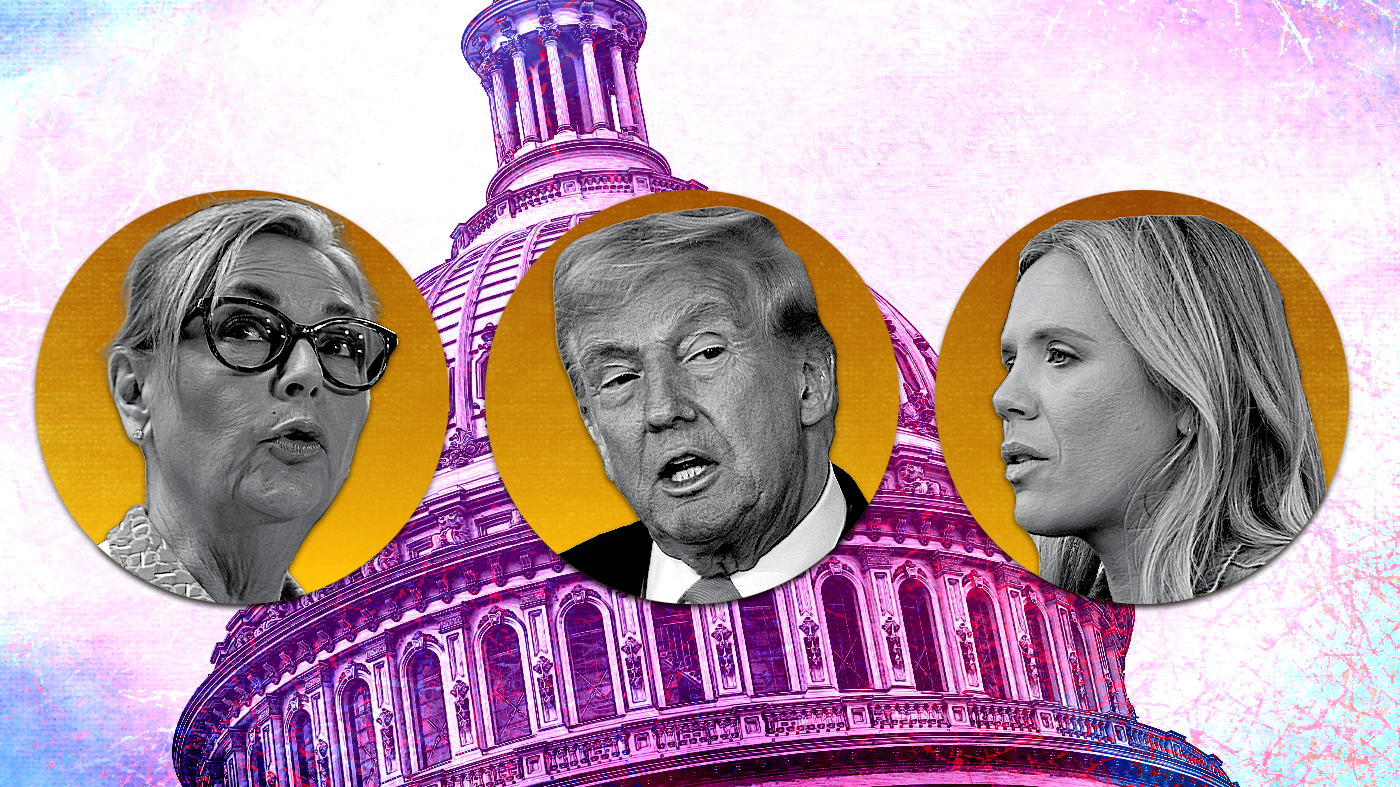
President Trump looks to be facing a major rebuke from voters as the clock ticks down to the midterm elections.
Yet, even as Democratic hopes rise, there are also nagging fears within the opposition party about its chances of taking the Senate, in particular.
The overall dynamics are plainly bad for Trump and his party. The president is mired in low approval ratings. Elevated gas prices, an unpopular war and Trump’s personal penchant for controversies — and questionable construction projects — weigh him down.
Trump’s job approval rating is 20 points in negative territory according to the average maintained by The Hill’s data and polling partner, Decision Desk HQ (DDHQ). According to that metric, roughly 39 percent of Americans approve of how Trump is doing his job, while 59 percent disapprove.
The final stretch of the campaign has seen Trump campaign in states usually considered Republican strongholds, including Mississippi, South Carolina and Texas. Those rally locations speak to the reality — widely accepted within both parties — that the Senate map has expanded in the Democrats’ favor.
It’s a startling shift from the aftermath of Trump’s 2024 presidential victory when the general consensus was that the Senate would not even be in play this year, given the red-tinged nature of many of the key states.
As for the House, few political insiders expect anything other than a Democratic victory.
“The House is almost certainly going to go Democratic,” admitted GOP strategist Dan Judy. “The question is, is it a huge wave or more of a pretty solid victory?”
Regarding the upper chamber, Judy added, “It’s amazing that the Senate is even a conversation. That’s a testament to how tough an environment it is for Republicans, even by historic midterms standards.”
Trump has often noted that the party that holds the White House almost always loses seats in midterms. The sole exception this century came in the 2002 midterms, which took place against the traumatic backdrop of the 9/11 attacks the previous year.
DDHQ currently gives the Democrats an 80 percent probability of taking the House majority and a 58 percent chance of winning the Senate.
The closeness of the Senate races in some usually reliable GOP states tells its own story. A New York Times/Siena University poll released Wednesday sent shockwaves through the political world when it indicated that the race in South Carolina between Republican Sen. Darline Graham and Democrat Annie Andrews is essentially tied.
Graham was appointed to the seat this summer after the sudden death of her brother, Sen. Lindsey Graham (R-S.C.), who had been in the Senate for almost a quarter century. In the 2024 presidential contest, Trump defeated Democratic nominee Kamala Harris in South Carolina by almost 18 points.
Roughly similar stories are seen elsewhere in the nation. In Texas, Democratic nominee James Talarico leads GOP nominee Ken Paxton by 4.2 points in the DDHQ average.
In North Carolina, Democratic former Gov. Roy Cooper is widely expected to take a seat away from the GOP given his large polling advantage over Republican nominee Michael Whatley. Another political veteran, former Sen. Sherrod Brown (D), is favored by roughly 3 points in the DDHQ average as he seeks to oust Sen. Jon Husted (R) in Ohio. Trump carried Ohio by 11 points in 2024.
Yet, even amid such apparently bullish signs for the Democrats, there are plenty of nerves among the opposition party.
One fear centers on the idea that polls are decreasing in reliability for a host of reasons, including a perception that some conservative-leaning demographic groups are becoming less willing to complete surveys.
Democrats are also aware that they do not have a massive margin for error. For example, few strategists would be shocked if Sen. Susan Collins (R-Maine) were to hold on to her seat, despite polls showing her down an average of about 3 points.
Talarico’s lead in Texas is eyed tentatively by Democrats who know how often their hopes have been dashed in statewide races in the Lone Star State. In Michigan, there is plenty of Democratic anxiety about Abdul El-Sayed, even though he is up 3 points in the DDHQ average. El-Sayed is attempting to retain a seat Democrats already hold, where Sen. Gary Peters (D) is retiring.
If the Democrats were to lose Michigan and fail to gain either Maine or Texas — none of which is implausible — the path to a Senate majority would suddenly seem a lot tighter.
There’s also the money factor. The New York Times recently noted that GOP ad spending is comfortably outpacing Democratic spending in six of the seven Senate races it considers toss-ups.
Democratic strategist Mark Longabaugh said that it was a combination of lack of faith in polling and “the spending disparity” that gives him restless nights.
“They seem to have unlimited money,” he said of the GOP. “In some races, we are getting outspent badly at the close of the race. In most of the races, they are not focusing on making an economic argument, they are just trying to character-smear the Democratic candidate. But I don’t underestimate their ability.”
For all that, Longabaugh pronounced himself “optimistic” overall because he believes economic discontent has left the electorate primed to exact their frustrations on Trump’s party.
Another Democratic strategist, Joe Trippi, was even more confident of his party’s chances.
Trippi argued that some of the most aggressive attacks leveled against Democratic candidates were evidence that the president and his party are having difficulty motivating their base voters.
“I think all this ‘Muslim, socialist, communist’ stuff — and Trump’s ‘Pretend I am on the ballot’ — just shows they are still grappling with how they are going to get their people to turn out,” Trippi said. “And no matter which enemy or scary thing they say is hiding under your bed, nobody is running to vote for them.”
Trippi noted that he did not expect 2024 MAGA voters to back Democrats in any significant number this time around.
But, he said, the reluctance of those voters to back the GOP — citing living costs, the war on Iran and Trump’s propensity for self-glorifying projects, among other factors — was clear.
The Memo is a reported column by Niall Stanage.
Topics in this story
Gathered from external sources. Rights to this text belong to whoever originally published it.