As More Young People Suffer Strokes, 29-Year-Old Recalls Early Signs: ‘A Bomb Went Off in My Head’
In July 2024, Patrick Mascoli, 29, of Boston, had just finished an ordinary run when something felt terribly wrong.
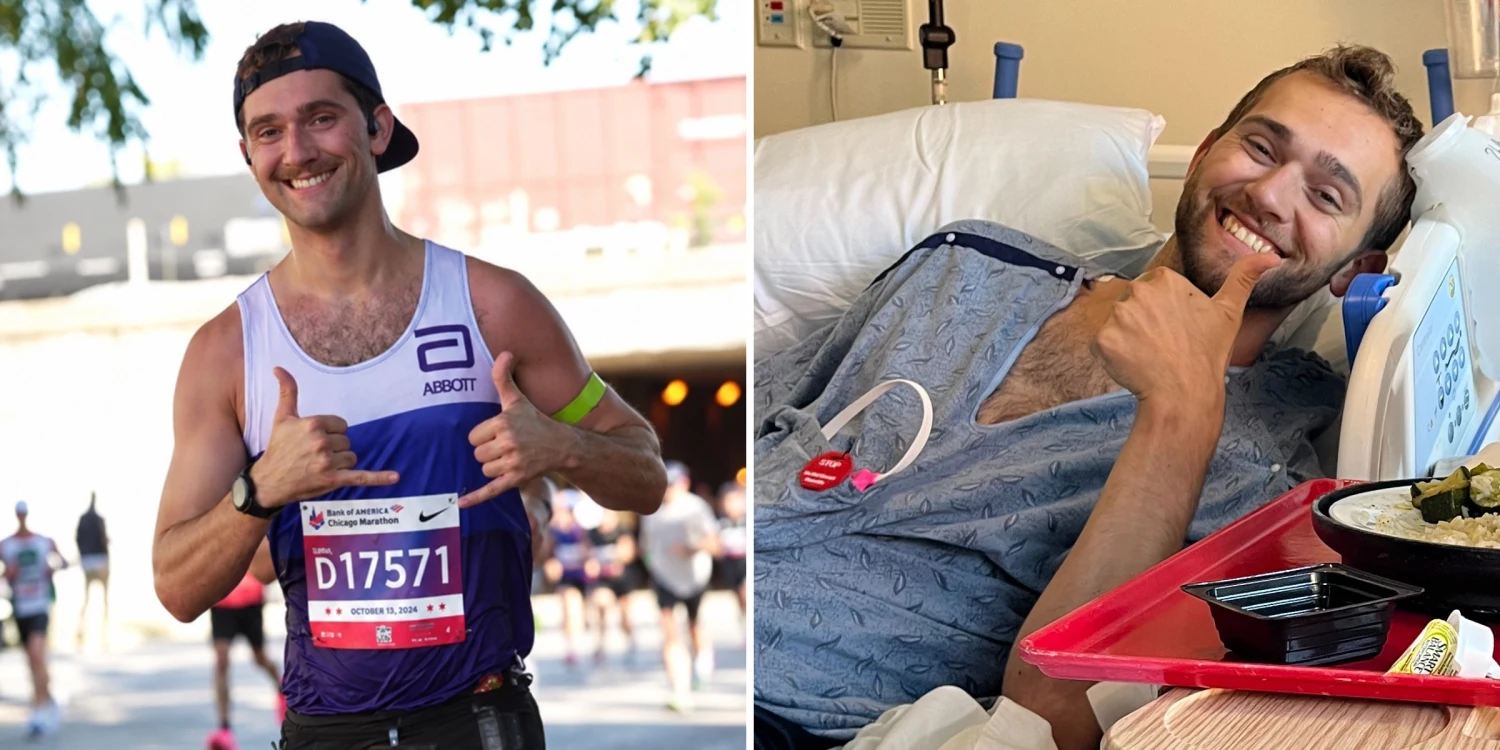
In July 2024, Patrick Mascoli, 29, of Boston, had just finished an ordinary run when something felt terribly wrong. He was in the gym’s changing room when he suddenly felt an intense, burning pain on the right side of his head. The room began spinning, his vision blurred and he struggled to control his limbs. “It felt like a bomb went off in my head,” Mascoli recalls. He began vomiting and sweating profusely, and he couldn’t move. “I tried to take a step with my right leg. And instead of going forward, it went completely to the right, and I just slid down the wall and fell to the ground.” Unable to control his body, he tried to crawl in search of help. Eventually, he managed to call his sister, who came to the gym and found him unable to speak or move. She called emergency medical services, and paramedics took Mascoli to the hospital. At first, emergency medical personnel thought Mascoli might be severely dehydrated. When his dizziness and vomiting continued, they considered vertigo. But after he was transferred to Boston Medical Center for further testing, an MRI revealed that he had suffered a stroke in his right cerebellum, the part of the brain that helps control balance, coordination and movement. “I was shocked,” he says. “I didn’t make the connection that this is something that can happen when you’re 27 … without some pre-existing condition.” A Stroke in a Healthy, Active 27-Year-Old According to the Centers for Disease Control and Prevention, the leading causes of stroke are high blood pressure, high cholesterol, smoking, obesity and diabetes. But Mascoli was a healthy, active 27-year-old without any of those conditions, leaving doctors searching for answers. Testing later revealed that Mascoli had a patent foramen ovale (PFO), a small opening between the heart’s upper chambers that is present in some people from birth. According to the American Heart Association, a PFO affects roughly one in four adults, and many people never know they have one. In some cases, a PFO can allow a blood clot to pass from the right side of the heart to the left and travel to the brain. However, doctors could not definitively determine whether Mascoli’s PFO caused his stroke. About a month after the stroke, Mascoli underwent a procedure to close the opening in the heart. Doctors inserted a closure device, called an occluder, through a vein and guided it to his heart. The device helps seal the opening. He spent about a week in the hospital. At first, even walking was difficult, but he was able to walk to the bathroom about three days after the surgery. Some movements improved quickly, while others — particularly those on his right side — took longer to resolve. The most frightening part for Mascoli was that he didn’t know what his recovery might look like. “The doctors didn’t know exactly what the effects (of the stroke) would be. That was scary because, at that point, I couldn’t really walk. I couldn’t hold a fork with my hand,” he says. “I was like, ‘What is this going to look like a week from now, a month from now, 10 years from now?’” He says he was internally panicking and trying not to show it to his family. “I always want to be there for them and help them,” he says. “For once, I needed their help.” Stroke Rates Rising Among Young Adults Mascoli’s experience appears to be part of a research-backed trend. A 2026 study published in the journal Neurology found that the rate of stroke among adults ages 20-54 nearly doubled between 1993 and 2020, while rates declined in older adults. The increase was largely driven by ischemic strokes, which occur when a blood clot blocks blood flow to part of the brain. Researchers also found that high blood pressure, diabetes, atrial fibrillation and substance use were more common among younger adults who had strokes in the later years of the study. However, the study could not establish what caused the increase in stroke rates. Because the research focused on one region of the United States, its findings do not provide a precise estimate of national stroke risk. Mascoli’s case also illustrates that there isn’t always a clear explanation for why a stroke happens. Although doctors discovered a PFO, they could not definitively link it to his stroke. Returning to Running After a Stroke After leaving the hospital, Patrick began rebuilding his strength and coordination. He returned to work after about a month and practiced fine motor skills through activities such as playing video games, writing, drawing and solving puzzles. “My right side just always felt like it was lagging behind, or it was a little unstable,” he says. “Slowly, it did come back.” When he returned to work, he noticed that his handwriting had become shaky. “My hand still shakes a little bit and has a little bit of tremor. Specifically if I’m tired, I notice it,” he says. Mascoli avoided exercise until two months after his PFO closure and recovery. When he finally started running again, he kept it short, sometimes running for just 10 minutes or sticking to a one-mile route. “It just took time,” he says. He gradually increased his distance and frequency, but it took about six months to get close to his previous running level. ‘I Just Bawled My Eyes Out’ In October 2026, Mascoli ran the Chicago Marathon as part of Team Abbott, a group of runners who have overcome health challenges. Abbott also manufactures the occluder used to close the opening in his heart. The marathon represented more than a race for Mascoli. It was a milestone in a recovery that had once felt uncertain. “I just bawled my eyes out when I crossed the finish line,” he says. “It just meant a lot to me.” The experience also changed what Mascoli values about running. Before his stroke, he might have focused more on getting faster or completing a challenging workout. Now, he finds meaning in the everyday moments he once took for granted. Mascoli takes daily aspirin and a statin, and he continues to manage the anxiety that can linger even when physical recovery is going well. He still worries about why the stroke happened and whether he could experience another complication. “I still get anxious,” he says, especially since doctors haven’t determined the cause. Mascoli is also participating in a stroke study and has met other people who have experienced strokes, many of whom are much older than he is. The experience has helped him appreciate how far he has come, even as he continues to work through lingering symptoms and worries. Completing the Chicago Marathon gave him a chance to recognize his progress and celebrate the life he has been able to return to. “I’m very grateful for where I’m at,” he says.
Topics in this story
Gathered from external sources. Rights to this text belong to whoever originally published it.